A Decade of Ruin: The $71 Billion Price Tag for Gaza’s Reconstruction

A joint report by the EU, UN, and World Bank estimates that Gaza requires $71.4 billion over ten years to rebuild following an 84% economic contraction. The destruction includes over 371,000 homes and the majority of the territory's health and education infrastructure, necessitating $26.3 billion in immediate aid.

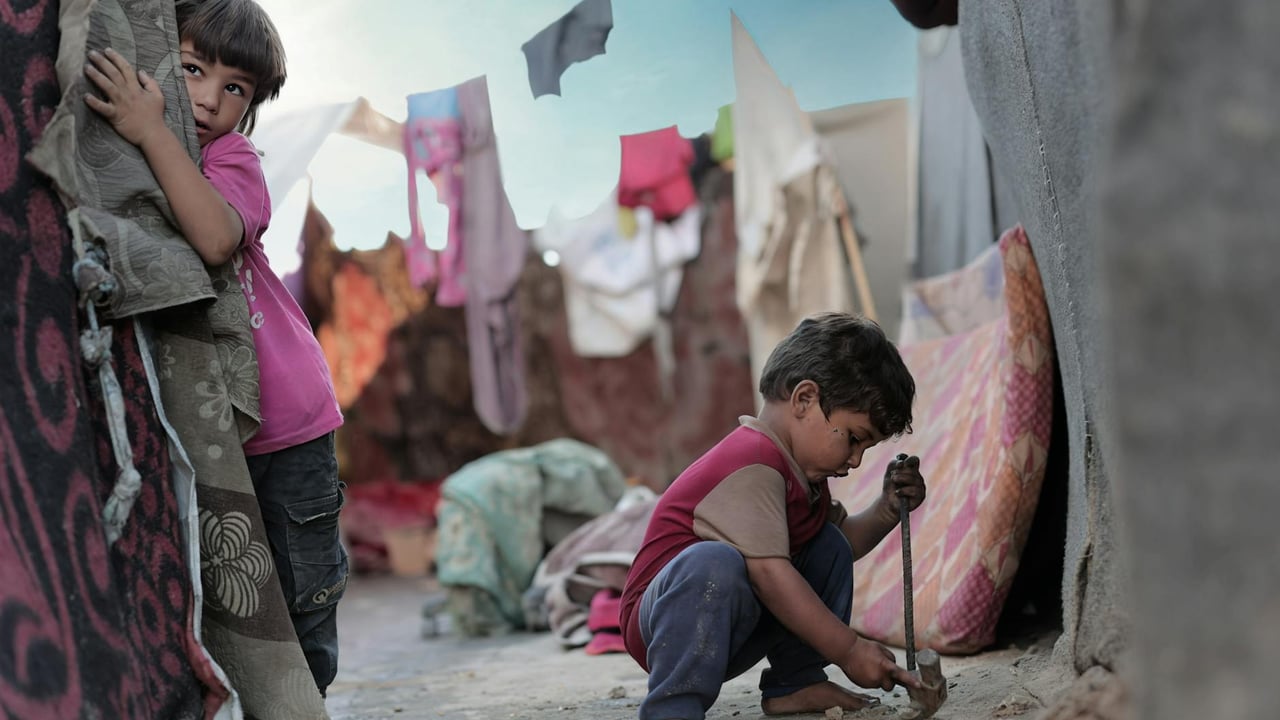
Children playing in a vibrant Gaza alleyway, capturing the resilient spirit of youth.

Key Takeaways

  • 1Gaza's economy has shrunk by 84%, representing a near-total collapse of local industry and commerce.
  • 2The total cost of reconstruction and recovery is projected at $71.4 billion over a ten-year period.
  • 3An immediate infusion of $26.3 billion is required within the first 18 months to restore essential services.
  • 4Critical infrastructure damage includes 371,000 housing units and the majority of hospitals and schools.
  • 5The report was a collaborative effort between the European Union, the United Nations, and the World Bank.

Editor's
Desk

Strategic Analysis

The $71 billion figure represents more than just a repair bill; it is a testament to the total de-development of Gaza. An 84% economic contraction suggests that the formal economy has effectively ceased to exist, replaced by a subsistence-level existence fueled entirely by aid. The primary challenge for the international community is not just the staggering cost, but the 'reconstruction paradox': donors are hesitant to commit billions to a region where geopolitical instability remains high and the risk of future destruction is constant. Furthermore, the 18-month requirement of $26.3 billion exceeds the annual budgets of many major international aid programs, suggesting that without a formal political settlement, the 'reconstruction' may never move past basic emergency relief.

China Daily Brief Editorial
Strategic Insight
China Daily Brief

The scale of economic erasure in Gaza has reached levels rarely seen in modern conflict, with a joint assessment by the European Union, the United Nations, and the World Bank painting a harrowing picture of total societal collapse. The report reveals that the territory’s economy has contracted by a staggering 84%, effectively undoing decades of development in a matter of months. This economic vacuum leaves the enclave entirely dependent on international intervention for the foreseeable future.

Restoring Gaza to even a semblance of its pre-war state will require an estimated $71.4 billion over the next ten years. The roadmap for recovery is divided into phases, beginning with an immediate $26.3 billion surge required within the first 18 months. This initial capital is desperately needed to restore basic services, stabilize what remains of the critical infrastructure, and prevent further loss of life through the collapse of the health and sanitation systems.

The physical destruction is equally catastrophic, with over 371,000 housing units damaged or destroyed, leaving a significant portion of the population permanently displaced. Public institutions have fared no better; more than 50% of the territory's hospitals are no longer functional, and virtually every school has suffered damage or complete destruction. These losses represent not just a financial burden but a generational setback for the territory’s human capital.

Agriculture and commerce, once the lifeblood of the local economy, have been almost entirely uprooted, making self-sufficiency an impossibility under current conditions. The assessment serves as a stark warning to the international community that without a coordinated, multi-billion-dollar Marshall Plan-style intervention, the territory risks falling into a permanent state of humanitarian and economic insolvency. The path to recovery is not merely a matter of funding, but of logistics and political will on a global scale.

Share Article

Related Articles

📰
No related articles found