
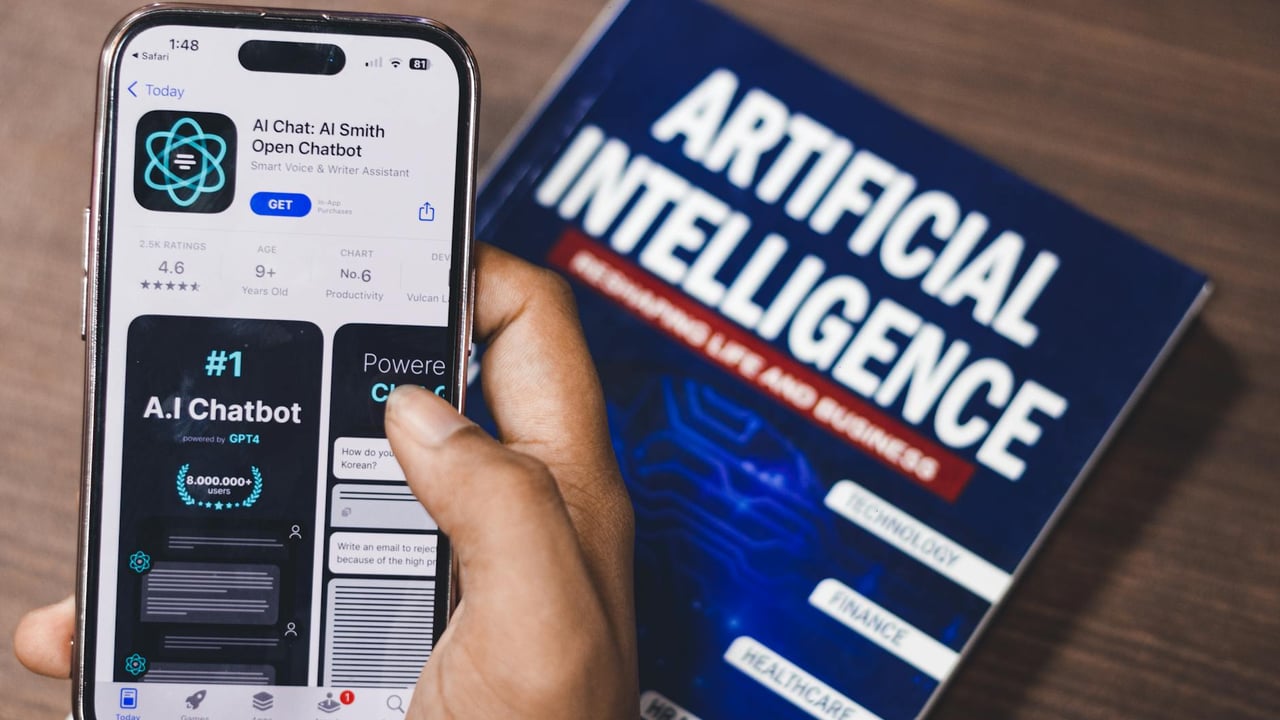

A profound shift in sentiment has taken hold in the corridors of Silicon Valley. Just over a year ago, developers spoke of Artificial Intelligence with the wide-eyed wonder of those who had discovered magic, viewing it as a tool to liberate human intellect and grant us more time for life. Today, that optimism has curdled into a complex mix of dependency and dread. The euphoria of falling production costs is now haunted by the shadow of replacement and a relentless competitive pressure that has turned AI from a 'co-pilot' into a digital taskmaster.
This transformation is best described by the 'Red Queen Hypothesis,' a term borrowed from evolutionary biology and Lewis Carroll’s Through the Looking-Glass. In the story, the Red Queen tells Alice that she must run as fast as she can just to stay in the same place. In the context of AI, we are seeing a structural shift where the technology is no longer a source of asymmetric advantage but a baseline requirement for survival. As firms race to outpace one another, the efficiency gains provided by AI are being instantly absorbed by heightened expectations, forcing workers to produce ten times the output in the same ten-hour workday.
The institutionalization of this race is becoming increasingly literal. Some high-stakes investment firms, such as Point72, have reportedly begun incorporating 'computing power consumption' into their KPIs. Portfolio managers are mandated to use a minimum threshold of tokens, under the logic that a failure to consume enough AI resources indicates a lack of 'AI thinking.' In this environment, tools are no longer being used to save time; they are being used to fill it with more complex, AI-driven simulations and cross-validations, creating a cycle of 'digital bureaucracy' where human workers become biological peripherals to the algorithm.
This cycle is also driving a counter-intuitive surge in demand for hardware and computing power. As AI-generated content begins to flood the internet, we are entering a phase of 'data collapse' and 'information hallucination.' To verify the accuracy of one model’s output, organizations are forced to employ three other models for cross-referencing. This 'redundancy to combat redundancy' ensures that the explosion in demand for semiconductors and infrastructure—benefiting hardware hubs like Suzhou—is only just beginning, fueled by the systemic friction of managing AI’s own flaws.
Ultimately, humanity is retreating to its final redoubt: the 'confirmation button.' While AI can synthesize data and generate infinite iterations of a report, it lacks the capacity for value-based judgment and the physical courage to take responsibility for its actions. As the Red Queen effect accelerates, the value of human labor will shift away from technical execution and toward these two un-automatable traits. To preserve human dignity in this era, we must move beyond measuring productivity through token consumption and rediscover the value of deep, un-simulated connection.