Guangdong’s Humanoid Ambition: China’s Industrial Heartland Moves to Master the ‘Brain and Body’ of AI

Guangdong has launched a strategic policy to integrate generative AI with humanoid robotics, focusing on the synergy between software 'brains' and hardware 'bodies.' The plan includes establishing massive training hubs in Guangzhou and Shenzhen to perfect 'embodied intelligence' for cross-industry applications.

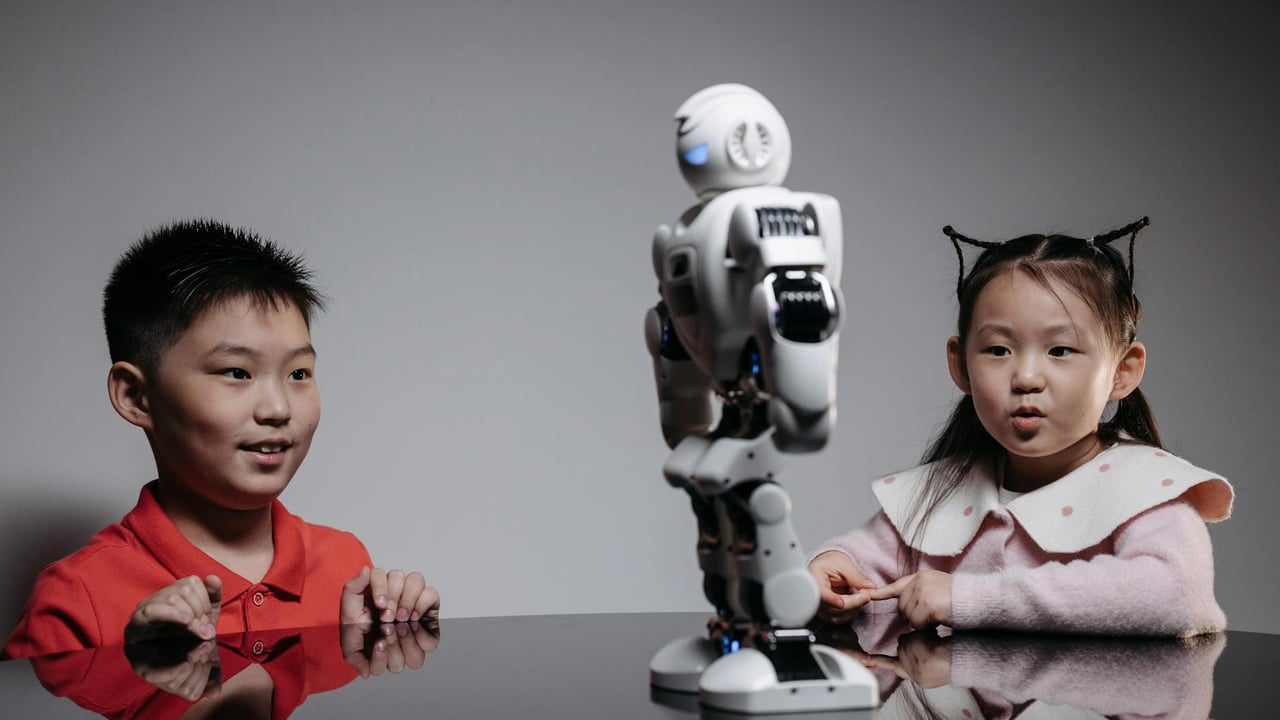
Kids amazed by a humanoid robot during an indoor play session, showcasing technology and learning.

Key Takeaways

  • 1Introduction of the 'Brain-Cerebellum-Body' framework to synchronize generative AI with physical motor control.
  • 2Establishment of dedicated humanoid training facilities in Guangzhou and Shenzhen to facilitate large-scale data validation.
  • 3Focus on 'embodied intelligence' to enable robots to operate autonomously across diverse, non-static environments.
  • 4Deployment of a cloud-edge-end architecture to solve the computational and latency challenges of mobile AI.
  • 5Integration of AI throughout the entire lifecycle of robotic manufacturing, from design to factory deployment.

Editor's
Desk

Strategic Analysis

Guangdong’s policy marks a critical evolution in China's 'New Quality Productive Forces' strategy. By prioritizing humanoid robots, Beijing is betting on a technology that bridges the gap between its world-leading manufacturing base and its burgeoning AI capabilities. The focus on 'embodied intelligence' is particularly significant; it acknowledges that the next frontier of the AI race isn't just about large language models (LLMs), but about how those models interact with the physical world. If successful, this regional initiative could turn the Pearl River Delta into a 'Silicon Valley of Hardware,' where the cost of producing sophisticated humanoid robots is driven down through the same supply-chain efficiencies that once revolutionized the smartphone industry. This poses a direct challenge to Western players like Tesla and Figure AI by creating a vertically integrated ecosystem for the mass production of autonomous agents.

China Daily Brief Editorial
Strategic Insight
China Daily Brief

Guangdong province, the engine of China’s industrial economy, has unveiled an ambitious roadmap to dominate the emerging humanoid robot sector. The provincial government’s latest action plan, titled “AI+ High-Level Application,” signals a strategic shift from traditional automation toward “embodied intelligence.” This move positions the Pearl River Delta as a central laboratory for the next generation of autonomous systems that can perceive, think, and act in physical space.

The policy introduces a sophisticated biological metaphor to describe its technical objectives, focusing on the simultaneous development of a robot’s “brain,” “cerebellum,” and “body.” While the brain represents generative AI and decision-making capabilities, the cerebellum focuses on real-time coordination and motor control. By mandating a synergetic approach, Guangdong aims to resolve the long-standing disconnect between advanced digital algorithms and the physical constraints of robotic hardware.

To accelerate commercialization, the province is establishing specialized “embodied intelligence” training grounds in the tech hubs of Guangzhou and Shenzhen. These facilities will serve as massive data-collection engines, providing the high-fidelity environments necessary for robots to undergo transfer learning. Such infrastructure is designed to help machines migrate their skills across different scenarios, from factory floors to domestic care settings, without constant reprogramming.

Beyond hardware, the plan emphasizes a “cloud-edge-end” integrated network to support the massive computational requirements of humanoid systems. This infrastructure will allow robots to tap into centralized cloud intelligence while maintaining the low-latency processing needed for immediate physical reactions at the “edge.” This comprehensive ecosystem approach suggests that Guangdong is not merely interested in building machines, but in establishing the foundational standards for a robot-integrated society.

Share Article

Related Articles

📰
No related articles found