
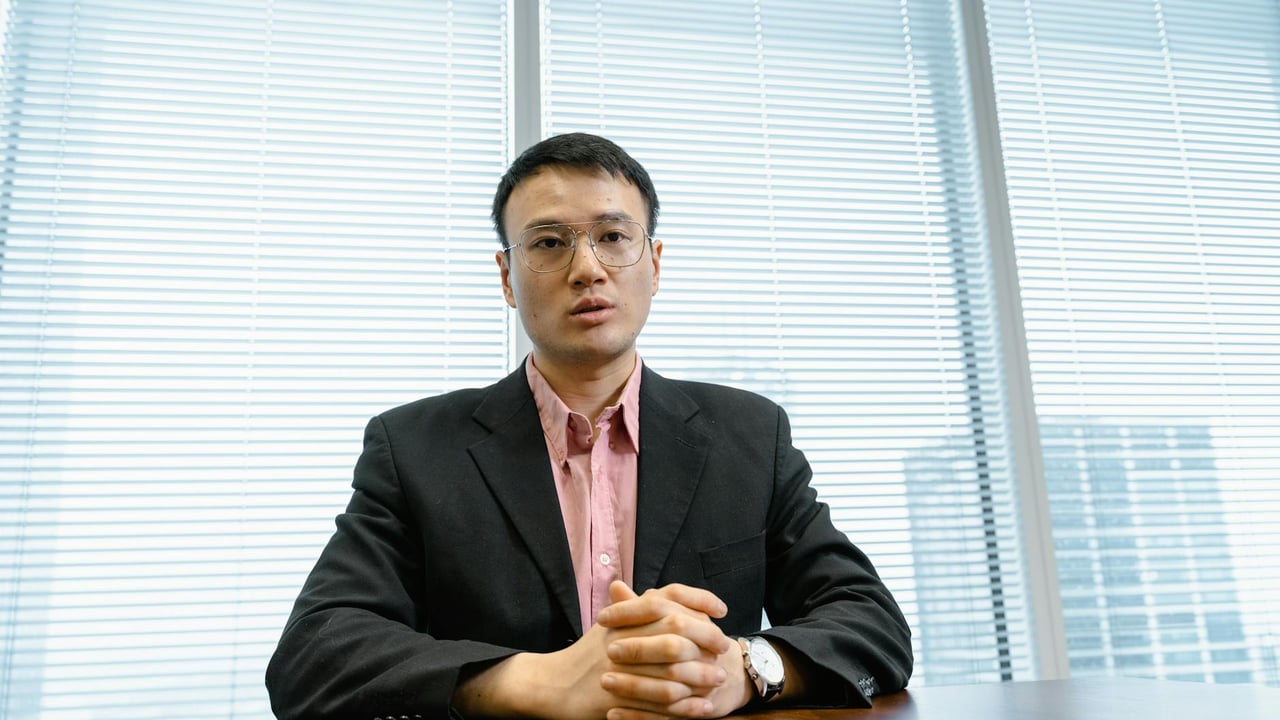

Zhang Kun, once the undisputed star of China’s retail investment boom, is navigating a complex transition as the domestic market enters another year of structural readjustment. His latest quarterly filings reveal a manager at a strategic crossroads, balancing his long-standing devotion to Chinese consumer staples with a newfound, aggressive exposure to the global semiconductor supply chain.
Assets under management across Zhang’s four flagship funds at E Fund Management fell to 41.67 billion yuan ($5.8 billion) by the end of March 2026, marking a significant decline from 48.38 billion yuan just three months prior. This shrinkage was largely fueled by persistent net redemptions, as investors reacted to performance that trailed benchmarks across most of his portfolio. The E Fund Blue Chip Selection Fund, his largest vehicle, saw its net asset value drop by over 5% in the first quarter alone.
Despite the outflow, Zhang remains a 'conviction player' regarding China’s high-end spirits. His top holdings—Kweichow Moutai, Wuliangye, and Luzhou Laojiao—continue to occupy the regulatory ceiling of 10% of net asset value in three of his funds. While absolute share counts in these companies were trimmed, analysts suggest this was a 'passive reduction' necessitated by fund redemptions rather than a loss of faith in the 'liquor king' strategy.
The most striking strategic shift emerged in the E Fund Asia Selection Fund, where Zhang pivoted toward the global AI trade. He increased holdings in Dutch lithography giant ASML by an extraordinary 1,536%, alongside a significant boost to South Korean memory leader SK Hynix. This move suggests a search for 'safe margins' through technical moats and global pricing power, providing a hedge against the softer domestic demand currently plaguing the Chinese market.
Zhang’s quarterly commentary, however, remains defiantly optimistic about the home front. He cautioned against 'linear extrapolation' of current economic headwinds, arguing that the difficulties are cyclical rather than structural. He pointed to stabilizing secondary housing prices in core cities and a turnaround in hospitality revenue (RevPAR) as early indicators that consumer confidence is beginning to mend after years of stagnation.
In his view, the market is currently suffering from a 'temporary melancholia,' causing the prices of high-quality equities to diverge significantly from their intrinsic value. For the patient investor, Zhang argues that the current atmosphere of group pessimism is actually magnifying the safety margin of 'evergreen' companies that possess deep competitive moats.