
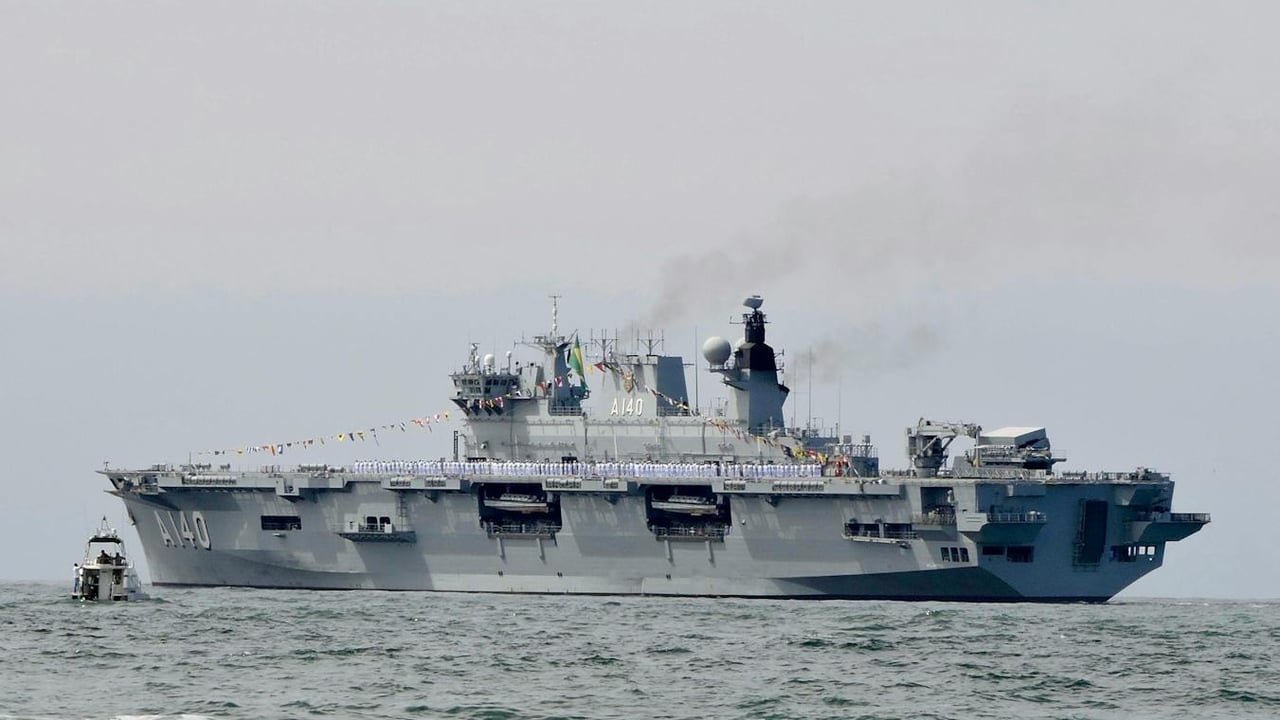

On the 77th anniversary of the People’s Liberation Army Navy (PLAN), Beijing has pivoted from its historical role as a coastal defense force to a formidable blue-water power. The showcase of its three-carrier fleet—the Liaoning, Shandong, and the technologically advanced Fujian—serves as more than a nationalist celebration. It is a calculated signal of the PLAN's transition toward global power projection and its ability to challenge the long-standing maritime status quo in the Western Pacific.
The evolution of the PLAN is embodied in the distinct roles of these three vessels. While the Liaoning provided the initial platform for carrier operations training, the Fujian represents a massive technological leap with its electromagnetic catapult system (EMALS). This technology places China in a rare category of naval powers capable of launching heavier, more sophisticated aircraft with greater frequency and efficiency, effectively narrowing the qualitative gap with the United States Navy.
Beyond the hardware, the shift toward 'systematized training' and 'far-seas patrols' highlights a significant change in operational doctrine. No longer confined to the 'First Island Chain,' Chinese carrier strike groups are now venturing regularly into the South China Sea and the deep waters of the Western Pacific. These maneuvers are designed to normalize the PLAN's presence in contested waters, establishing a 'new normal' that complicates the strategic calculus for regional neighbors and their international allies.
This modernization drive also emphasizes the integration of 'new quality combat forces,' likely referring to the synergy between traditional naval assets, unmanned systems, and sophisticated cyber-electronic capabilities. As the PLAN strives toward its goal of becoming a 'world-class navy' by mid-century, the focus has moved from mere shipbuilding to the complex task of multi-domain integration. This evolution marks the end of an era where regional dominance was the sole purview of the West, ushering in a more contested and multi-polar maritime environment.