The Admiral's Ambition: Inside Xi Jinping’s Blueprint for a Hegemonic Blue-Water Navy

Marking its 77th anniversary, the PLA Navy has completed a historic transformation into a world-class power under President Xi Jinping's direct oversight. The force now combines advanced carrier technology like the Fujian with a rigid ideological framework, positioning itself as the primary tool for defending China's global 'sovereignty, security, and development interests.'

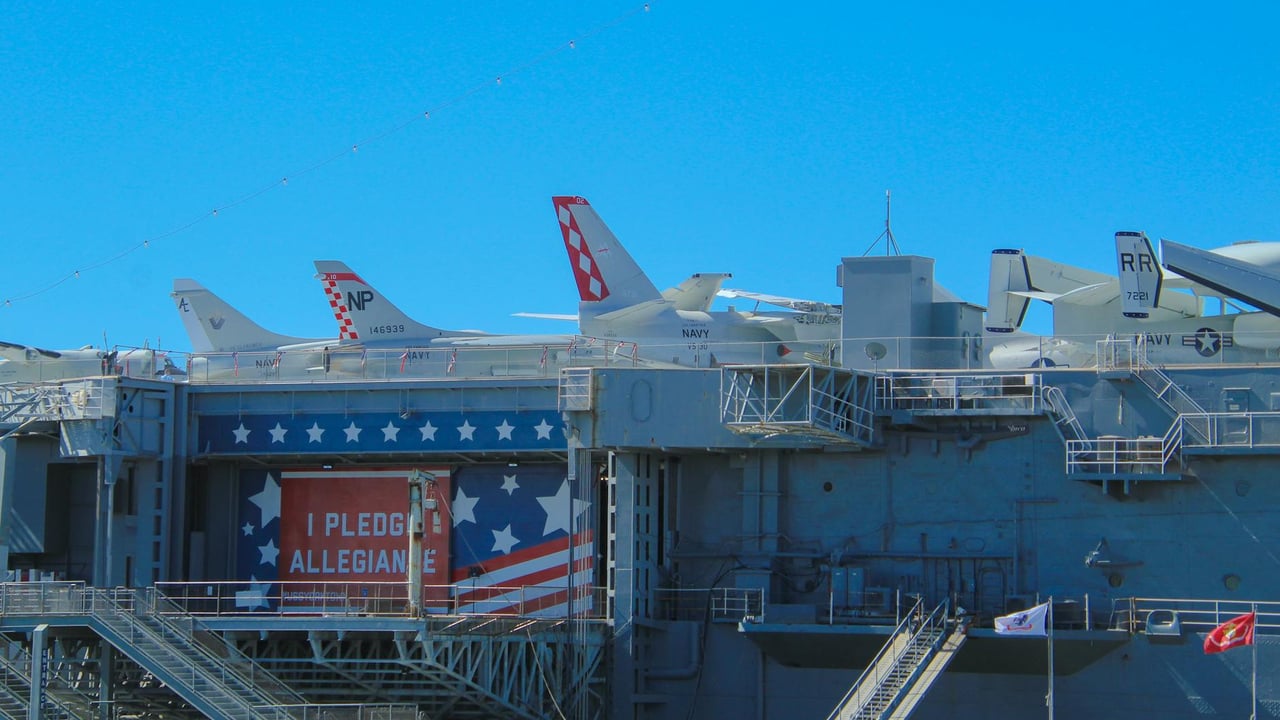
A view of a military aircraft carrier deck with fighter jets and patriotic banner.

Key Takeaways

  • 1The PLA Navy celebrated its 77th anniversary as a symbol of China's transition to a global blue-water power.
  • 2Xi Jinping has personally overseen the commissioning of three major aircraft carriers, including the technologically advanced Fujian.
  • 3Absolute Communist Party control remains the non-negotiable 'soul' of the naval modernization drive.
  • 4The PLAN has shifted from coastal defense to 'far-seas protection,' expanding its presence in the Gulf of Aden and beyond.
  • 5China uses 'naval diplomacy' through hospital ships and humanitarian missions to legitimize its growing global maritime footprint.

Editor's
Desk

Strategic Analysis

The breakneck speed of China’s naval modernization reflects a strategic urgency to challenge the U.S.-led maritime order in the Indo-Pacific. While the commissioning of the Fujian carrier demonstrates significant industrial and technological maturity, the PLAN's ultimate effectiveness remains untested in high-intensity conflict. The central tension in China's naval strategy lies in its 'dual-hatted' mission: it must act as a global provider of humanitarian 'public goods' to gain international legitimacy while simultaneously developing the coercive capabilities necessary to enforce territorial claims in the South China Sea and Taiwan Strait. This duality suggests that while the PLAN is becoming a 'world-class' navy in terms of tonnage and technology, its operational success will depend on its ability to manage the regional backlash sparked by its growing assertiveness.

China Daily Brief Editorial
Strategic Insight
China Daily Brief

As the People’s Liberation Army Navy (PLAN) celebrates its 77th anniversary, the force has transitioned from a coastal defense unit into a formidable blue-water instrument of national power. Under the personal stewardship of President Xi Jinping, the maritime service has become the vanguard of the 'Chinese Dream,' representing a fundamental pivot in China’s strategic orientation from the land toward the sea. Since taking power in 2012, Xi has prioritized naval expansion as a prerequisite for national rejuvenation, famously noting that China’s prosperity is inextricably linked to the oceans.

The ideological cornerstone of this expansion remains the 'absolute leadership' of the Communist Party. Recalling the legacy of the Nanchang Uprising and the Gutian Meeting, Xi has consistently reinforced that the navy’s primary 'soul' is political loyalty. This command structure ensures that as the fleet expands its geographic reach, it remains an unwavering tool of the Party’s central leadership, a policy reinforced during Xi’s early 2012 visit to the destroyer Haikou, which set the tone for a decade of military reform.

Technological milestones have mirrored this political consolidation. The commissioning of the Shandong and, more recently, the Fujian—China’s first carrier equipped with electromagnetic catapults—signals a closing technological gap with the U.S. Navy. By moving beyond the 'First Island Chain,' the PLAN is no longer merely defending China's coastline; it is actively shaping the security environment across the Indo-Pacific and asserting claims over sovereign interests with unprecedented hardware capabilities.

Beyond hard power, Beijing is leveraging its fleet as a diplomatic asset under the 'Maritime Community with a Shared Future' framework. From anti-piracy patrols in the Gulf of Aden to the 'Peace Ark' hospital ship missions, the PLAN is attempting to project the image of a responsible global stakeholder. This dual-track approach seeks to normalize the presence of Chinese warships globally, framing their expansion as a contribution to international public goods rather than a challenge to the existing maritime order.

Share Article

Related Articles

📰
No related articles found