
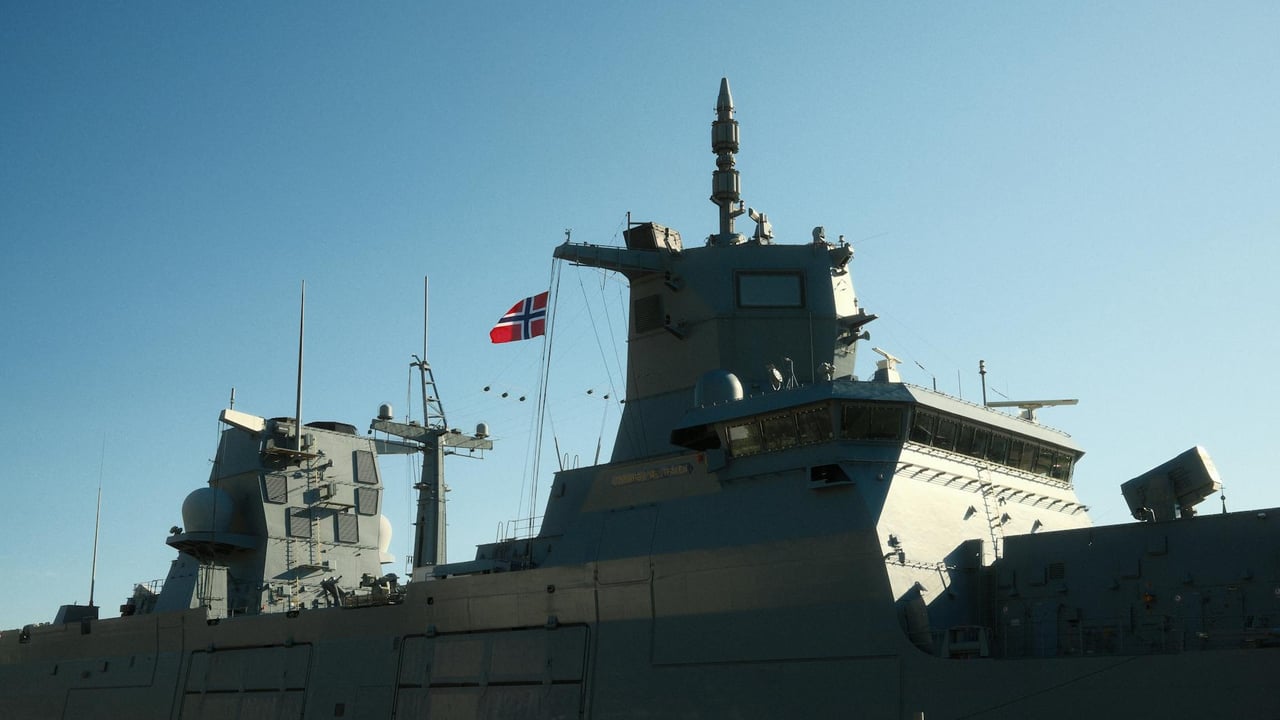

At the historic Lushun Port, the People’s Liberation Army Navy (PLAN) recently marked its 77th anniversary with a poignant visual juxtaposition: the 1980s-era training ship Zheng He sitting alongside the brand-new Type 054A frigate Ordos. This 'same-frame' appearance of vessels separated by nearly 40 years of engineering serves as a physical timeline of China’s maritime transformation. While the Zheng He represents the Navy’s pedagogical roots, the Ordos embodies the high-tech, blue-water ambitions of a modernizing superpower.
The Zheng He, commissioned in 1987, remains the 'classroom of the sea' where young officers are still required to master manual navigation. Despite the prevalence of GPS and digital displays, the PLAN insists that its cadets become proficient with sextants and paper charts. This 'manual backstop' is viewed as a critical survival skill, ensuring that Chinese commanders can navigate by the stars if satellite signals are jammed or radar systems fail during high-intensity conflict.
In contrast, the Ordos—commissioned in 2025—represents the cutting edge of the PLAN’s surface fleet. As the latest iteration of the Type 054A frigate, it features significantly upgraded sensors, longer helicopter decks for advanced anti-submarine warfare, and a fully domestic suite of hardware and software. These vessels are the workhorses of China’s 'distant sea' patrols, designed to project power far beyond the First Island Chain with enhanced coordination and intelligent combat systems.
The human element of this transition is equally striking, as the 'Post-00s' generation (those born after 2000) now takes the helm of these sophisticated platforms. Officers like Ye Ruiting and Wang Songyuan represent a new breed of personnel who are as comfortable with complex data modeling as they are with traditional seamanship. This generation is also increasingly international, having participated in naval diplomacy and joint drills in Southeast Asia, signaling a more confident and globally-engaged officer corps.
Strategic priorities outlined in China’s 15th Five-Year Plan emphasize the development of 'new quality' combat capabilities, including unmanned systems and intelligent warfare. The transition from 'seeing' to 'seeing clearly'—an evolution from basic radar to integrated multispectral sensors—is a recurring theme in the PLAN’s modernization. This shift aims to shorten the 'sensor-to-shooter' cycle, providing commanders with a decisive edge in the increasingly complex maritime environments of the Indo-Pacific.