Intel’s AI Renaissance: How the Chip Giant Found Its Footing in the Inference Era

Intel's stock skyrocketed nearly 20% following an optimistic Q2 revenue guidance fueled by surging demand for AI server CPUs. The company also secured Tesla as a flagship customer for its advanced 14A foundry process, signaling a potential comeback against rivals like TSMC and Nvidia.

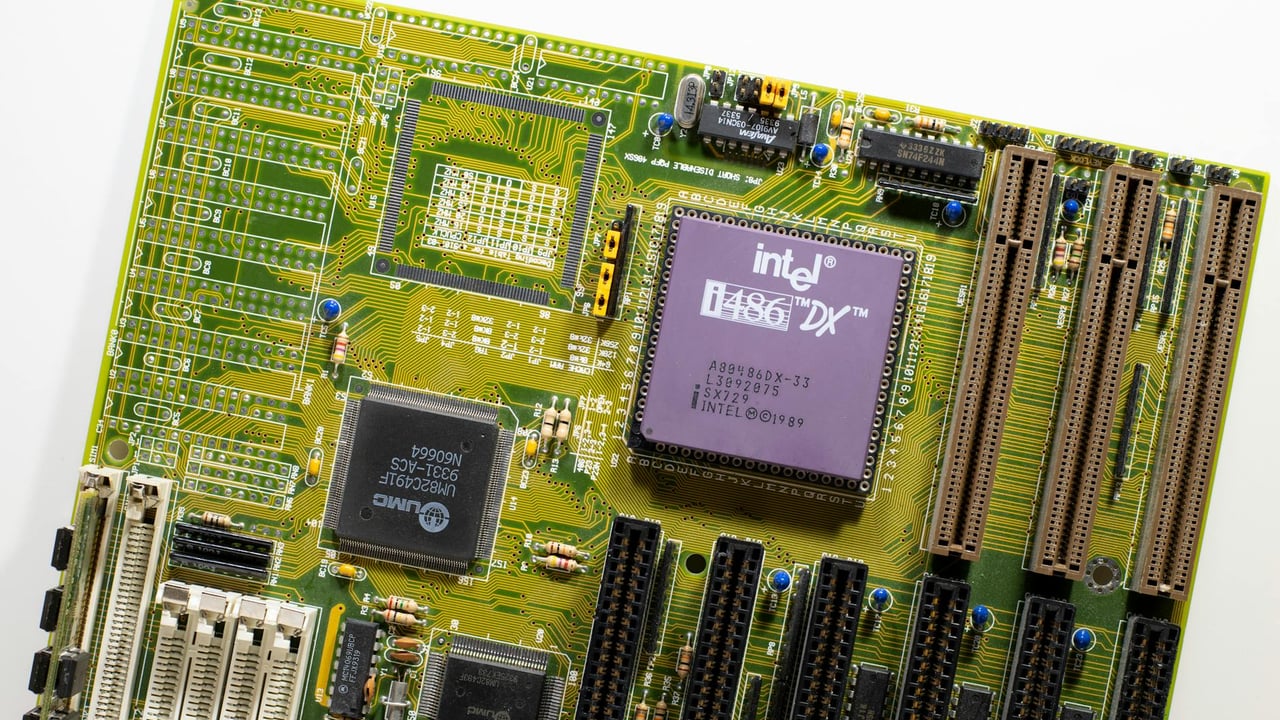
Close-up view of a vintage Intel i486 DX motherboard, highlighting retro technology.

Key Takeaways

  • 1Q2 revenue guidance of $13.8 billion to $14.8 billion exceeded analyst expectations of $13.07 billion.
  • 2Tesla has been named the first major customer for Intel’s advanced 14A process node for the 'Terafab' project.
  • 3Intel is successfully pivoting from AI training to AI inference, where its CPUs offer a competitive advantage for autonomous agents.
  • 4The company's foundry business, while still largely internal, is on track to reach $1 billion in ASIC revenue this year.
  • 5Massive restructuring and partnerships with US government and tech giants have stabilized the firm's long-term growth outlook.

Editor's
Desk

Strategic Analysis

Intel's sudden reversal is a masterclass in 'Inference-led' survival. While Nvidia owns the 'training' phase of AI, Intel is betting that the long-term volume lies in 'deployment,' where CPUs are more cost-effective for running AI agents. The deal with Tesla is more than just a contract; it is a geopolitical and industrial signal that Intel's foundry business can handle the world's most demanding clients. However, the true test lies in 2025-2030: Intel must transition from being a legacy IDM (Integrated Device Manufacturer) to a world-class service foundry. If they can maintain the 14A process timeline, they may break the TSMC monopoly, but any manufacturing hiccup could still evaporate this hard-won market confidence.

China Daily Brief Editorial
Strategic Insight
China Daily Brief

Intel appears to have finally broken its long streak of strategic stagnation. Shares of the Silicon Valley pioneer surged 19% in after-hours trading following a second-quarter revenue forecast that significantly outpaced Wall Street’s expectations. This momentum, which added roughly $640 billion in market value, signals a turning point for a company that was once dismissed as a casualty of the generative AI revolution dominated by Nvidia.

The resurgence is rooted in a shift within the AI market. While the initial gold rush focused on massive model training—a playground for high-end GPUs—the industry is now moving toward model deployment and the rise of autonomous AI agents. These 'inference' workloads play directly into Intel’s strengths in CPU architecture. Leadership has confirmed that current order structures reflect genuine demand from customers shifting toward these sophisticated, logic-heavy AI tasks.

Beyond hardware sales, Intel’s ambitious 'Foundry' strategy secured a monumental win with Elon Musk’s Tesla. The electric vehicle maker has signed on as the first major customer for Intel’s next-generation 14A manufacturing process. This technology will be utilized at Tesla's 'Terafab' facility in Austin, Texas, marking a critical validation of Intel’s ability to compete with global manufacturing leaders like TSMC on the cutting edge of semiconductor fabrication.

Despite the optimism, the path ahead remains fraught with execution risks. Intel’s first-quarter results included a heavy GAAP loss driven by over $4 billion in restructuring costs. To maintain this trajectory, the company must prove it can scale its fabrication capacity without the yield issues that plagued its past. For now, however, the combination of aggressive corporate slimming and strategic partnerships with the likes of Google and Nvidia suggests that the 'Old Guard' of chips is far from obsolete.

Share Article

Related Articles

📰
No related articles found