From Coastal Defense to Blue-Water Ambition: The People’s Liberation Army Navy at 77

The People’s Liberation Army Navy marked its 77th anniversary by hosting veterans and descendants of revolutionary heroes aboard its modern warships. The event highlights China's rapid naval modernization and its efforts to link revolutionary history with contemporary maritime power projection.

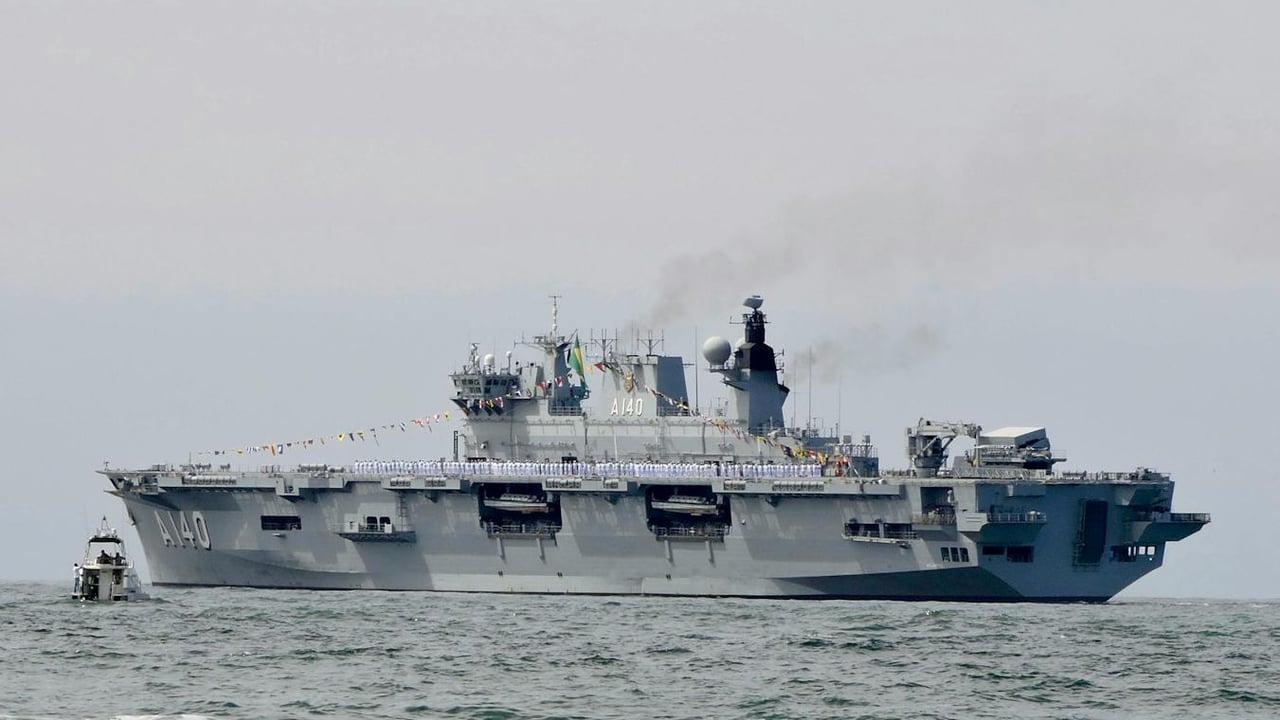
Military aircraft carrier sailing on ocean with visible smoke.

Key Takeaways

  • 1The PLAN celebrated its 77th anniversary on April 23, 2026, showcasing its transition from a coastal force to a blue-water navy.
  • 2Veteran involvement and the 'heroic descendants' narrative are used to reinforce ideological continuity and the 'Red Gene' within the ranks.
  • 3The event contrasts the PLAN's 1949 origins of repurposed vessels with its current fleet of advanced destroyers and carriers.
  • 4Domestic propaganda surrounding the anniversary aims to build public support for continued military expansion and modernization.

Editor's
Desk

Strategic Analysis

The 77th anniversary of the PLAN serves as a strategic inflection point for Beijing’s maritime narrative. By focusing on the 'human element'—veterans and their lineages—the CCP is attempting to bridge the gap between its revolutionary past and its high-tech future. This serves a dual purpose: it mitigates the 'peace disease' (a concern that modern soldiers lack combat experience) by invoking the spirit of past conflicts, while simultaneously justifying the immense cost of naval expansion to the Chinese public. Strategically, the emphasis on technological parity with the West, framed through the lens of national rejuvenation, suggests that China no longer views itself as a junior maritime player, but as a peer competitor ready to safeguard its interests in the South China Sea and beyond.

China Daily Brief Editorial
Strategic Insight
China Daily Brief

On the 77th anniversary of its founding, the People’s Liberation Army Navy (PLAN) orchestrated a symbolic bridge between its humble origins and its current status as a global maritime force. The commemorations centered on a 90-year-old veteran and the descendants of naval 'heroes' boarding one of China’s most advanced surface combatants. This curated encounter served as a visceral reminder of how far the force has evolved since its 1949 inception in Taizhou, Jiangsu province.

When the PLAN was established, it consisted of a ragtag collection of captured Nationalist vessels and repurposed civilian boats. Today, it stands as the world’s largest navy by hull count, possessing a sophisticated fleet of indigenous aircraft carriers, Type 055 stealth destroyers, and nuclear-powered submarines. For the veterans walking these decks, the transition from 'millet and rifles' to high-tech maritime dominance represents the fulfillment of a decades-long national aspiration.

The inclusion of the 'heroic descendants' highlights a core tenet of modern Chinese military culture: the preservation of the 'Red Gene.' By linking the courage of past generations with the technological prowess of the present, Beijing seeks to foster a sense of historical continuity and ideological loyalty. This narrative is essential for maintaining morale as the PLAN shifts its focus from 'near-seas defense' to 'far-seas protection' and power projection.

These anniversary celebrations are more than just nostalgic exercises; they are carefully calibrated signals of national strength. As the PLAN expands its footprint across the Indo-Pacific and beyond, these events reinforce the domestic legitimacy of massive naval expenditures. For a global audience, the message is clear: the modern Chinese navy views itself as the rightful heir to a revolutionary legacy, now equipped with the tools to challenge the existing maritime order.

Share Article

Related Articles

📰
No related articles found