
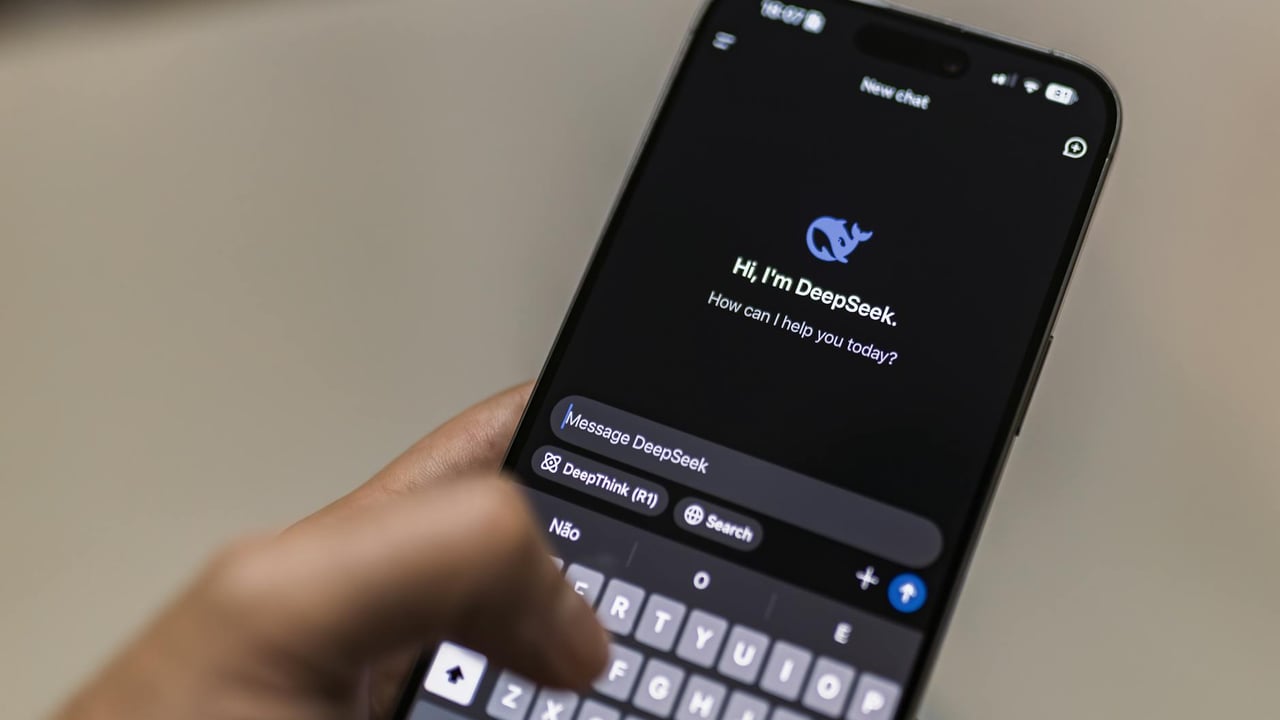

The release of DeepSeek V4 marks a watershed moment in the global AI arms race, signaling that China has found a potent formula to bypass Western hardware restrictions. While the model’s performance metrics are impressive, the most significant revelation is its native optimization for Huawei’s Ascend (昇腾) chips. This development directly realizes a scenario previously described by Nvidia CEO Jensen Huang as 'catastrophic' for U.S. interests: the emergence of a top-tier Chinese AI model built entirely on domestic silicon.
Technically, DeepSeek V4 is split into two variants: the flagship V4-Pro and the lightweight V4-Flash. Both support a massive 1-million-token context window, but their true innovation lies in architectural efficiency. By utilizing Compressed Sparse Attention (CSA) and Heavy Compression Attention (HCA), DeepSeek has dramatically reduced the computational and memory costs associated with long-form reasoning. This allows the model to achieve state-of-the-art performance in coding and mathematics without the 'brute force' compute requirements typical of Silicon Valley’s leading labs.
The economic implications are equally disruptive. DeepSeek V4-Pro is priced at approximately one-tenth the cost of comparable services from OpenAI or Anthropic, effectively turning high-end AI into a commodity. This 'floor price' strategy is not merely a marketing gimmick; it is the result of a radical redesign of the model’s underlying structure. By prioritizing architectural density over raw parameter count, DeepSeek is challenging the prevailing 'scaling laws' that have governed AI development for the past three years.
Geopolitically, the shift toward Huawei’s Ascend NPU marks the end of DeepSeek’s reliance on Nvidia’s sanctioned hardware. The V4 development cycle involved parallel verification across Nvidia and Huawei platforms, with the final product benefiting from deep synergy with Huawei’s Ascend SuperPoD clusters. This vertical integration of domestic software and hardware suggests that China’s AI ecosystem is beginning to insulate itself from U.S. export controls, creating a self-sustaining cycle of innovation.
However, the model is not without its limitations. DeepSeek V4 remains a text-only model, lacking the multimodal capabilities—such as native image and video processing—that are becoming standard in the West. Critics also point out that while it excels in logic-driven tasks like STEM and programming, it still trails behind Google’s Gemini in 'world knowledge' and nuanced cultural context. Nevertheless, for global developers, the promise of extreme stability and ultra-low costs is proving to be an irresistible proposition.