Brinkmanship at Sea: The Nanning’s High-Stakes Interception Signals a More Assertive PLA Navy

The Chinese destroyer Nanning recently engaged in a high-stakes interception of a foreign warship near claimed territorial waters. The incident, characterized by aggressive maneuvering and verbal warnings, highlights Beijing's hardening stance on maritime sovereignty and the increasing risk of naval miscalculation.

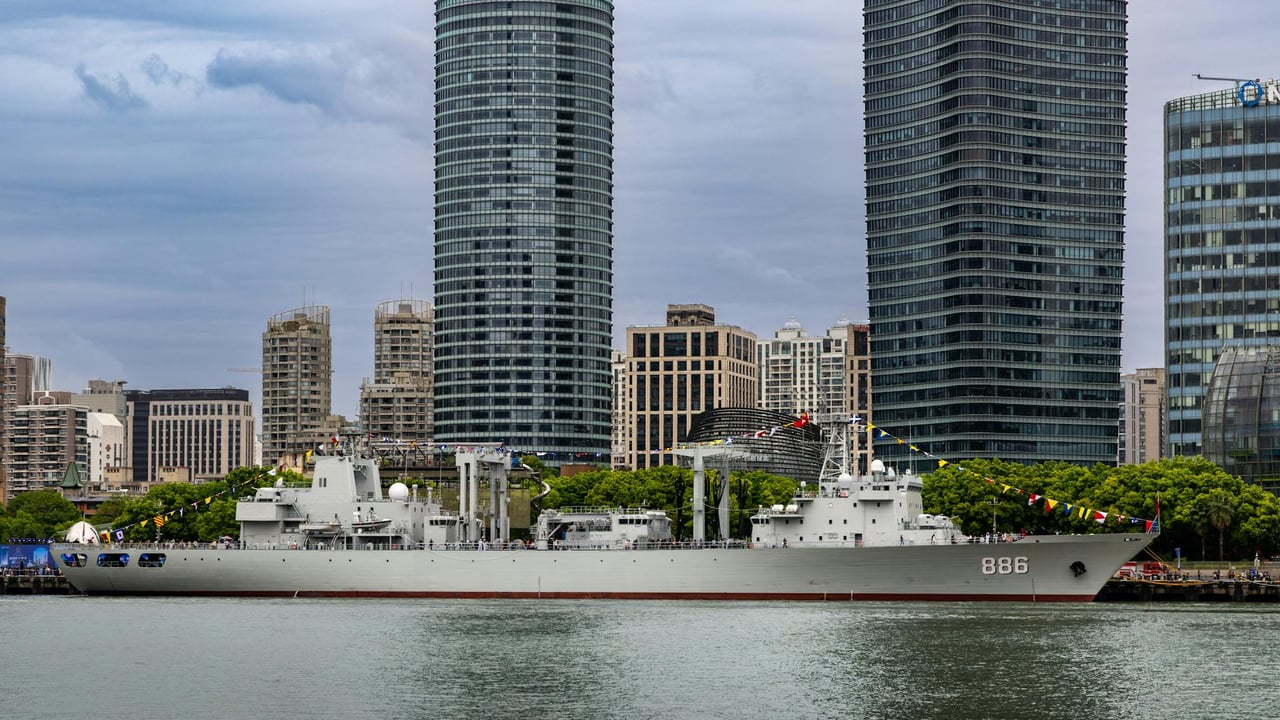
Military ship docked alongside a modern city skyline with high-rise buildings.

Key Takeaways

  • 1The Type 052D destroyer Nanning conducted a 'hardcore' expulsion of an unidentified foreign warship.
  • 2Tactics included high-pressure verbal warnings and physical maneuvering to block the foreign vessel's path.
  • 3State media is highlighting the bravery and readiness of the PLAN crew to bolster domestic nationalist sentiment.
  • 4The encounter reflects a broader shift toward more aggressive maritime 'gray zone' tactics by China.

Editor's
Desk

Strategic Analysis

The strategic significance of this encounter lies in the PLA's transition from passive surveillance to active physical impedance. By framing the expulsion as 'hardcore' (硬核), Beijing is normalizing a higher level of tactical risk, betting that foreign captains will prioritize collision avoidance over mission objectives. This creates a new 'normal' where legal disputes over territorial waters are settled through ship-to-ship brinkmanship rather than diplomatic or legal channels. Furthermore, the timing of this report suggests it is part of a broader messaging campaign intended to deter future Freedom of Navigation operations by raising the perceived 'cost' of entry for foreign navies. The lack of specific identification of the foreign vessel allows Beijing to maintain a degree of strategic ambiguity while still projecting strength to its domestic audience.

China Daily Brief Editorial
Strategic Insight
China Daily Brief

The bridge of the Nanning, a Type 052D guided-missile destroyer, recently became the frontline of a high-tension maritime standoff. As an unidentified foreign warship approached what Beijing defines as its territorial waters, the Chinese vessel moved to intercept, employing what state media describes as 'hardcore' expulsion tactics. Crew members, recalling the encounter, described a sequence of verbal warnings followed by aggressive maneuvering to force the intruding vessel off its course.

This incident is not merely a tactical victory for the People’s Liberation Army Navy (PLAN) but a choreographed display of its evolving 'gray zone' strategy. By publicizing the details of the encounter through domestic channels, Beijing is signaling its decreasing tolerance for foreign naval presence near its claimed littoral zones. The use of the Nanning, a sophisticated workhorse of the modern Chinese fleet, underscores the technical parity the PLAN now claims to hold against Western counterparts.

The 'hardcore' nature of the expulsion—often involving sharp turns and close-quarters navigation—highlights the inherent risks of miscalculation in these crowded waters. While the specific nationality of the foreign vessel was not disclosed in the immediate reports, the incident fits a broader pattern of friction involving Freedom of Navigation Operations (FONOPs) conducted by the United States and its allies. These encounters are increasingly characterized by physical proximity rather than distant monitoring.

Ultimately, the Nanning’s actions serve as a powerful domestic narrative of national rejuvenation and military prowess. For the global community, it serves as a stark reminder that the era of uncontested maritime access in the Western Pacific is over. As both sides lean into their respective definitions of international law, the potential for these 'tense moments' to escalate into active conflict remains a persistent concern for regional stability.

Share Article

Related Articles

📰
No related articles found