
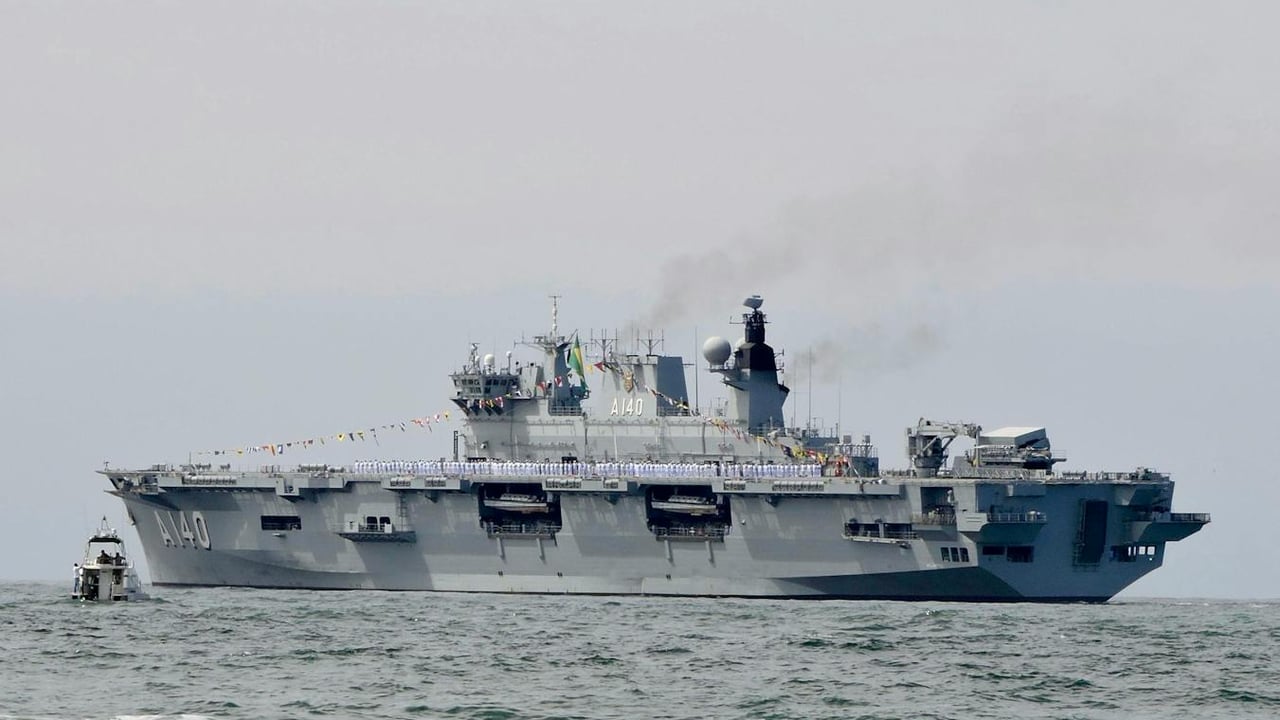

The maritime landscape of the Middle East has shifted into a posture of unprecedented military pressure as a third U.S. aircraft carrier strike group enters the region. The arrival of the USS George H.W. Bush in the Indian Ocean, joining the USS Gerald R. Ford and the USS Abraham Lincoln already stationed in the Red Sea and Arabian Sea, creates a concentrated naval presence rarely seen outside of major conflict scenarios. This surge in power projection signals a decisive move by the Trump administration to move beyond traditional containment toward a more active and coercive stance against Tehran.
From Washington, the rhetoric has sharpened alongside the military hardware. President Trump’s recent assertions that "time is ticking" for the Islamic Republic suggest a timeline for diplomatic or economic concessions is rapidly closing. By framing the situation as an urgent countdown, the U.S. is effectively eliminating the ambiguity that previously characterized its regional deterrence. This creates a volatile environment where tactical movements of carrier groups are no longer viewed as routine rotations but as precursors to potential kinetic action.
In Jerusalem, the mood has turned toward the existential. Defense Minister Katz has signaled that the Israel Defense Forces are in a state of maximum readiness, awaiting only a "green light" from Washington to initiate a comprehensive military campaign. Unlike previous limited strikes on proxy infrastructure, the current Israeli doctrine appears to target the heart of the Iranian state. Katz’s threats to strike energy grids, economic lifelines, and the potential successors of the current leadership indicate a strategy designed to induce systemic regime collapse rather than mere tactical delay.
Tehran, meanwhile, has responded with its traditional doctrine of "active resistance," emphasizing that its defense industries and strategic reserves are insulated from external shocks. The Iranian Ministry of Defense continues to project a narrative of self-sufficiency, claiming that its production lines for high-end munitions and defensive systems remain operational despite the looming threat. However, the convergence of three U.S. carrier strike groups presents a technological and logistical challenge that may test the limits of Iran’s conventional and asymmetric capabilities.