
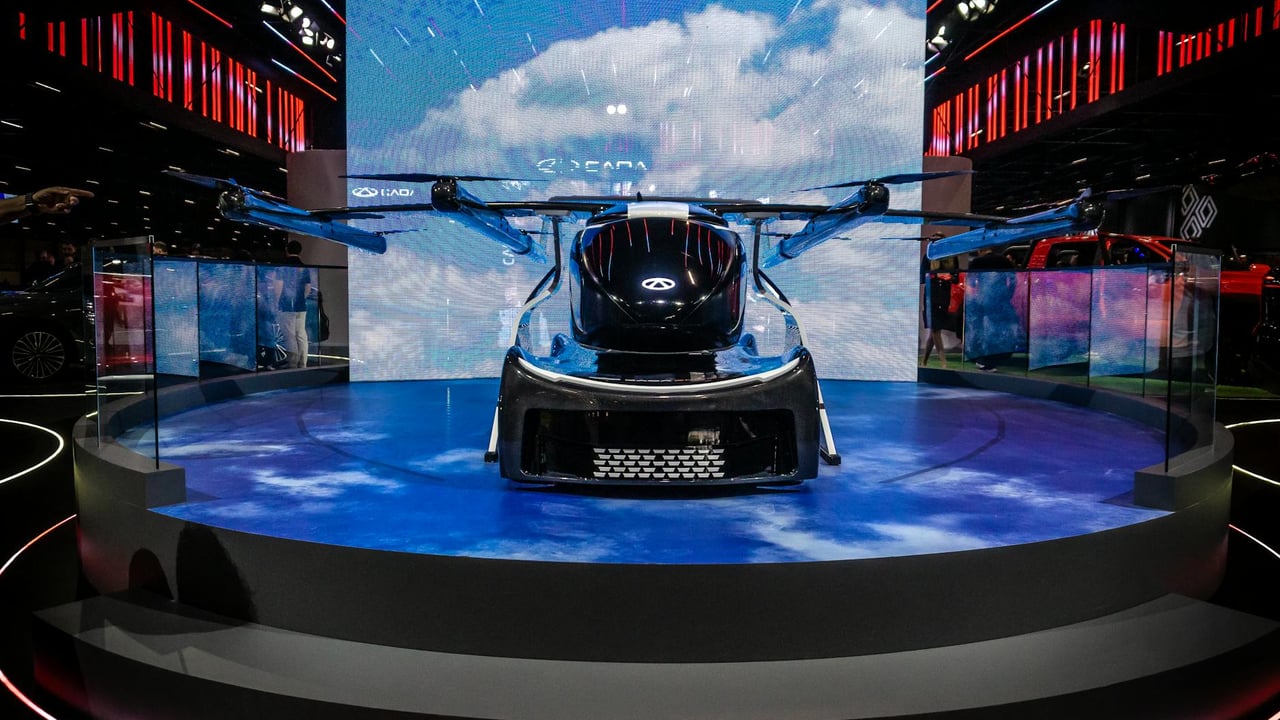

The 2026 Beijing International Automotive Exhibition marks a watershed moment in the global automotive hierarchy, characterized by a striking demographic shift on the showroom floor. No longer is the event merely a domestic showcase; roughly one in four attendees now sports an international face. These global executives, engineers, and distributors are not here to sell—they are here to study, meticulously documenting the innovations of Chinese 'new force' manufacturers with tablets and business cards in hand.
The gravitational center of the show has shifted decidedly toward brands like HarmonyOS Intelligent Mobility (HIMA) and Xiaomi. While traditional competitors argue over horsepower and leather quality, Huawei-backed HIMA is playing a different game entirely: a battle for the operating system. By integrating the HarmonyOS ecosystem and 'Qiankun' intelligent driving, Huawei is attempting to replicate Apple’s iOS dominance, securing high-profit margins by controlling the software architecture that governs the vehicle's soul.
Other domestic players are carving out distinct strategic moats that defy simple sales rankings. XPeng is pushing the boundaries of artificial intelligence and low-altitude mobility with its VLA architecture and flying cars, while Xiaomi leverages its massive 'Human-Car-Home' ecosystem to turn the vehicle into a 24-hour data portal. Meanwhile, Leapmotor has found success in the 'unsexy' but vital sector of cost management, utilizing its partnership with Stellantis to offer high-tech features like LiDAR at price points that baffle international observers.
Foreign observers are segmented into distinct groups: the 'copycats' trying to understand how China squeezed out such high tech at such low costs, the 'scouts' assessing whether European and American consumers will soon demand the same AI-integrated cockpits, and the 'dealers' looking to bring these disruptors to local markets. For many, the presence at these booths is an admission of an existential threat. The intensity of foreign interest in a brand is now a direct barometer of how much that brand threatens the established global automotive order.
As the industry enters this new era, the old 'NIO-XPeng-Li' (Wei-Xiao-Li) hierarchy has dissolved into a more complex landscape of divergent paths. Success is no longer measured solely by quarterly deliveries, but by who controls the infrastructure, the ecosystem, and the technological standards of the future. The Beijing Auto Show confirms that Chinese manufacturers are no longer just participating in the race; they are building the track on which everyone else must now run.