Challenging the 'Bunker Buster': Iran Claims Neutralization of America’s Most Formidable Conventional Bombs

The IRGC claims to have destroyed three US GBU-57 bunker busters and dismantled a fourth recovered in Zanjan province. This highlights a potential challenge to the US military's primary tool for striking hardened Iranian nuclear facilities.

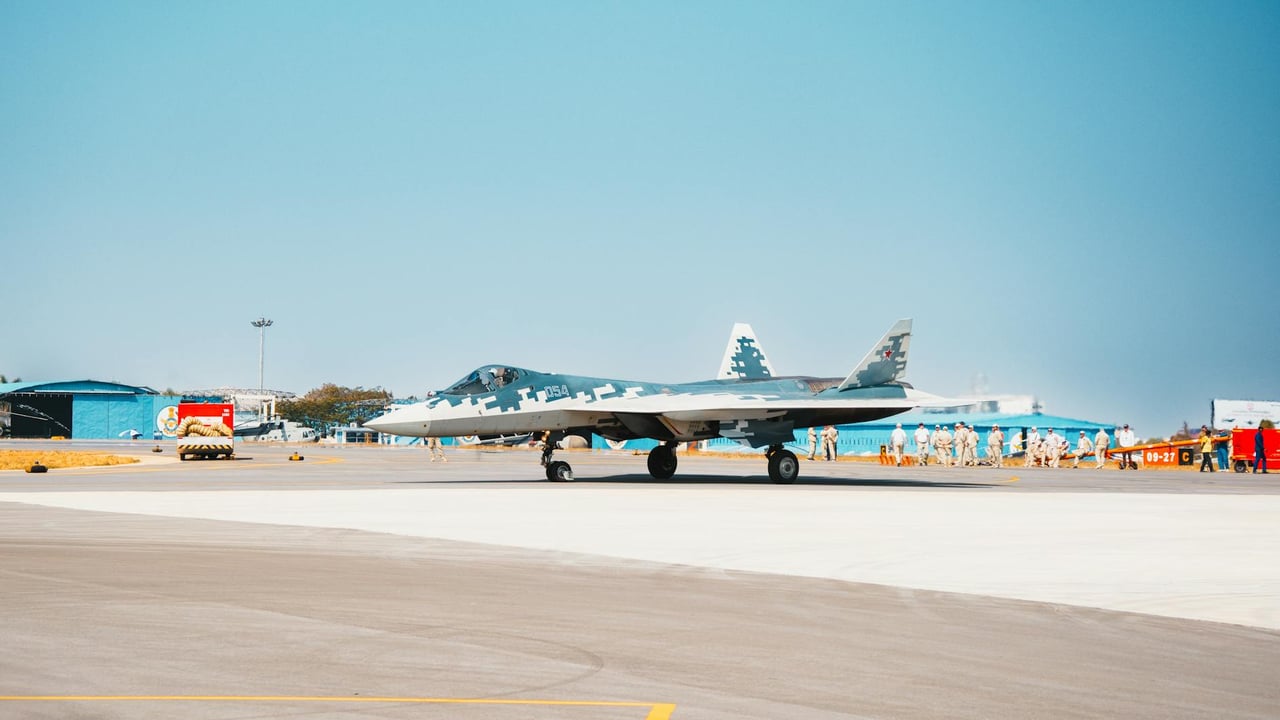
A Sukhoi Su-57 fighter jet stationed on a military airfield runway.

Key Takeaways

  • 1IRGC claims to have neutralized four GBU-57 Massive Ordnance Penetrators in total.
  • 2One unit was reportedly captured and dismantled in Zanjan province, suggesting a failure in the weapon's deployment.
  • 3The GBU-57 is the heaviest conventional bomb in the US arsenal, specifically designed to hit deep underground targets.
  • 4This claim undermines the perceived 'invincibility' of US precision strikes against Iranian infrastructure.
  • 5The report suggests ongoing high-intensity military engagements between the US and Iran through 2026.

Editor's
Desk

Strategic Analysis

The capture of an intact GBU-57 represents a potential intelligence catastrophe for the United States. Beyond the immediate propaganda value for the IRGC, a recovered MOP allows Iranian and potentially allied engineers (such as those from Russia or China) to study the metallurgy, guidance systems, and fuse sensors of the Pentagon's premier deep-strike asset. If Iran has indeed found a way to intercept or cause these bombs to fail, the entire US strategy for 'denying' Iran a nuclear shield through conventional force may need to be recalibrated. This narrative of technical defiance is likely intended to project a sense of security to the Iranian public while signaling to Washington that its most expensive conventional deterrent is no longer a guaranteed solution.

China Daily Brief Editorial
Strategic Insight
China Daily Brief

The Iranian Islamic Revolutionary Guard Corps (IRGC) has made a provocative claim regarding the efficacy of the United States’ most powerful non-nuclear weapon. According to state-affiliated reports, IRGC special forces successfully destroyed three GBU-57 Massive Ordnance Penetrators (MOP) and recovered a fourth unexploded unit in the Zanjan province. This development, if verified, represents a significant escalation in the technical and psychological warfare defining the current conflict.

The GBU-57, weighing 30,000 pounds, is a specialized 'bunker buster' designed for a singular purpose: the destruction of deeply buried and hardened targets that are unreachable by standard munitions. Its deployment has been a cornerstone of the Pentagon’s strategy to deter Iran’s nuclear ambitions, specifically targeting facilities like Fordow which are encased deep within mountain ranges. The weapon is intended to penetrate up to 200 feet of reinforced concrete before detonating.

The recovery of an intact GBU-57 in Zanjan—a province located in northwestern Iran—raises urgent questions about the operational success of recent U.S. sorties. While the U.S. has utilized these heavy munitions in campaigns throughout 2025 and 2026, the claim that Iran can 'dismantle' such sophisticated ordnance suggests a sophisticated level of explosive ordnance disposal (EOD) capability or a potential failure in the weapon's trigger mechanisms.

For Tehran, the publicizing of this military achievement serves as a powerful signal of resilience to both domestic audiences and international adversaries. By demonstrating that even the 'ultimate' conventional threat can be neutralized or captured, the IRGC seeks to erode the credibility of the U.S. military deterrent. It further hints at a possible intelligence or electronic warfare breakthrough that may have interfered with the precision-guided delivery of these massive assets.

Share Article

Related Articles

📰
No related articles found