
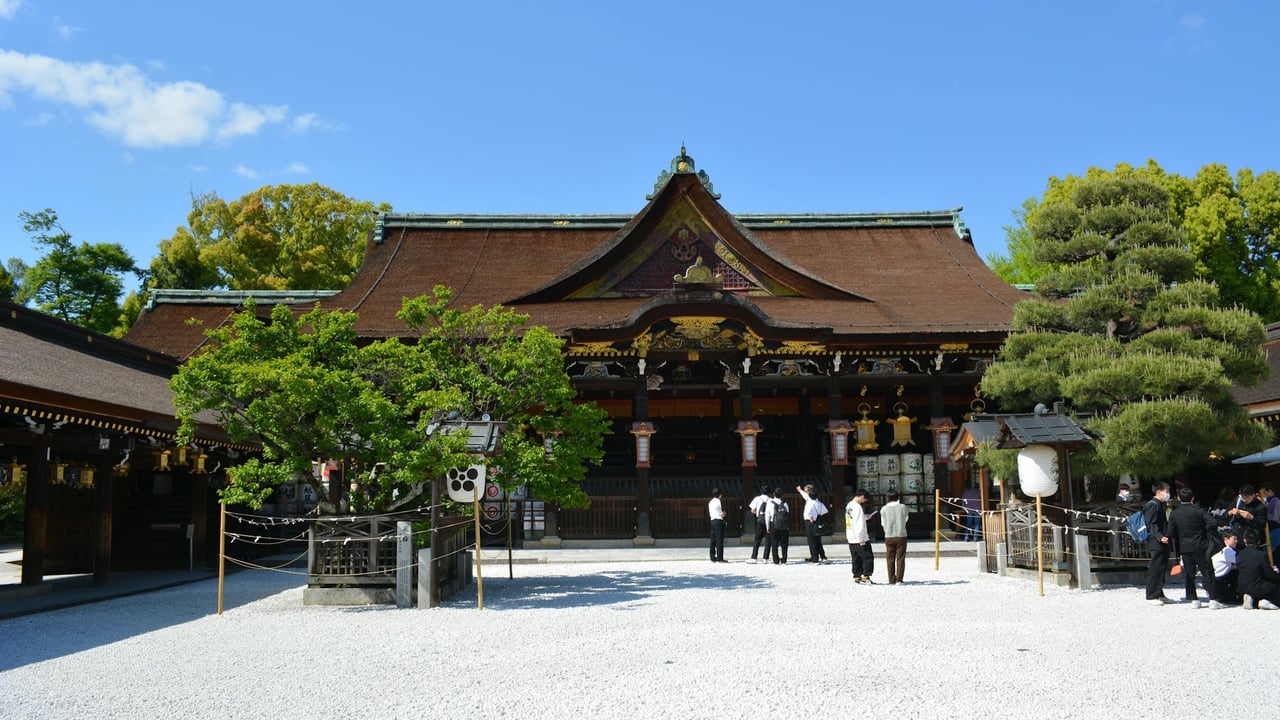

The administration of Prime Minister Sanae Takaichi has enacted a series of policy shifts that represent the most significant departure from Japan’s post-war pacifist tradition in decades. By simultaneously paying tribute to the controversial Yasukuni Shrine and authorizing the export of lethal military hardware, Tokyo is signaling a decisive move toward becoming a 'normal' military power. This dual-track strategy aims to consolidate the domestic conservative base while fundamentally re-engineering Japan’s role in the global security architecture.
Central to this transformation is the recent modification of the 'Three Principles on Defense Equipment and Technology Transfer.' For the first time since 1945, Japan has formally permitted the export of lethal weaponry to seventeen partner nations, effectively ending the era where Japanese defense contractors were limited to providing non-combat support. This regulatory overhaul transitions the nation from a producer of 'shields' to a supplier of 'spears,' allowing for the sale of advanced frigates, missiles, and components to allies including the United States and Australia.
While the defense pivot addresses contemporary security challenges, it is deeply entwined with historical revisionism. The Takaichi administration’s decision to send ritual offerings to the Yasukuni Shrine—where fourteen Class-A war criminals are interred—has reignited diplomatic friction with Beijing and Seoul. Analysts suggest this is a 'low-intensity' form of political provocation designed to honor the nation's wartime past without triggering the catastrophic diplomatic fallout seen during former Prime Minister Shinzo Abe’s 2013 visit.
Beyond hardware and heritage, the Takaichi government is centralizing the nation’s intelligence apparatus with the creation of a 'National Intelligence Agency.' Modeled after the CIA, this body aims to unify security data and counter-intelligence efforts under the direct control of the Prime Minister’s office. However, the move has drawn sharp criticism from civil rights groups and opposition lawmakers who fear a resurgence of pre-war surveillance tactics and the erosion of transparency in military decision-making.
Japan’s Self-Defense Forces are also undergoing a structural modernization to integrate more closely with U.S. military operations. New specialized units for space, cyber, and information warfare are being established to act as force multipliers for the alliance in the Indo-Pacific. By expanding its reach into orbit and the digital domain, Tokyo is positioning itself as a vital 'sentinel' for Western interests, further blurring the lines of the constitutionally mandated 'purely defensive' posture.
The ultimate goal of these incremental changes appears to be the revision of Article 9 of the Japanese Constitution. Prime Minister Takaichi has explicitly signaled her intent to redefine Japan’s legal framework to officially recognize the military’s right to engage in warfare. If successful, this would represent the final brick in the wall of Japan’s re-militarization, potentially shifting the regional balance of power and increasing the risk of an arms race in East Asia.