
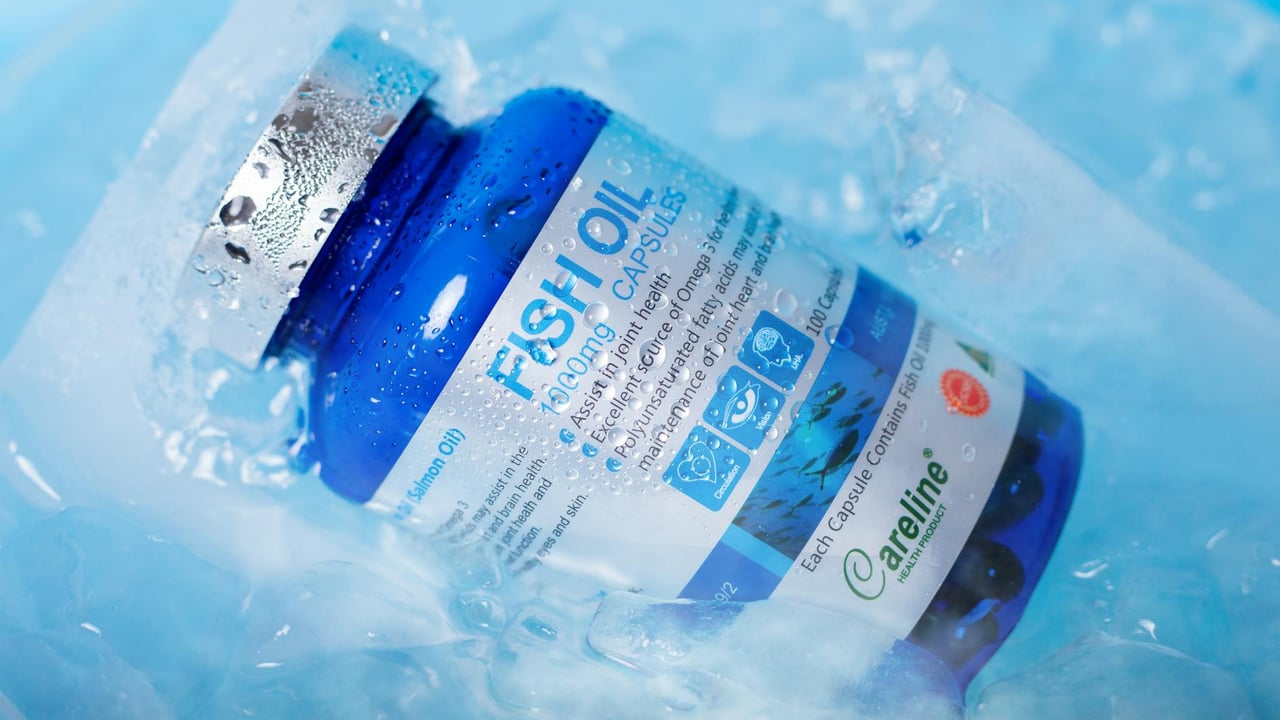

The recent fall from grace of the 'fish oil' market in China illustrates a recurring pathology within the country’s multi-trillion-yuan wellness industry. What was once hailed as a 'miracle drug' for cardiovascular health has been unmasked as a sophisticated landscape of rebranded failures and 'fake foreign' identities. The scandal centers on the brand Okiss, which has surged back to the top of e-commerce charts despite being linked to a previous entity caught selling plant oil disguised as premium deep-sea fish oil.
Investigations by state media revealed that several top-selling 'Omega-3' supplements contained virtually no EPA or DHA, the core active ingredients derived from fish. In some instances, products claiming 95% purity—surpassing even pharmaceutical-grade standards—were found to be nothing more than common vegetable oil packaged as candy. Despite these exposures and subsequent regulatory crackdowns, the underlying companies simply cycle through new brand names and logos to continue their lucrative operations.
This cycle of 'rebranding' is fueled by a mature grey-market infrastructure that allows domestic firms to masquerade as prestigious international brands. For a fee of roughly 20,000 to 50,000 RMB, intermediaries provide 'all-in-one' services including overseas trademark registration, forged health permits, and 'cross-border tourism' shipping routes. By routing domestic goods through bonded warehouses, companies can legally claim products are 'imported,' allowing a 20 RMB bottle of capsules to retail for as much as 899 RMB.
The structural vulnerability of the market lies in the dominance of Original Equipment Manufacturers (OEMs), who handle production for over 70% of the industry. This outsourcing allows brands to operate without any proprietary technology or manufacturing facilities, focusing instead on aggressive marketing and 'health narratives.' These narratives exploit deep-seated anxieties regarding aging and chronic illness among China's middle class, turning scientific jargon into a tool for financial extraction.
While regulators have penalized thousands of firms and levied millions in fines, the market is projected to reach 5.8 trillion RMB by 2025. The high profit margins significantly outweigh the risk of administrative penalties, creating a 'whack-a-mole' environment where disgraced products are never truly eliminated. As long as the demand for 'health in a bottle' remains high and trust in domestic standards remains low, the cycle of deceptive rebranding will likely persist.