Alibaba Cloud Pushes Industrial AI into the Green Sector via Dynagreen Partnership

Alibaba Cloud and Dynagreen have launched a strategic partnership to deploy AI agents in waste-to-energy plants. By utilizing the Tongyi Qianwen large language model, the companies aim to optimize waste incineration and export these smart green-tech solutions to international markets.

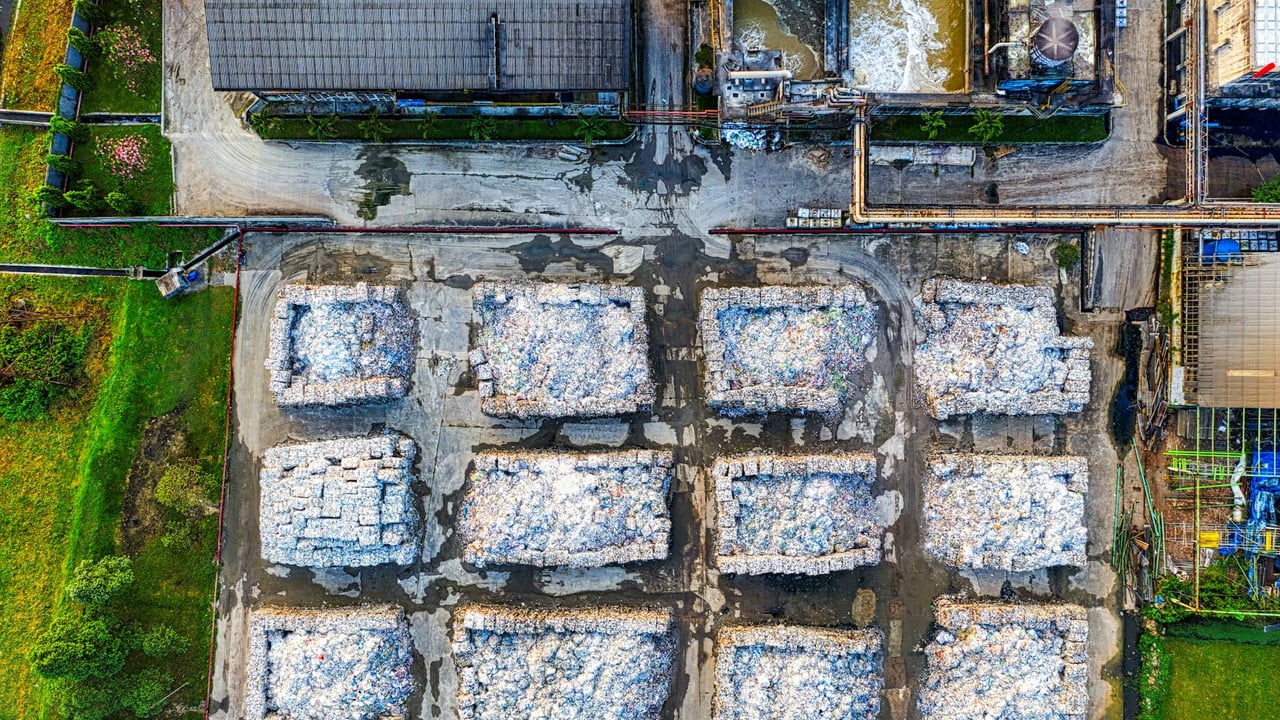
Aerial shot of a waste processing plant in Serang, Banten, Indonesia showcasing industrial operations.

Key Takeaways

  • 1Dynagreen and Alibaba Cloud are collaborating on full-stack AI for solid waste power plants.
  • 2A specialized 'Smart Control' AI agent has been developed based on the Tongyi Qianwen (Qwen) model.
  • 3The partnership focuses on intelligent facility upgrades and the creation of industry-specific AI agents.
  • 4Both companies intend to leverage this technology for overseas business expansion and global waste management projects.
  • 5The deal highlights the shift toward applying generative AI to industrial efficiency and environmental sustainability.

Editor's
Desk

Strategic Analysis

This partnership represents the second wave of the generative AI revolution in China: the transition from 'general intelligence' to 'industrial intelligence.' For Alibaba Cloud, these deep-tier industrial integrations are vital for maintaining market share against state-owned rivals and competitors like Huawei. By embedding the Qwen model into the critical infrastructure of waste-to-energy plants, Alibaba is moving its AI from the periphery of the office to the core of the factory floor. For the waste-to-energy sector, which often struggles with the volatile quality of solid waste feedstocks, AI offers a precision-level control that was previously impossible. Looking forward, the 'exportability' of this AI-integrated green tech is a strategic play, allowing China to offer a turnkey, intelligent energy solution to BRI (Belt and Road Initiative) partners that combines hardware with sophisticated digital governance.

China Daily Brief Editorial
Strategic Insight
China Daily Brief

Alibaba Cloud has entered a comprehensive 'full-stack' AI partnership with Dynagreen Environmental Protection Group, a major player in China’s waste-to-energy sector. This collaboration marks a significant move to integrate generative AI and large language models (LLMs) into the operations of solid waste power plants. The two entities will focus on three primary pillars: the intelligent upgrade of waste-to-energy facilities, the development of industry-specific AI agents, and the joint pursuit of international market opportunities.

At the heart of this partnership is the deployment of a 'Smart Control' AI agent built on Alibaba’s proprietary Tongyi Qianwen (Qwen) model. Unlike traditional automation, this AI agent is designed to manage the complexities of solid waste incineration, optimizing combustion processes in real-time to maximize energy output while minimizing harmful emissions. By shifting from manual or rigid rule-based systems to dynamic AI-driven control, Dynagreen seeks to significantly enhance its operational efficiency across its portfolio of power plants.

This move signals a strategic pivot for Alibaba Cloud as it seeks to monetize its AI capabilities within China’s industrial backbone. Rather than focusing solely on consumer-facing chatbots, Alibaba is increasingly targeting 'vertical' industrial applications where high-stakes decision-making and efficiency gains can justify the high costs of cloud computing and model training. The integration of the Qwen model into heavy industry showcases the maturity of Chinese LLMs in handling structured and semi-structured industrial data.

Beyond domestic operations, the partnership has a clear eye on the global stage. As developing nations look to modernize their waste management infrastructure, the 'AI-plus-Green' model developed by Dynagreen and Alibaba offers a high-tech export. This aligns with China’s broader strategy of exporting 'New Three' (renewables, EVs, and batteries) and related digital infrastructure, positioning Chinese firms as leaders in the global transition toward smart, sustainable energy.

Share Article

Related Articles

📰
No related articles found