

While the global spotlight has been fixated on large language models and the software side of artificial intelligence, a more physical revolution is quietly gaining momentum in China's industrial parks. In a recent half-marathon held in Beijing’s Yizhuang district, the 'Lightning' humanoid robot stunned observers by completing the course in just over 50 minutes. This feat did more than just break the previous record of two hours and forty minutes; it surpassed the human world record, signaling that the mechanical constraints of humanoid locomotion are being dismantled at an unprecedented pace.
This athletic achievement serves as a high-stakes stress test for the burgeoning industry. A 21-kilometer race is not merely a show of speed; it is a rigorous validation of integrated systems, including motor durability, battery management, and real-time autonomous navigation. Last year, the industry’s benchmark was simply finishing the race. Today, the focus has shifted to high-load reliability and mechanical synergy, suggesting that the upstream supply chain for core components is finally reaching maturity.
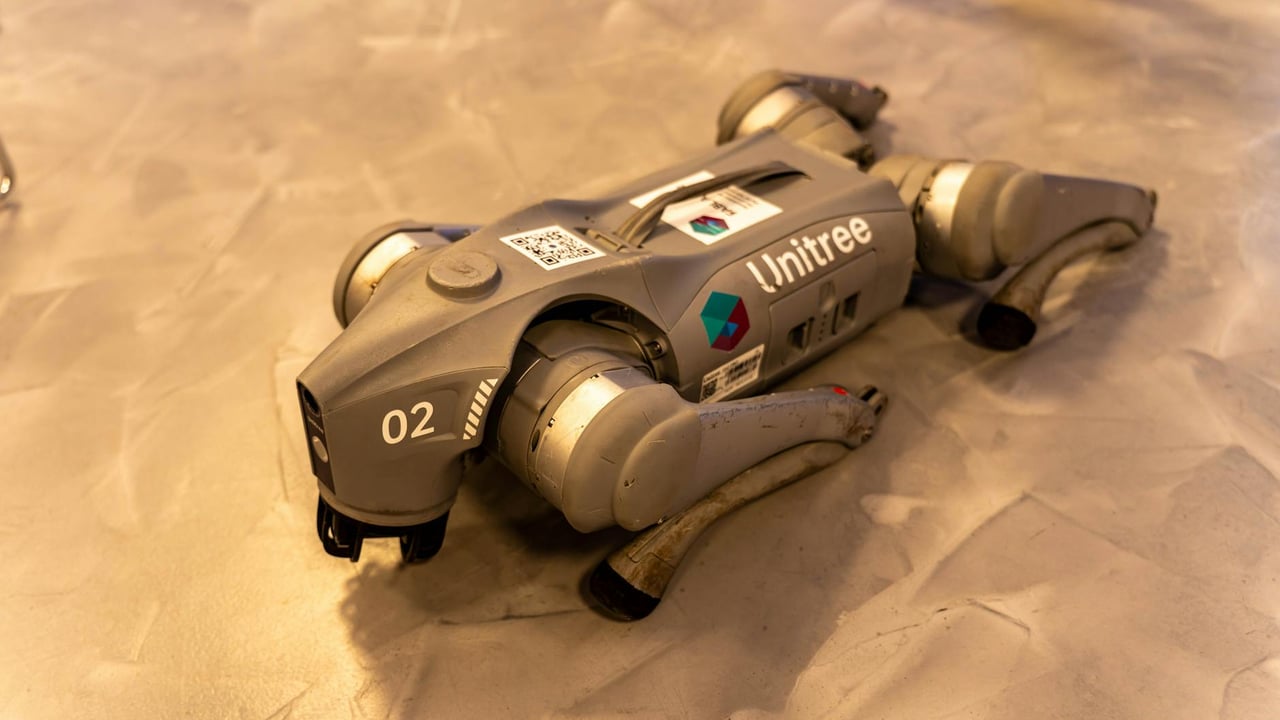
Beyond the racetrack, the transition from experimental prototypes to commercial scale is becoming visible in corporate balance sheets. Leading Chinese firms such as Agibot and Unitree have reportedly crossed the threshold of 5,000 units in annual shipments for 2025. While these robots are currently deployed in niche sectors like education, guided tours, and exhibitions, the leap into four-digit production volumes marks the end of the 'lab phase' and the beginning of the 'validation phase' for mass manufacturing.
Agibot, a rising star in the sector, has laid out an aggressive roadmap that mirrors the explosive growth seen in China’s electric vehicle industry. The company projects revenue to reach 10 billion RMB by 2027, scaling to a staggering 100 billion RMB by 2030. These figures reflect a deep-seated confidence among domestic manufacturers that the cost-curve of humanoid robots is about to collapse, much as it did for solar panels and lithium-ion batteries over the previous decade.
Despite this industrial acceleration, a curious disconnect remains between factory progress and stock market performance. The robotics sector has seen cooling sentiment in early 2026, largely due to a mismatch between long-term industrial cycles and short-term capital appetites. Investors currently favor immediate earnings, while robotics remains in a heavy-investment, pre-profit stage. However, for those tracking the 'Optimus' era, this period of cooling may represent a tactical entry point as the structural pieces of the humanoid economy—from harmonic reducers to sensory arrays—fall into place.