
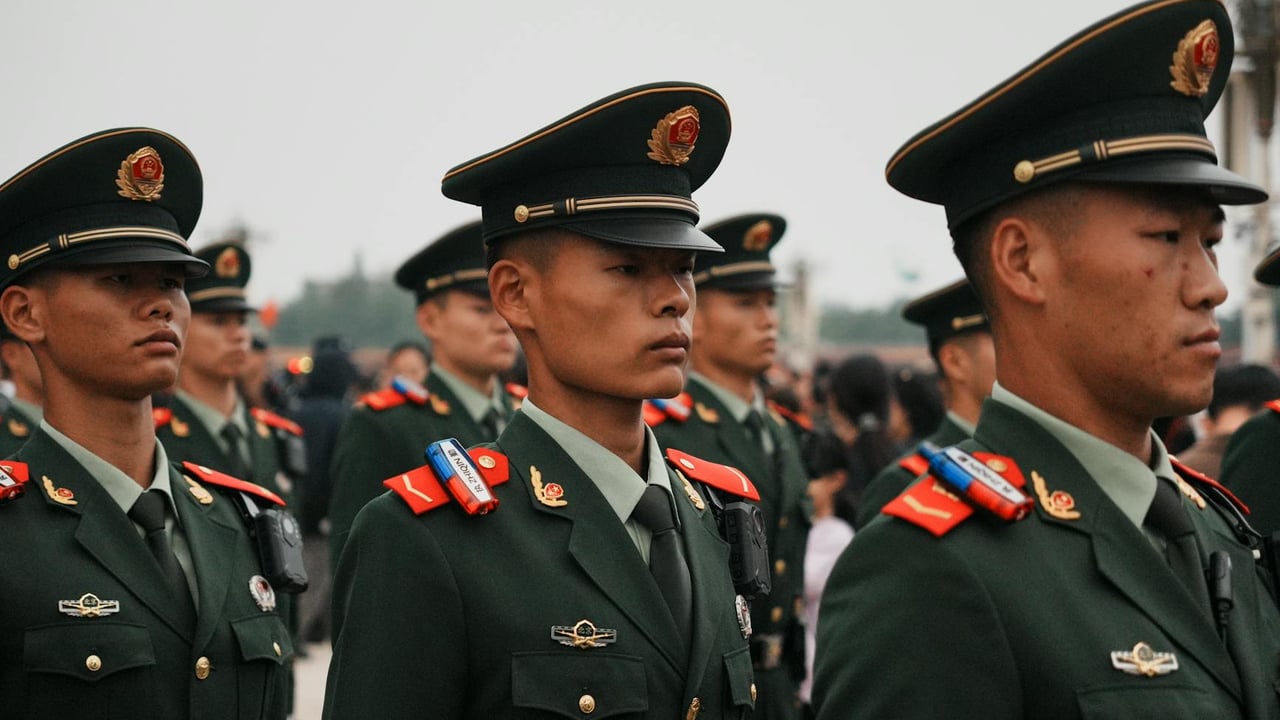

Deep within the dense, unfamiliar terrain of China’s interior, the 77th Group Army of the People’s Liberation Army (PLA) recently concluded a series of high-intensity penetration and assault drills. These maneuvers represent a significant departure from the highly choreographed training sessions of the past, signaling a shift toward a more agile and unpredictable combat doctrine. By focusing on 'all-element' integration, the reconnaissance units are being forced to navigate the fog of war in real-time.
The centerpiece of this evolution is the removal of the traditional 'script.' In these latest exercises, commanders were given no advance notice and no pre-arranged narrative, forcing small-unit leaders to rely on their own initiative and real-time intelligence. This shift reflects a broader mandate from the Central Military Commission to eliminate 'formalism' in training and prepare for the chaotic realities of modern, decentralized battlefields.
Technological empowerment played a critical role in the exercise, with unmanned aerial vehicles (UAVs) providing what the PLA calls 'precision empowerment.' These drones were not merely used for surveillance but were integrated into the tactical flow, feeding data directly to assault teams to coordinate strikes. This fusion of human reconnaissance and robotic sensing highlights the PLA's commitment to 'intelligentized' warfare, where data dominance is as vital as firepower.
Operating under the Western Theater Command, the 77th Group Army is often tasked with mastering difficult, mountainous environments that characterize China's border regions. These drills suggest a maturing of the PLA’s middle-management—the junior officers and non-commissioned officers—who must now manage complex assets like UAVs and electronic warfare tools simultaneously. The goal is to transform these reconnaissance units into 'sharp blades' capable of independent operation behind enemy lines.