
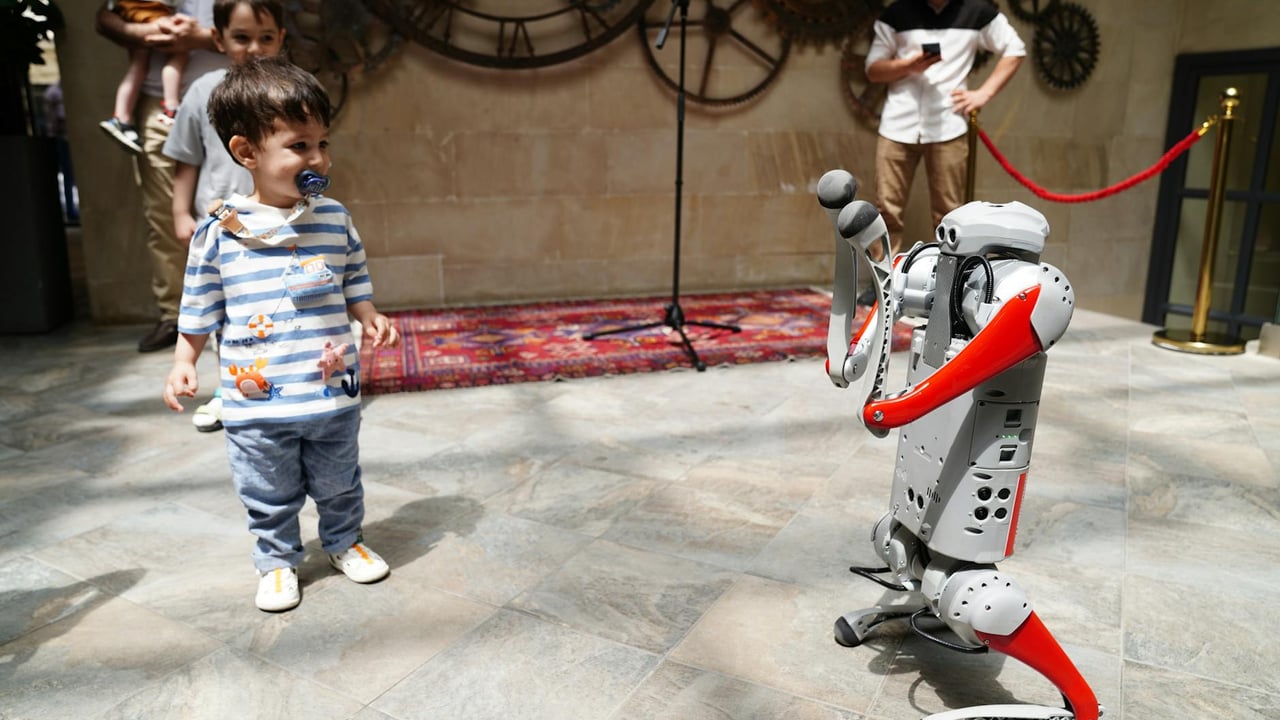

The boundary between science fiction and consumer reality continues to blur in the heart of Beijing. Unitree Robotics, a leader in the field of embodied AI, has officially opened its first flagship retail store in the prestigious Wangfujing In88 shopping mall. This strategic move places humanoid robots and advanced quadrupeds alongside high-end electric vehicle showrooms and smartphone flagships, signaling a new era where robots are marketed as lifestyle consumer electronics rather than industrial tools.
Positioned in a high-traffic zone previously occupied by a luxury jewelry boutique, the store is surrounded by heavyweights like Huawei and Huawei-backed EV brands AITO and Luxeed. By choosing the 'May Day' holiday for its public debut, Unitree is betting on the curiosity of mainstream domestic tourists to drive brand awareness. The company is even recruiting 'product consultants' with competitive salaries and experience in consumer electronics, further emphasizing the transition from deep-tech engineering to retail-oriented customer service.
This Beijing opening is merely the spearhead of a broader nationwide expansion. Following existing partnerships in Wuhan and a joint venture at the JD MALL in Beijing's Chaoyang district, Unitree is preparing to launch its 'Asia First' flagship in Shanghai’s elite Jing’an district next month. These physical touchpoints serve a dual purpose: they demystify the technology through live demonstrations of robot boxing and dancing, while simultaneously shortening the sales cycle by allowing customers to purchase high-end models like the Go2 directly through integrated digital mini-programs.
On the technical front, Unitree is aggressively lowering the barrier to entry with the R1 humanoid robot, priced at a relatively accessible 39,900 RMB (approximately $5,500). Meanwhile, its flagship H2 model showcases the upper limits of Chinese robotics, featuring bionic facial expressions, 31 high-precision joints, and the ability to perform complex household tasks. These machines are increasingly integrated with Large Language Models (LLMs), enabling low-latency decision-making and fluid interaction that mimic human responses.
Financially, the company’s trajectory is as steep as its technological evolution. Unitree recently applied for an IPO on the Shanghai Stock Exchange’s STAR Market, aiming to raise 4.2 billion RMB to become the first 'humanoid robot stock' in the A-share market. With a reported 2025 revenue of 1.7 billion RMB—a staggering 335% year-on-year increase—the company is proving that the nascent market for embodied intelligence is no longer just a venture capital dream but a rapidly scaling commercial reality.