
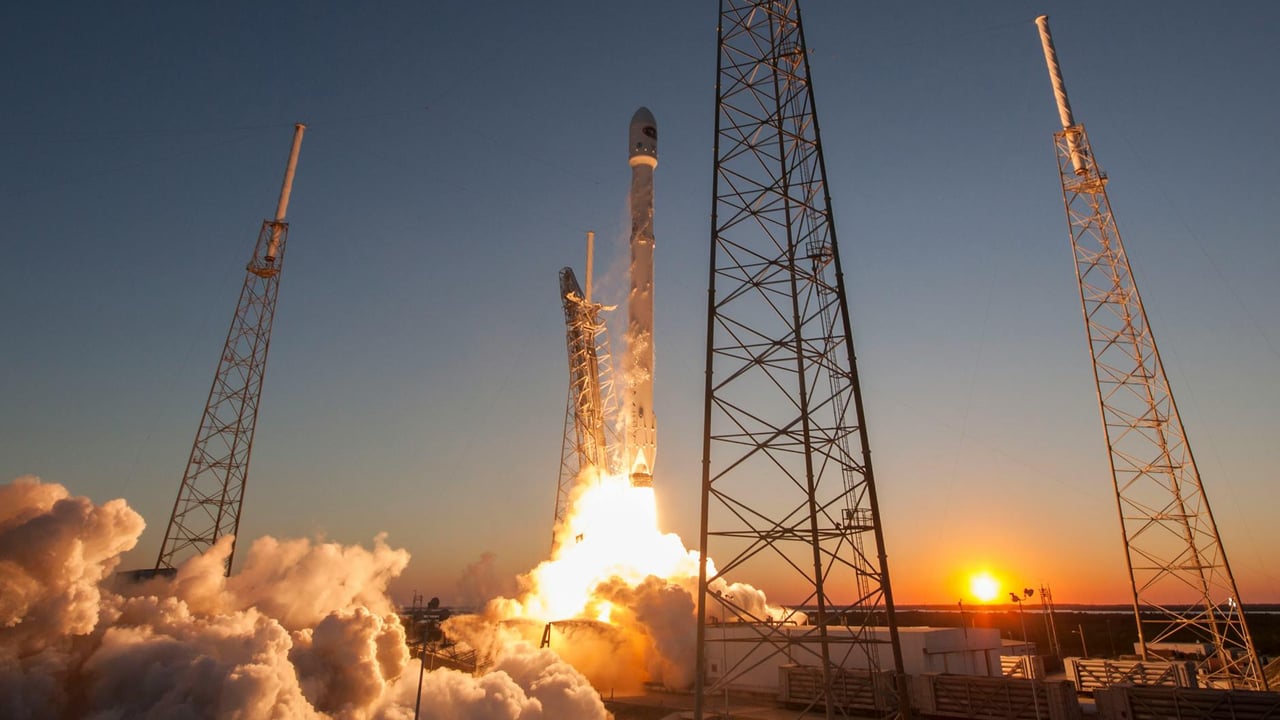

SpaceX has once again demonstrated the operational maturity of its Falcon Heavy launch vehicle, successfully deploying the ViaSat-3 F3 communication satellite into a geostationary transfer orbit. This mission represents a pivotal moment for Viasat, the American satellite communications giant, as it seeks to expand its high-capacity broadband network across the globe. The launch underscores the ongoing shift toward ultra-high-throughput satellites that require the massive lift capacity unique to the Falcon Heavy's triple-booster configuration.
The ViaSat-3 constellation is designed to deliver unprecedented data capacity, with each satellite expected to provide over one terabit per second of total network throughput. This infrastructure is essential for meeting the burgeoning demand for high-speed internet in the aviation, maritime, and defense sectors, where reliable connectivity was once a luxury. By placing these massive payloads into precise orbits, SpaceX continues to lower the barrier for commercial enterprises to establish dominant positions in the orbital economy.
While the space industry is increasingly focused on the development of next-generation rockets like Starship, the Falcon Heavy remains a critical asset for missions that require a balance of extreme power and proven reliability. This launch highlights SpaceX's ability to maintain a high cadence of complex missions while its competitors struggle to bring comparable heavy-lift alternatives to market. For the broader telecommunications industry, the success of this mission signals a new era of global connectivity where bandwidth constraints are increasingly a thing of the past.
Furthermore, the mission reflects the deepening synergy between private launch providers and established satellite operators. As the U.S. commercial space sector continues to outpace international rivals in launch frequency and cost-efficiency, it creates a self-reinforcing cycle of investment and technological advancement. This dominance in the heavy-lift category remains a cornerstone of American strategic influence in the rapidly evolving space domain.