
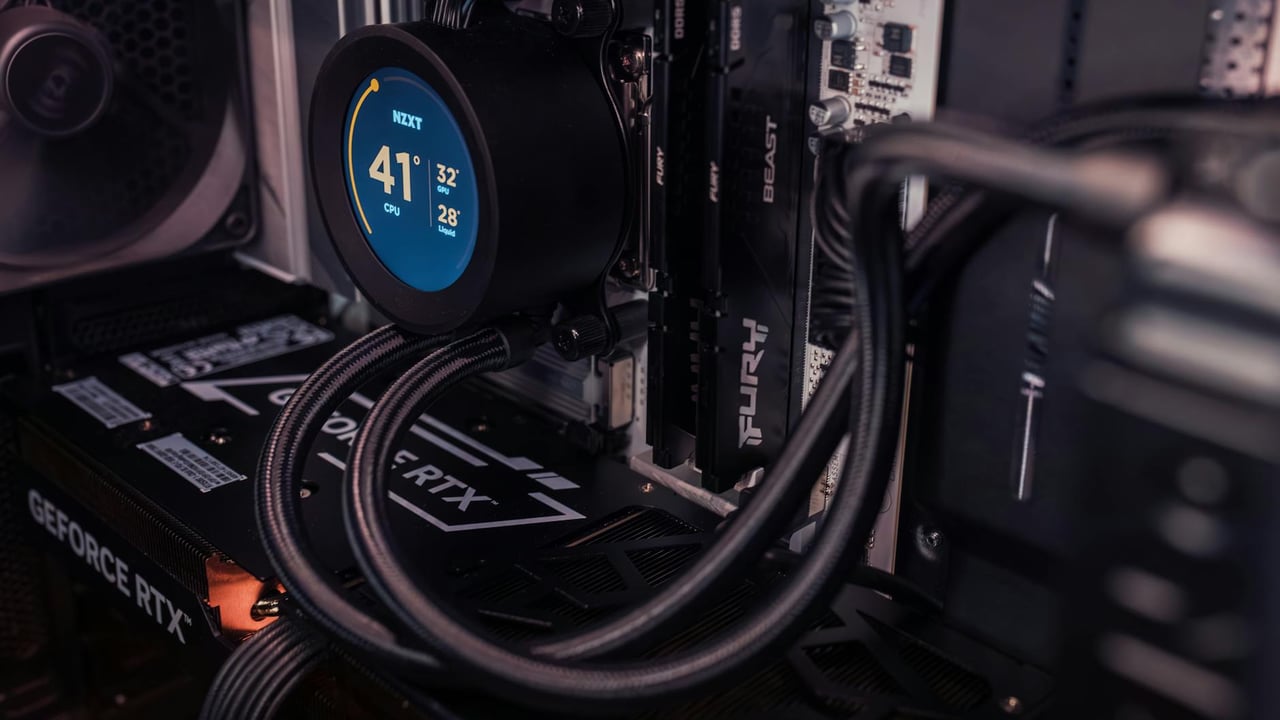

For the past two years, the global artificial intelligence narrative has been dominated by a single piece of silicon: the Graphics Processing Unit (GPU). As Nvidia’s valuation soared and startups scrambled for high-end compute, the GPU became the 'hard currency' of the digital age. In this high-stakes arms race, whoever owned the most chips was seen as the inevitable victor, leaving the Central Processing Unit (CPU) to linger in the shadows as a legacy component of the server rack.
However, as we move into 2026, this 'GPU-only' myth is beginning to fracture. The AI industry is undergoing a profound structural shift as the primary battlefield moves from a race to train models to a race to deploy them. The focus of the industry is pivotally swinging from peak compute performance toward overall system efficiency. This change signals that the speed of AI commercialization will no longer be determined by how large a model can be trained, but by how cost-effectively and reliably it can be run.
Market signals are already reflecting this transition. Intel’s Q1 2026 earnings surprised analysts with a 22% growth in its Data Center and AI (DCAI) division, as investors began to realize that the demand structure for AI infrastructure is diversifying. Deployment ratios of CPUs to GPUs in data centers are tightening from the traditional 1:8 toward 1:4, and in some 'AI Agent' scenarios, they are approaching parity. The market is finally repricing the CPU not as a relic, but as the critical system variable that determines Return on Investment (ROI).
The logic behind this shift is grounded in the harsh reality of operational expenses. While training is a one-time capital expenditure, inference—the act of running a model—is a continuous cost. By some estimates, inference will account for two-thirds of total AI compute demand by late 2026. For major players, the core problem is no longer 'raw power' but the 'utilization trap,' where expensive GPUs sit idle because data loading and system orchestration—tasks handled by the CPU—cannot keep pace.
The rise of AI Agents has accelerated this trend. Unlike chatbots, Agents must orchestrate complex tasks, call APIs, and manage memory, shifting the workload from pure calculation to system-level logic. Research shows that in typical Agentic workflows, up to 90% of end-to-end latency can occur at the CPU level during tool processing and data scheduling. This makes the CPU the new 'brain' of the AI system, rather than just the 'hands' feeding the GPU.
In China, the world’s most aggressive market for AI deployment, these pressures are particularly acute. With daily token usage skyrocketing into the hundreds of trillions, Chinese enterprises are hitting a 'cost wall' where AI threatens to become a profit-sinking black hole without radical architectural optimization. This is driving a domestic re-evaluation of the entire infrastructure stack, where system-wide efficiency and software-hardware synergy are becoming more valuable than the sheer number of imported accelerators.