

The global economy is teetering on the edge of a manufactured catastrophe as the continued closure of the Strait of Hormuz threatens to plunge tens of millions into extreme poverty. UN Secretary-General António Guterres issued a stark warning this week, noting that a blockade extending to mid-year could slash global growth to 2.5% while sending inflation soaring. The human cost would be staggering, with an estimated 32 million people forced into poverty and 4500 million facing acute hunger as supply chains for both energy and food collapse under the weight of geopolitical friction.
Data from the United Nations Conference on Trade and Development reveals the sheer scale of the disruption, showing a 95.3% drop in shipping traffic through the vital waterway since late February. This paralysis has already triggered a 53% surge in European crude prices and a 6% rise in global food costs. With approximately 20% of the world’s oil and gas supply currently obstructed, the International Monetary Fund has been forced to revise its global growth outlook downward to a precarious 3.1%, a figure that may still be optimistic if the maritime deadlock persists.
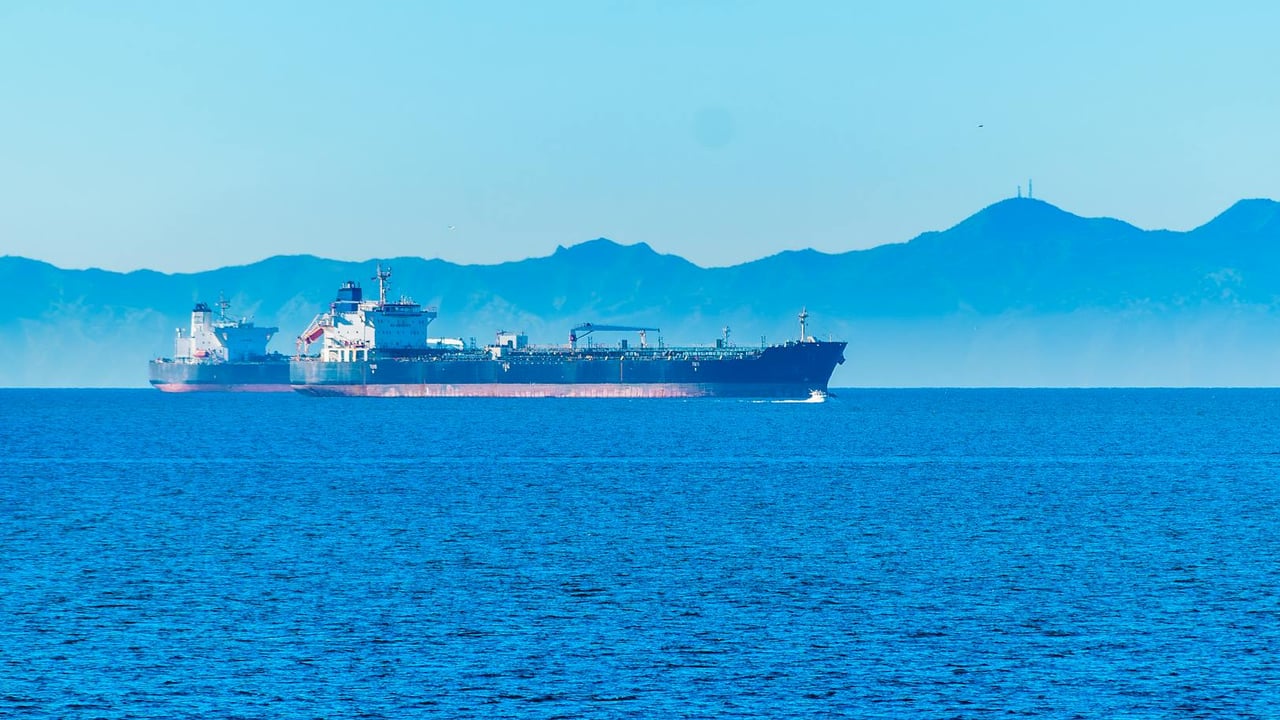
On the ground—and at sea—the signs of Iranian desperation are becoming visible through satellite imagery. With onshore storage tanks reaching maximum capacity, Tehran has been forced to reactivate decommissioned vessels to serve as floating warehouses. Among them is the Nasha, a 30-year-old Very Large Crude Carrier (VLCC) capable of holding two million barrels. This aging giant, once retired from the fleet, now sits off Kharg Island as a symbol of a domestic storage network that is rapidly hitting its physical limits.
Energy analysts at Kpler estimate that Iran’s total storage capacity will reach absolute saturation within 12 to 22 days. Beyond the use of retired tankers, Tehran is reportedly utilizing temporary containers and abandoned industrial tanks in southern hubs like Ahvaz and Asaluyeh. If these stopgap measures fail, Iran faces the grim prospect of shutting down its oil wells entirely—a move that could cause permanent geological damage to its aging fields and hinder any future production recovery.
While the United States attempts to assemble a maritime coalition to reopen the strait, Iranian President Masoud Pezeshkian has characterized the blockade as an intolerable act of economic warfare. Tehran maintains that the militarization of the region by U.S. and Israeli forces has created an environmental and navigational hazard, citing the sinking of several Iranian vessels. As both sides dig in, the Strait of Hormuz has transformed from a vital trade artery into a volatile frontline, leaving the global economy hostage to a high-stakes game of brinkmanship.