
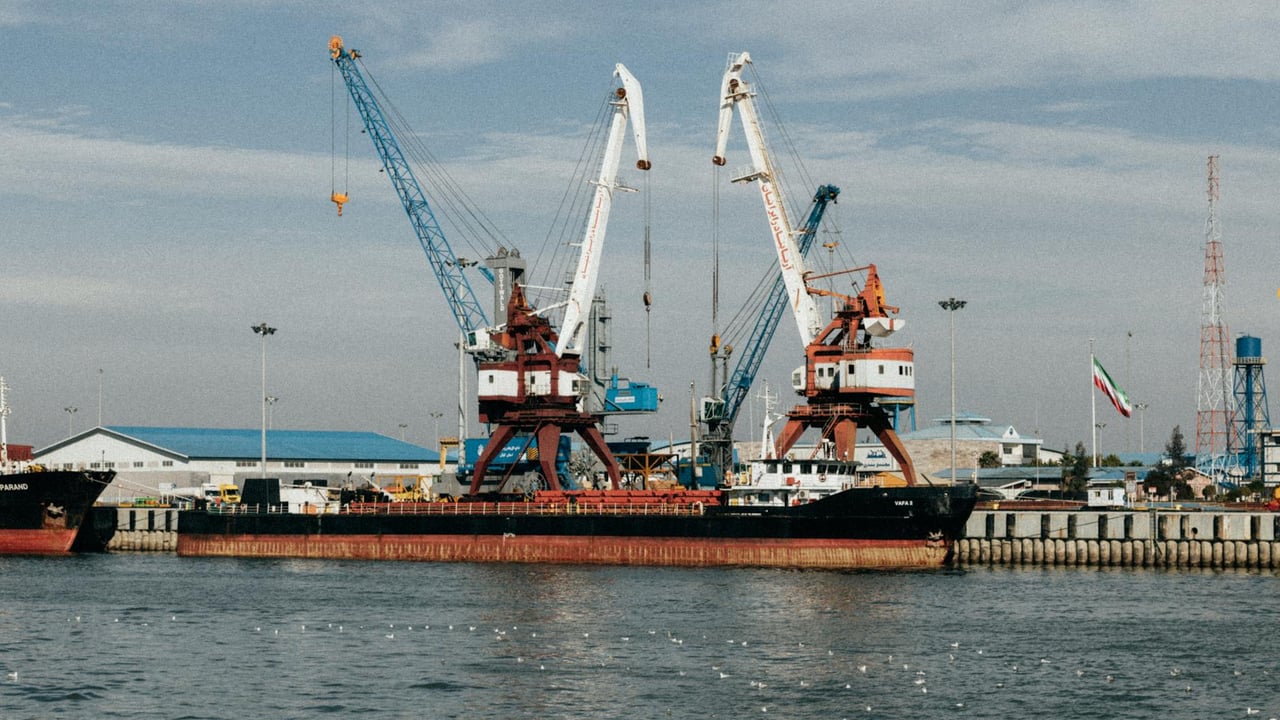

Tensions in the Persian Gulf have reached a fever pitch as the U.S. administration reaffirms a policy of maritime encirclement. By maintaining a strict blockade on Iranian waters, Washington aims to force Tehran into a comprehensive nuclear surrender that goes far beyond previous agreements. President Trump has explicitly prioritized this naval chokehold over traditional kinetic strikes, betting that economic strangulation will prove more effective than a bombing campaign.
Tehran’s response has been one of defiant escalation rather than capitulation. Senior security officials in the Islamic Republic have warned that any continued interference with passage through the Strait of Hormuz will trigger an unprecedented military response. They characterize the U.S. presence as "persistent piracy" and suggest that their previous restraint, intended to give diplomacy a chance, is rapidly reaching its expiration point.
On the water, the military build-up is palpable as the USS Mason joins the USS George H.W. Bush carrier strike group in the region. This deployment signals a robust American commitment to enforcing the blockade despite the logistical complexities of policing the Arabian Sea and the Gulf of Oman. Iranian naval commanders have countered by claiming past successes in targeting U.S. assets, creating a volatile environment where the risk of miscalculation is at an all-time high.
Diplomatic backchannels, primarily facilitated by Pakistan, appear to be hitting a wall. A three-stage de-escalation proposal—which sought to address regional hostilities before pivoting to the nuclear issue—was recently dismissed by the White House. The U.S. position remains firm: no relief from the maritime blockade will be granted until Iran agrees to a total dismantling of its nuclear ambitions.
Inside Iran, the political leadership is attempting to project a front of absolute unity to prevent domestic instability. Parliament Speaker Mohammad Bagher Ghalibaf has urged the public to resist U.S. attempts to exploit internal divisions between so-called moderates and hardliners. The regime is framing the current economic pressure not as a failure of policy, but as a test of national sovereignty and revolutionary resolve.