China’s Fusion Ambitions: Sichuan Consolidates 1,000 Scientists into New Nuclear Energy Hub

China is concentrating over 1,000 nuclear scientists in a new R&D hub in Sichuan to accelerate the development of fusion energy. The center is currently testing critical components for the ITER project and building an industrial alliance to bridge the gap between experimental science and commercial energy production.

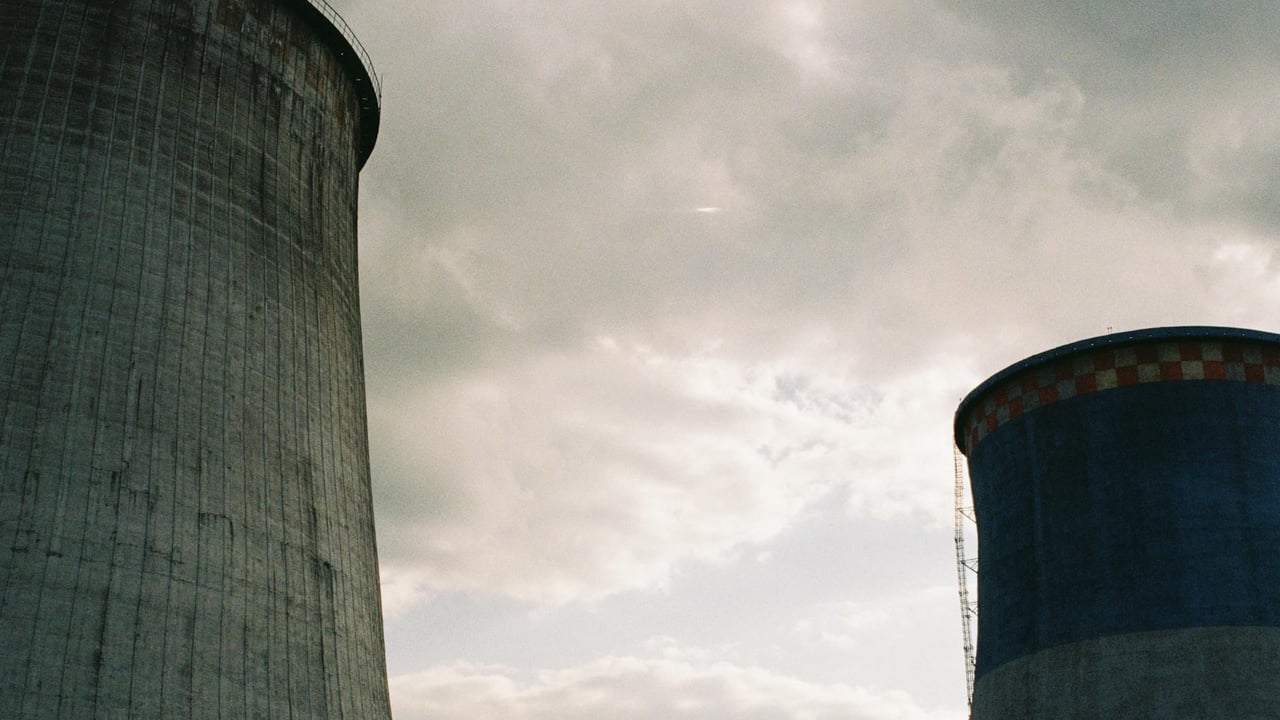
Imposing cooling towers of a nuclear power station under a cloudy sky, showcasing industrial architecture.

Key Takeaways

  • 1Over 1,000 researchers are moving to the Tianfu Fusion Technology R&D Center to centralize China's fusion expertise.
  • 2The facility is conducting high-heat load testing for ITER's 'first wall' components and helium cooling systems.
  • 3An 18-member industrial innovation alliance has been formed to integrate research with upstream and downstream supply chains.
  • 4The strategic focus is shifting from basic research toward 'burning plasma' experiments and engineering-scale reactors.
  • 5Sichuan is emerging as a primary hub for both magnetic and inertial confinement fusion technologies.

Editor's
Desk

Strategic Analysis

The mobilization of 1,000 researchers into a single dedicated 'Fusion City' illustrates China's unique ability to utilize state-directed resource allocation to dominate strategic sectors. While the US and EU often rely on a more fragmented landscape of private startups and university labs, Beijing is pursuing vertical integration by forcing the marriage of academic research and industrial manufacturing. By focusing on the 'first wall' and cooling loops—the most difficult engineering hurdles in fusion—China is positioning itself as an indispensable partner in international projects like ITER while simultaneously building the domestic capacity to eventually bypass them. This move also reinforces Sichuan’s role as China's 'strategic hinterland,' moving high-tech energy security infrastructure away from vulnerable coastal regions.

China Daily Brief Editorial
Strategic Insight
China Daily Brief

The race for commercial nuclear fusion is entering a new phase of physical consolidation in southwestern China. Following the May Day holiday, a contingent of over 1,000 researchers is slated to relocate to the Tianfu Fusion Technology Research and Development Center. This massive influx of human capital into the Sichuan Tianfu New Area signals Beijing’s intent to transform the region into a premier global cluster for 'artificial sun' technology.

Operated by the Southwestern Institute of Physics (SWIP), the center has already commenced critical testing on components for the International Thermonuclear Experimental Reactor (ITER). Current experiments focus on the 'first wall' components—the materials directly facing the volatile plasma—and helium-cooled circuit testing. These steps are vital for the transition toward 'burning experiments,' where the fusion process becomes self-sustaining, a prerequisite for any viable power plant.

Sichuan is no longer treating fusion as a purely academic pursuit but as an industrial ecosystem. The newly formed Fusion Science and Innovation City has established a consortium of 18 core entities, including top-tier universities, state-owned research institutes, and private-sector suppliers. This alliance is notable for its technology-agnostic approach, covering both magnetic confinement (Tokamak) and inertial confinement fusion pathways.

By centralizing these resources in the Tianfu New Area, China is attempting to solve the 'valley of death' between laboratory breakthroughs and engineering reality. The goal is to move beyond the experimental phase toward the construction of a Fusion Engineering Test Reactor (CFETR). This initiative positions Sichuan as a strategic inland 'energy highland,' leveraging its historical industrial base to lead the next generation of global energy infrastructure.

Share Article

Related Articles

📰
No related articles found