
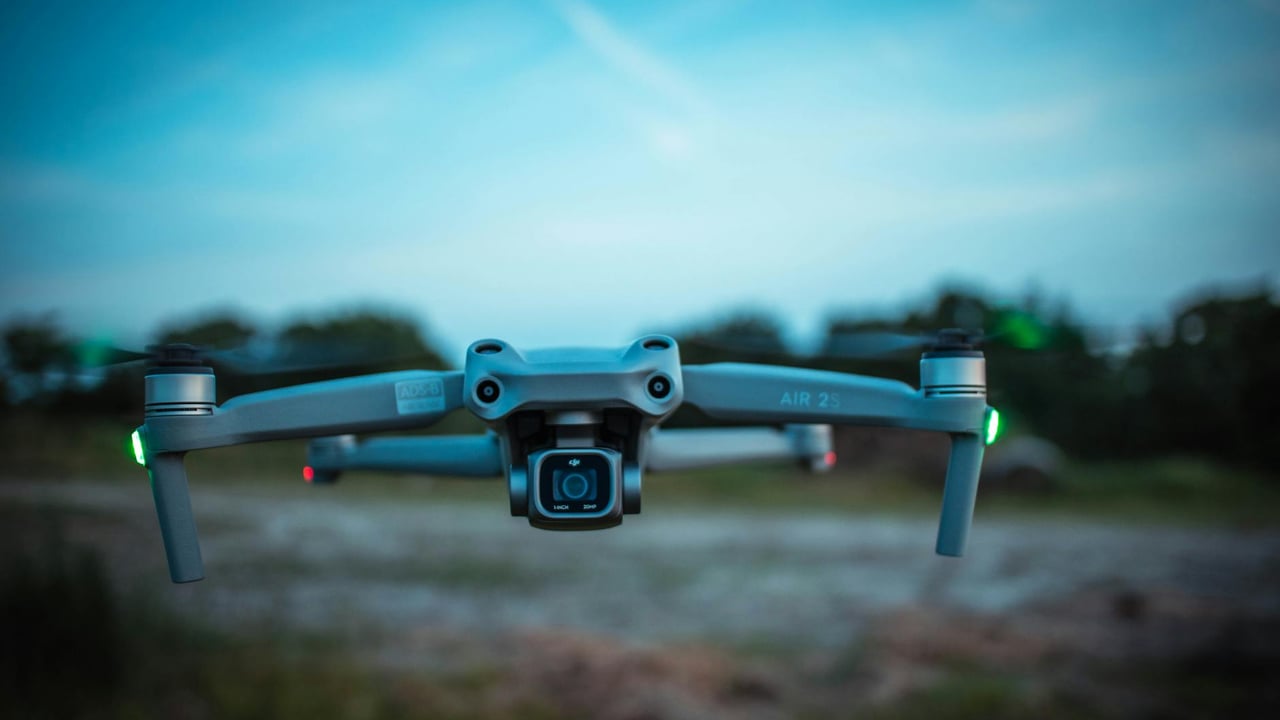

In a nondescript office at the Beijing Institute of Technology (BIT), Professor Song Tao represents the intellectual vanguard of China’s push for dominance in autonomous systems. While he appears as a casual academic in sneakers and a sweatshirt, his work focuses on the high-stakes intersection of artificial intelligence and unmanned aerial vehicles (UAVs). Specifically, Song leads the development of autonomous drone-on-drone engagement, a critical frontier in modern electronic and kinetic warfare.
Song’s trajectory reflects a broader trend in China’s strategic talent acquisition. After completing postdoctoral research at the Technical University of Munich in 2016, he declined multiple international offers to return to China. At BIT’s Autonomous Control Laboratory, he established the 'Flying Eagle' team, a group dedicated to solving the complex problems of onboard autonomous recognition, decision-making, and precision capture of hostile drones.
The team’s technical prowess was validated on the international stage during the Abu Dhabi International Unmanned Systems Challenge (MBZIRC). In both 2017 and 2020, Song’s team outperformed top-tier global research institutions to secure back-to-back world championships. Their success was built on a breakthrough in autonomous interception, marking the first time a UAV successfully identified and captured another drone in mid-air without human intervention.
Beyond competitive accolades, Song’s laboratory serves as a critical talent pipeline for the Chinese state. Over the past decade, his students have secured more than 20 gold medals in top-tier national innovation competitions. More significantly, over 80% of his graduates are funneled directly into key positions within China’s defense and military-industrial complex, ensuring that cutting-edge research in 'low-altitude security' translates immediately into national strategic capability.
The project, nicknamed 'Falcon' due to its roots in biomimetic research of birds of prey, symbolizes the shift toward intelligentized warfare. As drones increasingly dominate modern conflicts, the ability to train 'eagle handlers'—the engineers behind autonomous defensive systems—has become as vital as the hardware itself. Song’s team stands at the center of this transformation, turning academic theory into a shield for the nation’s airspace.