
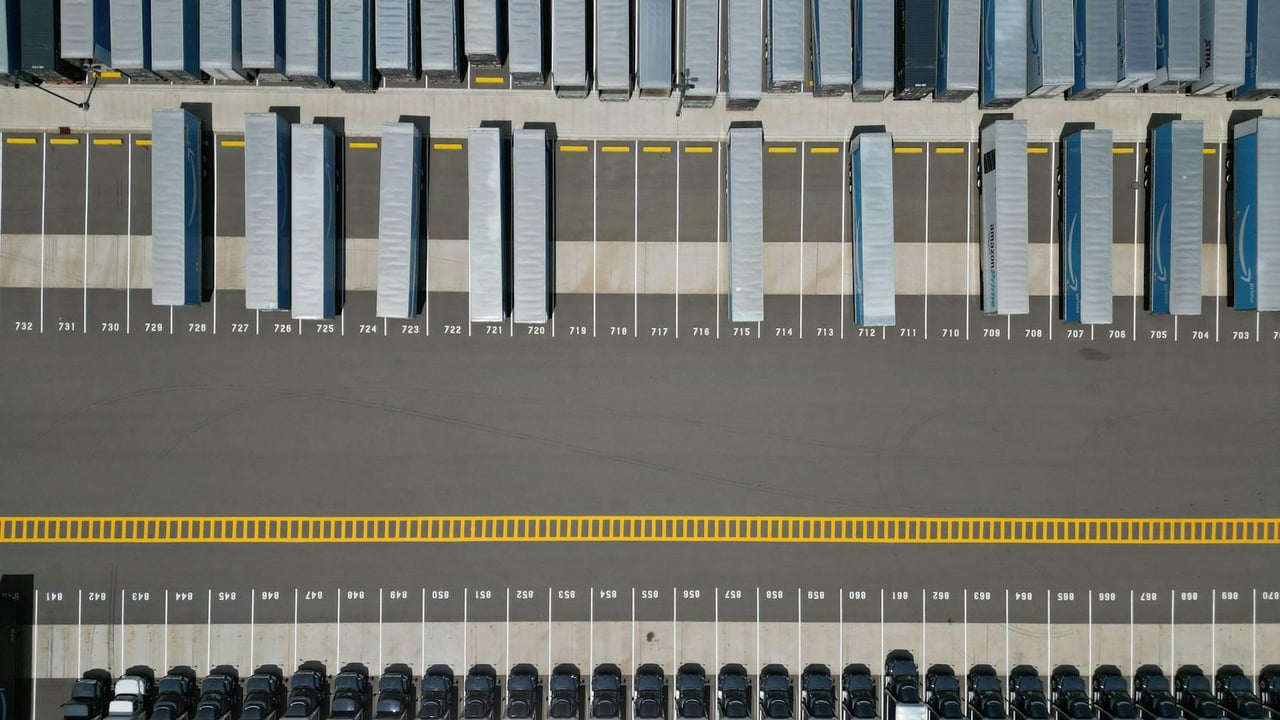

Amazon has officially dismantled the gates to its internal logistics empire, launching its Supply Chain by Amazon (ASCS) as an open-access utility for businesses of every scale. While the company has long offered fulfillment services to its own third-party sellers, this expansion allows any manufacturer or retailer to utilize Amazon’s vast network of planes, trucks, and warehouses, regardless of whether they list products on the Amazon marketplace. Early adopters of the service include industry titans such as Procter & Gamble, 3M, Lands’ End, and American Eagle Outfitters.
This transition marks the evolution of Amazon from a dominant e-commerce retailer into a fundamental global utility provider, often described as the 'AWS for Atoms.' Just as Amazon Web Services productized the company’s internal digital infrastructure for the masses, ASCS is designed to monetize the physical delivery network the company built out of necessity. By consolidating freight, distribution, and last-mile delivery into a single, modular service, Amazon is positioning itself to handle the messy complexities of the global supply chain for third parties.
The strategic timing of this rollout coincides with a broader industry push for supply chain resilience following years of pandemic-driven disruptions. By onboarding heavyweights like P&G and 3M, Amazon demonstrates that its logistics capabilities can meet the rigorous demands of multi-national conglomerates. This move places Amazon in direct competition with traditional shipping giants like UPS, FedEx, and DHL, challenging the long-standing dominance of legacy logistics firms through superior technology and data-driven routing.
Ultimately, this shift allows Amazon to maximize the utilization of its capital-intensive assets, such as its fleet of Prime Air cargo planes and millions of square feet of robotic fulfillment centers. For the broader market, it signals a democratization of high-speed delivery infrastructure, enabling smaller players to compete with the speed of giant retailers. As the service scales, it may fundamentally reshape how goods move globally, turning the 'Amazon effect' into the new standard for the entire logistics industry.