
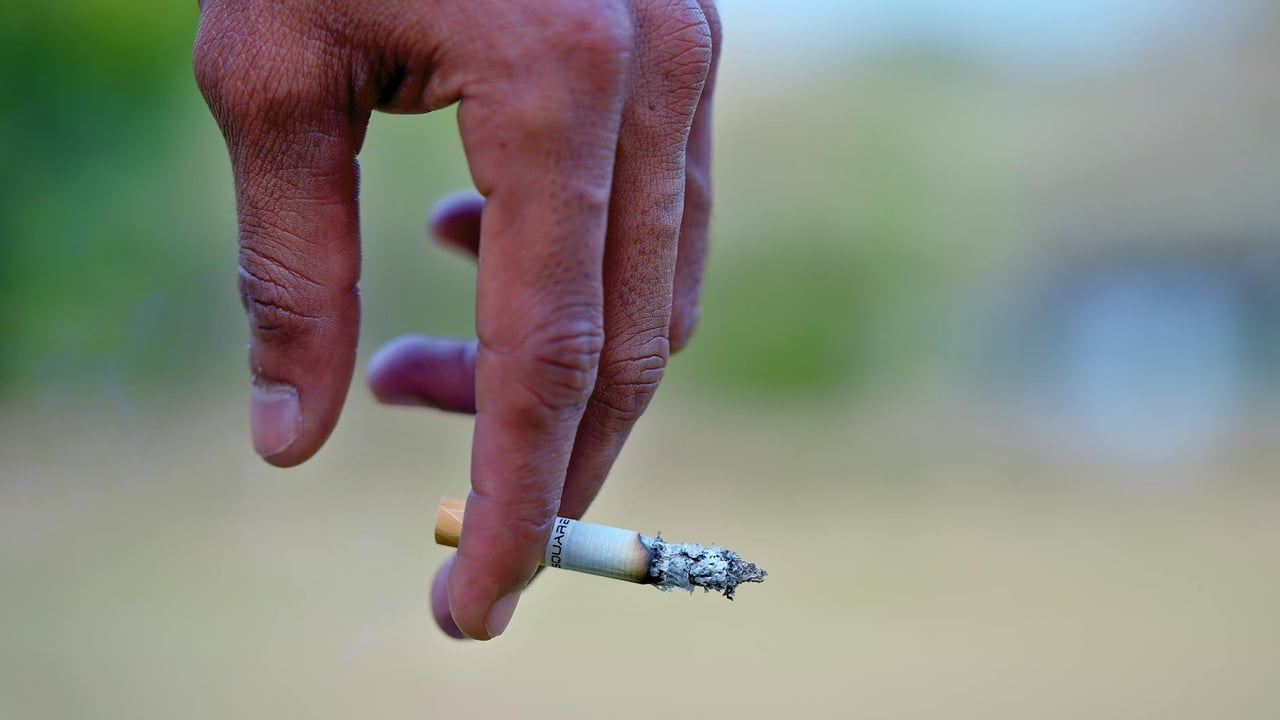

For decades, the ritual of lighting up in public spaces across China was less a violation of law than a demonstration of social status or personal stress relief. However, a series of high-profile altercations—including violent disputes at Shanghai Disney Resort—highlights a shifting social contract. As non-smokers increasingly demand their 'right to breathe,' the Chinese state is responding with its most stringent regulatory crackdown to date, moving beyond mere slogans to digital surveillance and massive fines.
The health stakes are staggering for a nation with over 300 million smokers. Beyond the well-documented risks of primary and second-hand smoke, recent research from the Chinese Academy of Sciences has brought the threat of 'third-hand smoke' into the public consciousness. This lingering residue on furniture and fabrics can persist for months, turning indoor environments into 'gas chambers' where infants face nicotine exposure levels up to 50 times higher than those in non-smoking households.
Shenzhen has emerged as the vanguard of this new era of enforcement, successfully driving its smoking rate down to 17.4%—well below the national average. By deploying the 'Don't Smoke' mini-program, the city has essentially turned every citizen with a smartphone into a mobile 'electronic eye.' This digital-first approach is paired with aggressive penalties, including China’s first 30,000-yuan fine for selling tobacco to minors and criminalizing the act of fleeing after being caught smoking in a restricted area.
In Hong Kong, the regulatory framework is shifting toward a near-total prohibition of tobacco alternatives. Starting in 2026, the mere possession of electronic cigarettes or herbal smoking products in public will be a criminal offense, carrying fines up to 50,000 HKD and potential imprisonment. This zero-tolerance policy, which includes no 'first-offense' exemptions for tourists, signals a hardline transition toward the city’s goal of becoming a truly smoke-free territory.
Despite these local successes, the national landscape remains fragmented. In many provinces, fines of 50 to 200 yuan are viewed as a negligible cost of doing business, and venue owners often turn a blind eye to avoid alienating customers. Furthermore, the structural paradox of the Chinese tobacco industry—which provides massive tax revenue while burdening the healthcare system—remains the primary obstacle to a unified national tobacco control law.
Yet, a grassroots movement is filling the gaps where legislation falters. From environmentalists hand-picking thousands of cigarette butts from tree roots to stand-up comedians like Zhang Hui framing tobacco control as a fight against 'second-hand smoke bullying,' the narrative is changing. For China’s younger generation, the battle is no longer just about public health; it is about reclaiming public space and the fundamental right to clean air.