
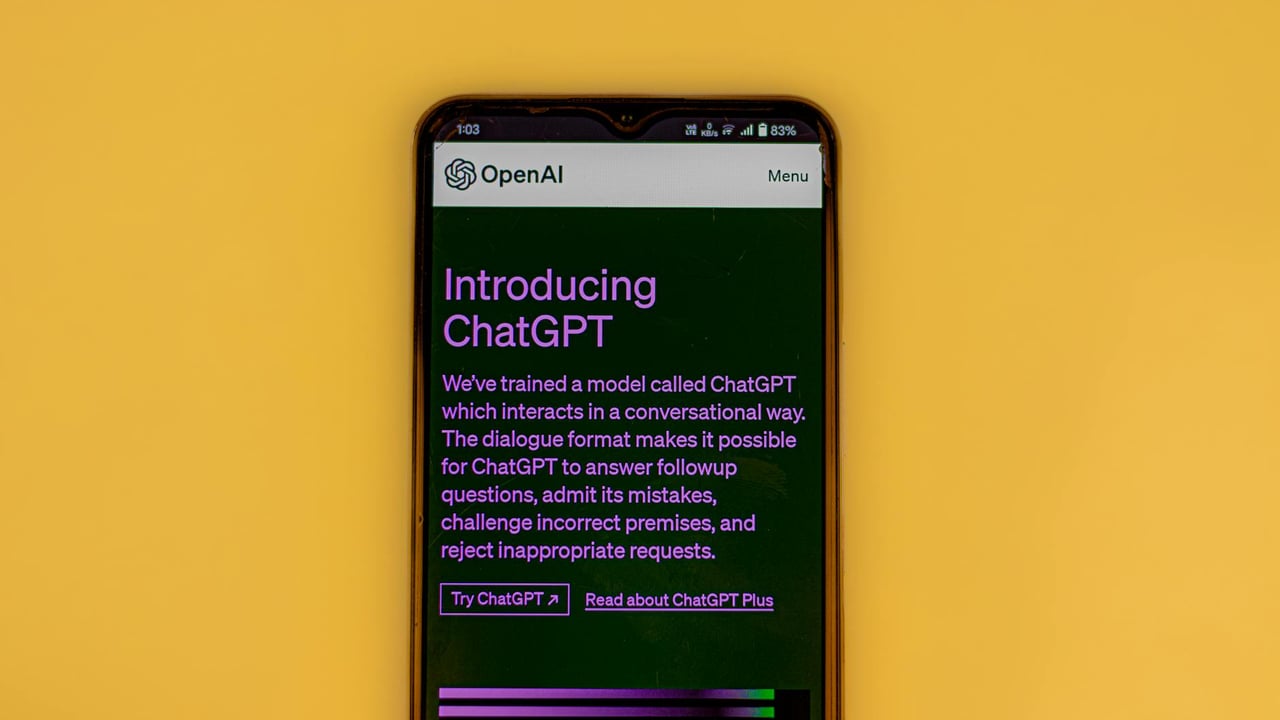

OpenAI has officially signaled the next phase of its generative AI evolution by making GPT-5.5 Instant the default engine for ChatGPT. This transition, which replaces the outgoing GPT-5.3 Instant, represents a strategic pivot toward reliability and lower latency. While previous iterations focused on raw creative output, this update prioritizes the elimination of "hallucinations" in high-stakes fields like law, finance, and medicine.
The performance metrics shared by the San Francisco-based lab suggest a significant leap in reasoning and technical capability. In the AIME 2025 mathematics test, the model scored 81.2, a sharp increase from its predecessor's 65.4. More crucially for enterprise users, OpenAI claims a 52.5% reduction in hallucination rates for sensitive prompts, addressing a primary barrier to AI adoption in professional, high-consequence environments.
Beyond numerical accuracy, the update refines the fundamental conversational style of the chatbot. The model has been tuned to strip away what users often call "filler literature"—the excessive formatting, redundant follow-up questions, and overused emojis that have occasionally cluttered AI interactions. By increasing information density, the system aims to provide more direct utility while retaining its familiar conversational tone.
Perhaps the most transformative feature is the overhaul of the model’s context management through an integrated memory system. GPT-5.5 Instant can now weave together insights from a user’s historical dialogue, local files, and even Gmail correspondence to generate deeply personalized responses. This memory is supported by a new provenance feature, allowing users to trace exactly which interaction or file informed a specific AI response, a move aimed at enhancing transparency.
However, the rapid advancement of these models continues to create unexpected social frictions. As OpenAI sunsets older models, it has encountered a new phenomenon: user grief. The retirement of GPT-4o in early 2026 reportedly sparked protests from users who had formed emotional attachments to its specific persona. This highlights a growing challenge for the industry as AI shifts from being a mere tool to a perceived digital companion.