
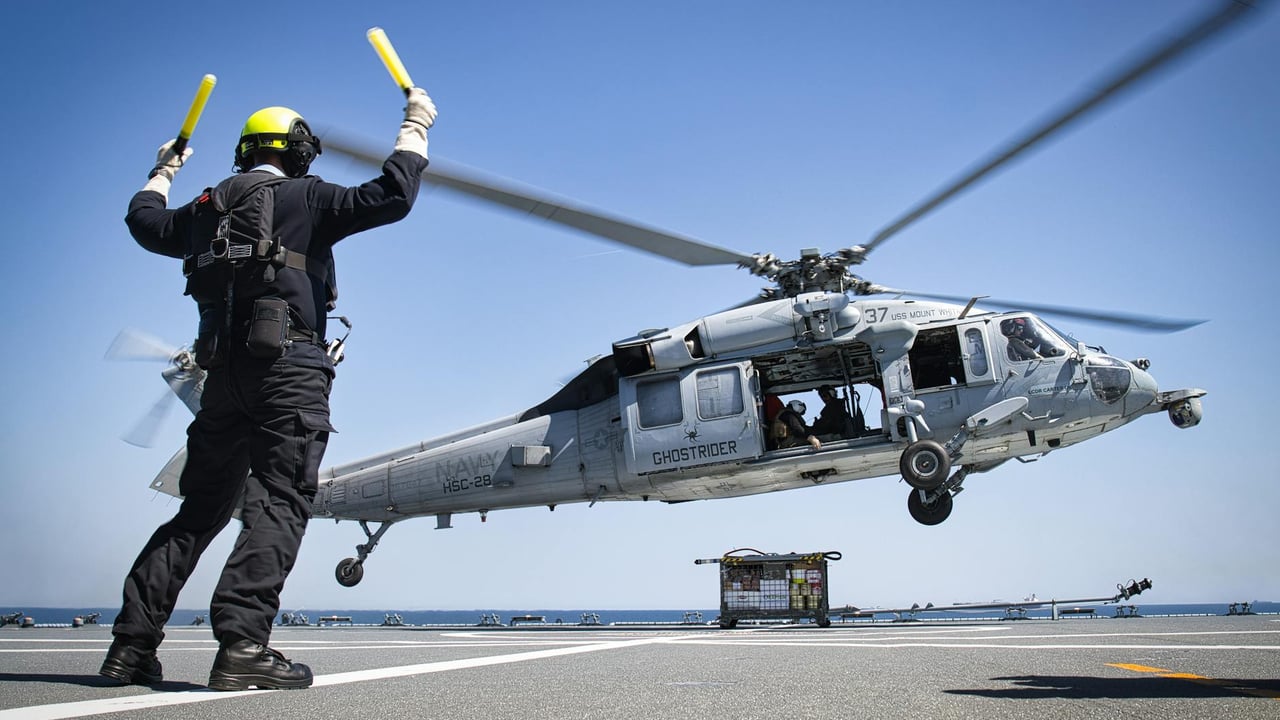

The transit of the USS George H.W. Bush (CVN 77) through the Arabian Sea, confirmed by U.S. Central Command on May 5, 2026, marks a significant deployment of American naval power in a region historically fraught with volatility. This Nimitz-class aircraft carrier serves as a mobile sovereign territory, capable of projecting force far beyond its hull, and its presence in these waters is a calculated signal to both regional allies and strategic adversaries. By maintaining a high-visibility profile in the North Arabian Sea, the United States reaffirms its commitment to maritime security and the free flow of global commerce.
The Arabian Sea serves as the vital maritime gateway to the Persian Gulf and the Red Sea, two of the world's most critical energy transit corridors. Any disruption in these waters reverberates instantly through global energy markets and international supply chains, making the presence of a carrier strike group a prerequisite for regional stability. This deployment arrives at a juncture where traditional power dynamics are being tested by both regional state actors and non-state entities seeking to exert influence over strategic chokepoints.
For international observers, the movement of the USS George H.W. Bush is not merely a routine patrol but a demonstration of the Pentagon's ability to maintain a 'dual-theater' presence. While much of the U.S. strategic focus has pivoted toward the Indo-Pacific to address long-term competition in East Asia, the persistent necessity of a carrier presence in the Middle East highlights the enduring complexity of global security commitments. This balancing act remains a central pillar of U.S. foreign policy as it navigates an increasingly multipolar world.
Chinese state-affiliated media’s rapid reporting on this transit underscores Beijing’s own growing interests in the Middle Eastern maritime theater. As China increases its energy dependence on the region and expands its 'Blue Water' naval aspirations, the movements of U.S. carrier groups are monitored with increasing scrutiny and analytical depth. The Arabian Sea has effectively become a microcosm of the broader competition for maritime dominance, where the presence of a carrier can carry as much weight as a formal diplomatic treaty.