
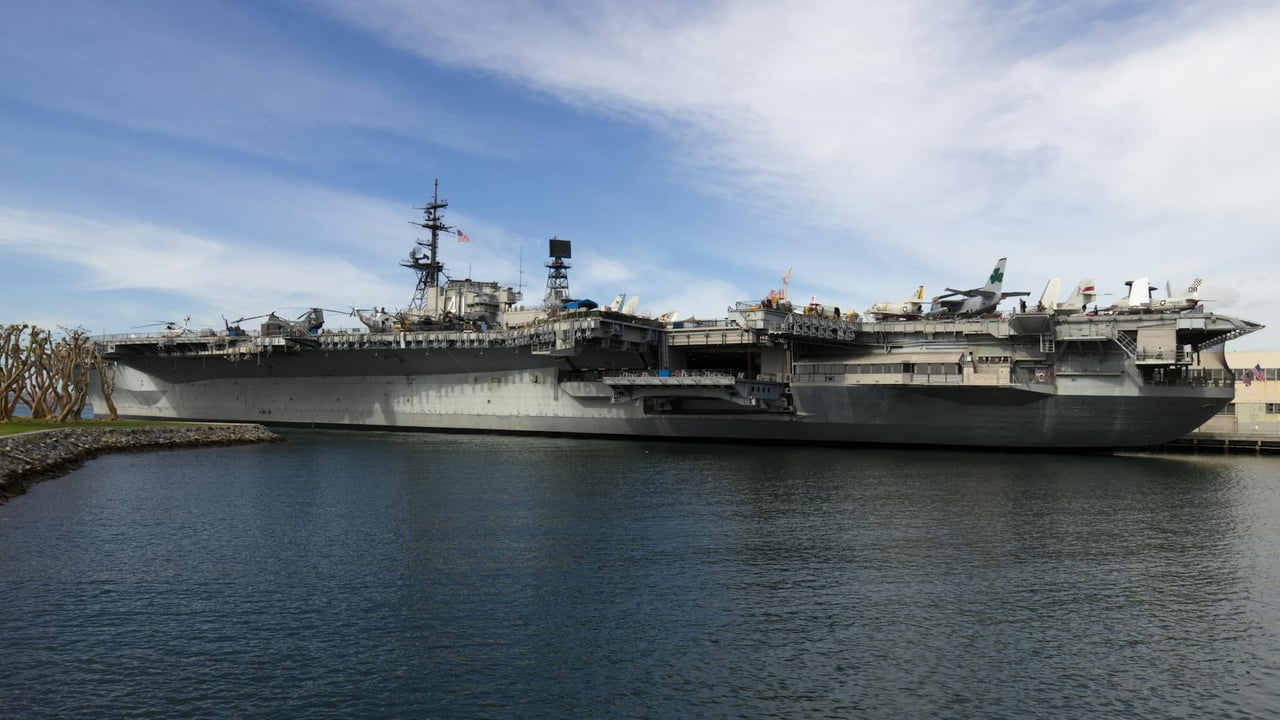

For the cornerstone of American global power—the aircraft carrier—the threat of internal dissolution is increasingly becoming more realistic than external destruction. As the hypothetical conflict with Iran extends into its fourth month in 2026, the focus has shifted from the lethality of anti-ship missiles to the psychological endurance of the sailors tasked with operating these 100,000-ton leviathans. The legal and operational threshold for 'mutiny' is now the primary concern for military analysts observing the Persian Gulf.
According to Article 94 of the Uniform Code of Military Justice (UCMJ), a mutiny requires four distinct elements: intent to usurp command, collective action, refusal of duty, and illegal behavior. While the U.S. military leadership rarely uses the term due to its severity and the potential for capital punishment during wartime, recent events on the USS Gerald R. Ford suggest the Navy is skirting the 'red line.' The distinction between gross indiscipline and a true mutiny is narrowing as crews move from passive dissatisfaction to active sabotage.
Historical precedents, such as the 2020 COVID-19 outbreak on the USS Theodore Roosevelt, showed how morale can collapse when sailors feel abandoned by their command. While the Roosevelt incident remained a 'quasi-mutiny' driven by self-preservation, the current scenario on the USS Ford involves more calculated, strategic resistance. Faced with an unprecedented 11-month deployment and nearly a year without port leave, the crew has reportedly turned to 'soft mutiny'—the coordinated sabotage of life-support systems to force the ship's return to port.
Investigators have noted that the widespread failure of the Ford’s sanitation systems and fires in the primary laundry facilities were not accidents, but deliberate acts. By clogging over 600 toilets with clothing and tools, the crew created an environment where the ship could no longer function as a habitable platform. This tactical sabotage allows sailors to challenge the legitimacy of their deployment without the overt violence typically associated with historic mutinies, yet it achieves the same result: the neutralization of a strategic asset.
Two specific triggers could now catalyze a full-scale command collapse. The first is a high-risk order, such as a landing operation on Iran’s Kharg Island, which would force the carrier to face saturation missile strikes. If sailors perceive they are being treated as 'political consumables' in a suicidal mission, the latent 'soft mutiny' could instantly transform into open defiance. The second trigger is the simple passage of time; analysts predict that without a crew rotation, the Ford’s combat capability will vanish within three months regardless of enemy action.
If a flagship like the USS Ford were to suffer a mutiny, the geopolitical consequences would be catastrophic for Washington. Beyond the immediate loss of a $13 billion asset, the myth of American invincibility would be shattered, leading to a forced strategic contraction across the Middle East. Such an event would leave regional allies like Israel without their primary security umbrella, fundamentally tilting the balance of power toward Tehran and ending the era of uncontested American naval hegemony.