
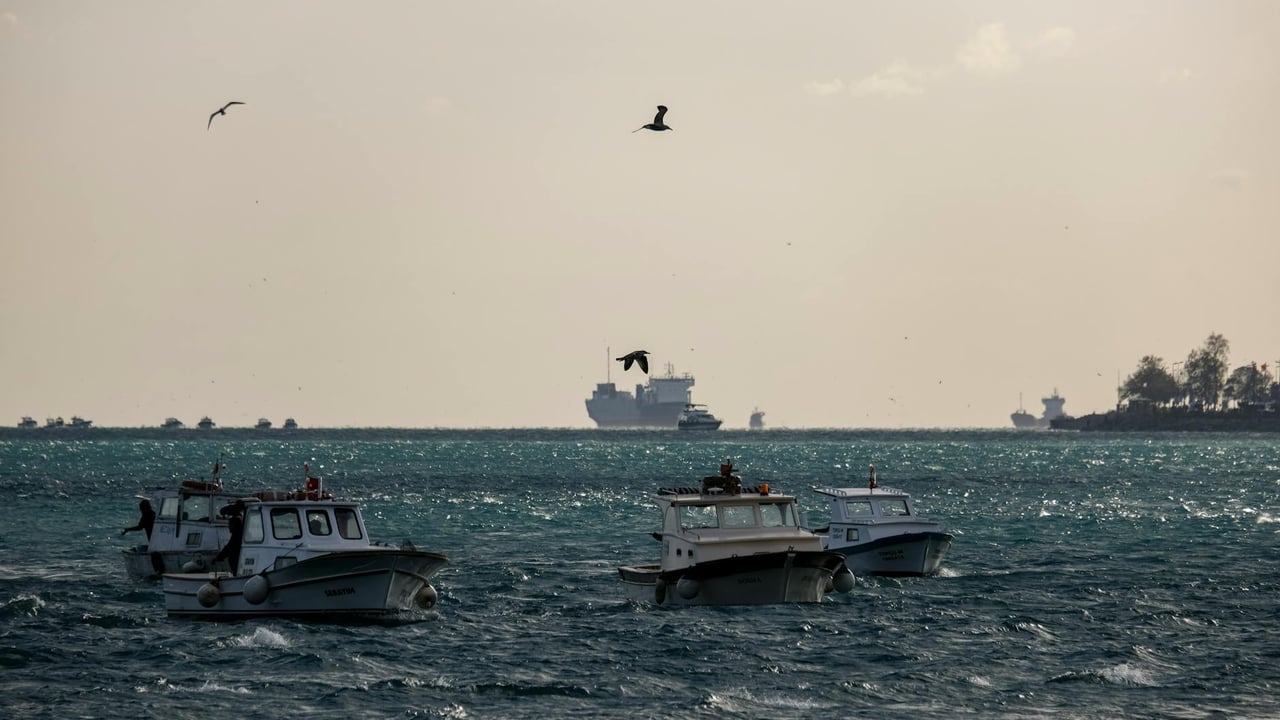

The Persian Gulf has once again become a high-stakes theater of escalation as President Donald Trump issued a scorched-earth warning to Tehran. Following reports of Iranian forces firing upon commercial and military vessels in the Strait of Hormuz, the American president threatened to 'wipe Iran from the face of the earth' should such provocations continue. This rhetoric follows a direct military engagement where U.S. forces reportedly sank seven Iranian fast-attack craft after an alleged assault on a South Korean cargo ship.
At the heart of the current crisis is a U.S.-led 'clearing operation' designed to escort vessels trapped in the strategic chokepoint of the Strait of Hormuz. General Cooper of CENTCOM confirmed that Iranian forces deployed cruise missiles and drones against U.S. naval assets and protected merchant ships, prompting a lethal kinetic response. The U.S. administration characterizes its current posture as one of maximum readiness, claiming that military bases in the region are fully stockpiled and prepared for a return to full-scale operations if diplomacy remains stalled.
Internally, the Trump administration appears to be grappling with the nomenclature of the conflict. During a White House Small Business Summit, the president labeled the situation a 'mini-war,' a term his advisors and House Speaker Johnson have previously urged him to avoid. This linguistic shift reflects a president trying to balance a hardline military stance with the reality of domestic fatigue; Trump himself acknowledged that polling shows only 32% of the American public supports a full-scale war with Iran.
Tehran, however, remains resolute in its defiance, viewing the U.S. presence as an infringement on its territorial sovereignty. Ebrahim Rezaei, a spokesperson for Iran’s National Security and Foreign Policy Committee, countered that the Strait cannot be opened or closed via social media posts. He emphasized that the international community must either recognize Iranian dominance over the waterway or face the consequences of a returning battlefield, further complicating any hopes for a negotiated ceasefire.
The diplomatic vacuum is compounded by Iran's refusal to engage in nuclear discussions. Foreign Minister Araghchi has dismissed U.S. pressure tactics—ranging from port blockades to support for domestic dissent—as failed attempts at regime change. With the status of previous ceasefire agreements now ambiguous and both sides entrenching their positions, the world's most critical energy artery sits on the precipice of a broader conflagration.