
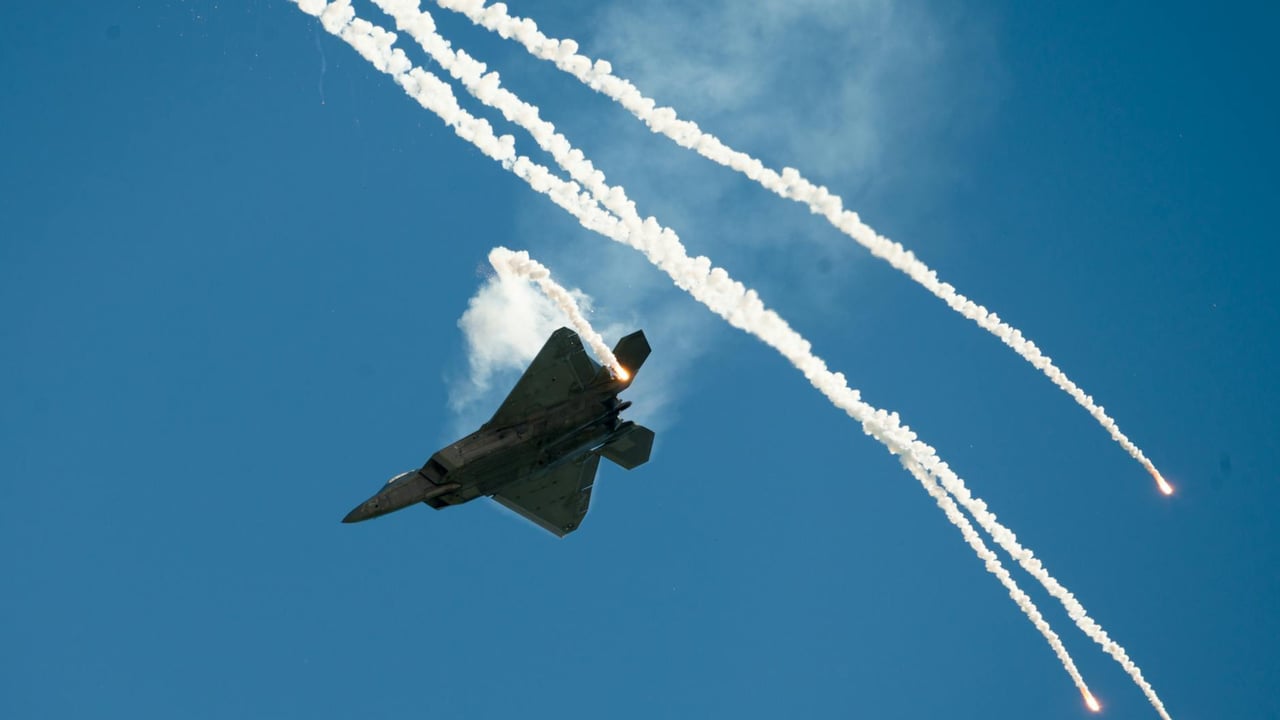

The arrival of F-22A Raptors at Luzon’s airbases marks a significant pivot in the Pentagon’s strategy for the South China Sea. While these fifth-generation fighters were once viewed as uncontested masters of the sky, their deployment alongside the Philippine Air Force’s light FA-50 trainers reflects a complex mixture of strategic signaling and logistical anxiety. For Manila, the presence of the world’s premier stealth fighter is a morale booster; for Washington, it is a critical test of its 'Agile Combat Employment' (ACE) concept.
This deployment, involving personnel from the 199th Fighter Squadron based in Hawaii, focuses less on traditional dogfighting and more on the grueling mechanics of forward-deployed logistics. By utilizing C-17A transports to establish rapid-response maintenance hubs in austere environments, the U.S. Air Force is acknowledging a grim reality. Its massive, fixed bases in Okinawa and Guam are no longer sanctuaries from the People’s Liberation Army (PLA) missile inventory, necessitating a strategy of 'distributed lethality' to ensure survival in a high-intensity conflict.
However, the tactical synergy between the F-22A and the Philippine FA-50 remains marginal at best. The FA-50, essentially a modified South Korean trainer, lacks the data-link sophistication and sensor suites required to operate effectively within a fifth-generation stealth ecosystem. This mismatch suggests that the drills are primarily a political theater intended to reassure regional allies that the United States remains physically present on the front lines, even as the military balance of power shifts.
In Beijing, the reaction is one of calculated confidence rather than the alarm seen in decades past. The PLA Air Force (PLAAF) has moved beyond the experimental phase of its J-20 'Mighty Dragon' fleet, which is now operational in significant numbers. When integrated with the KJ-500 airborne early warning aircraft and the long-range PL-15 missile, the J-20 creates a 'system-of-systems' that challenges the F-22’s traditional envelope of air superiority.
The strategic environment in East Asia has evolved into a sophisticated contest of networked capabilities. Unlike previous decades where the mere arrival of a stealth wing could force a diplomatic de-escalation, the U.S. now faces a peer adversary with a dense anti-access/area-denial (A2/AD) umbrella. The F-22 remains a formidable platform, but it is increasingly viewed by analysts not as an unstoppable force, but as a manageable variable within a much larger, more dangerous maritime and aerial chessboard.