
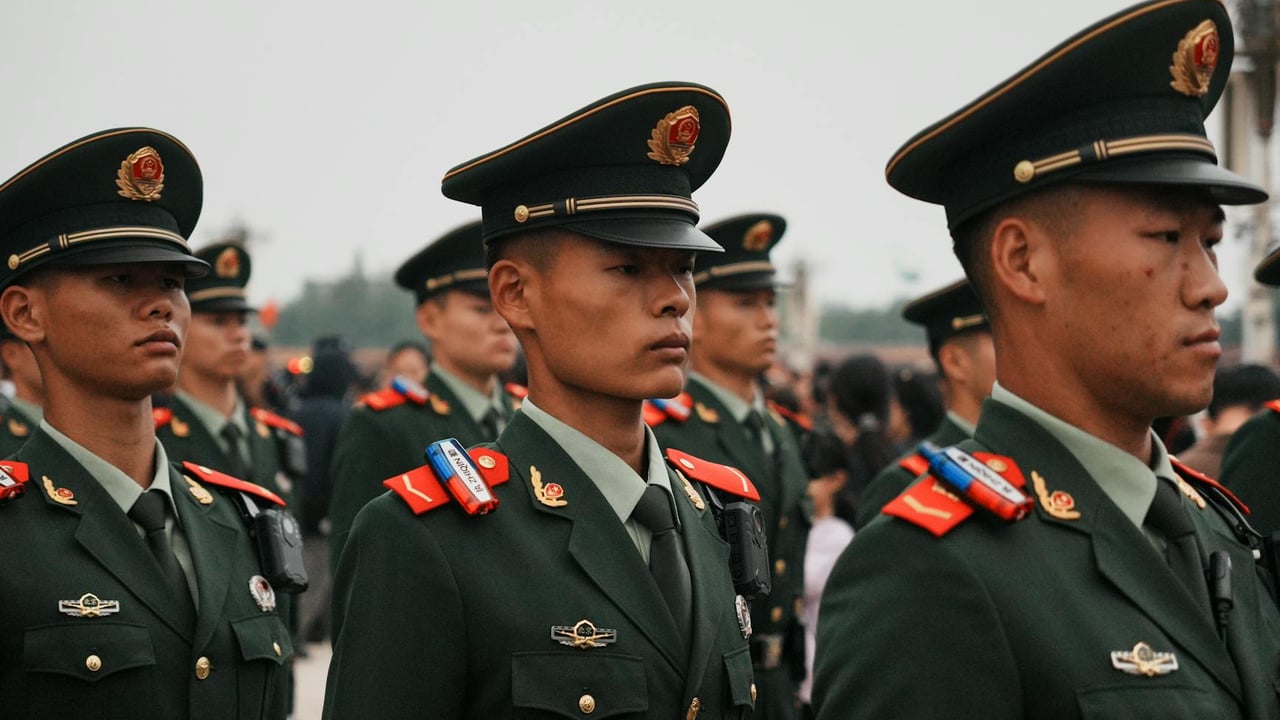

At a training facility for the People’s Liberation Army’s Information Support Force, a young soldier named Xiao Liu recently surged from being a 'training dropout' to a 3,000-meter champion. His transformation was not the result of automated systems or high-tech simulations, but the persistent mentorship of Master Sergeant Feng Lujian. A 19-year veteran, Feng represents the critical human element in China's rapidly modernizing military structure, where psychological resilience is increasingly viewed as being as vital as technological proficiency.
Feng’s role as a 'Gold Medal Instructor' highlights a shift in PLA training philosophy toward more personalized, data-driven mentorship. Rather than relying solely on traditional top-down discipline, Feng utilized a 'stepped recovery plan' and detailed training logs to monitor Xiao Liu's progress. By breaking down complex physical objectives into manageable psychological milestones, Feng managed to rehabilitate a soldier who had previously been paralyzed by a fear of failure.
The context of this mentorship is particularly significant given the unit involved. The Information Support Force is a cornerstone of China's recent military restructuring, designed to provide the backbone for information-led warfare. In such a high-pressure environment, the PLA recognizes that technical skills must be matched by extreme psychological durability. Feng’s 'magic whistle' and his ability to read the emotional fluctuations of Gen-Z soldiers represent a move toward a more sophisticated form of military soft power within the ranks.
Beyond individual coaching, Feng has institutionalized his decades of experience by codifying his methods into training manuals and forming instructor groups. This initiative aims to standardize the 'old-to-new' knowledge transfer, ensuring that the nuances of field leadership are not lost during the military's digital transition. By transforming every training session into a classroom for both physical and mental tactics, the PLA is attempting to scale the individual success of veterans like Feng across its broader force structure.