

The race for Low Earth Orbit (LEO) has transformed from a scientific frontier into a frantic land grab. With SpaceX’s Starlink already operating over 10,000 satellites and performing 144,000 collision-avoidance maneuvers in a single half-year period, Beijing has identified domestic launch capacity as a strategic imperative. In the industrial outskirts of cities like Zhuzhou, a new breed of private Chinese rocket firms is attempting to replicate the 'Xiaomi model'—leveraging China’s vast manufacturing ecosystem to build cheap, reusable rockets that can challenge the Western monopoly on orbital access.
Walking into a Chinese rocket factory today feels less like a sterile NASA laboratory and more like a high-end automotive plant. At startups like Yushi Space, engineers are welding together 4.2-meter-wide cylinders made of stainless steel, a direct nod to Elon Musk’s design philosophy for the Starship. By swapping expensive carbon fibers for common steel and adopting industrial-grade sensors, these companies aim to slash launch costs. They are fueled by a surge in venture capital; some firms have seen their valuations decuple in mere months, driven by the 'Thousand Sails' project, a state-backed plan to launch 15,000 satellites to secure China’s place in the stars.
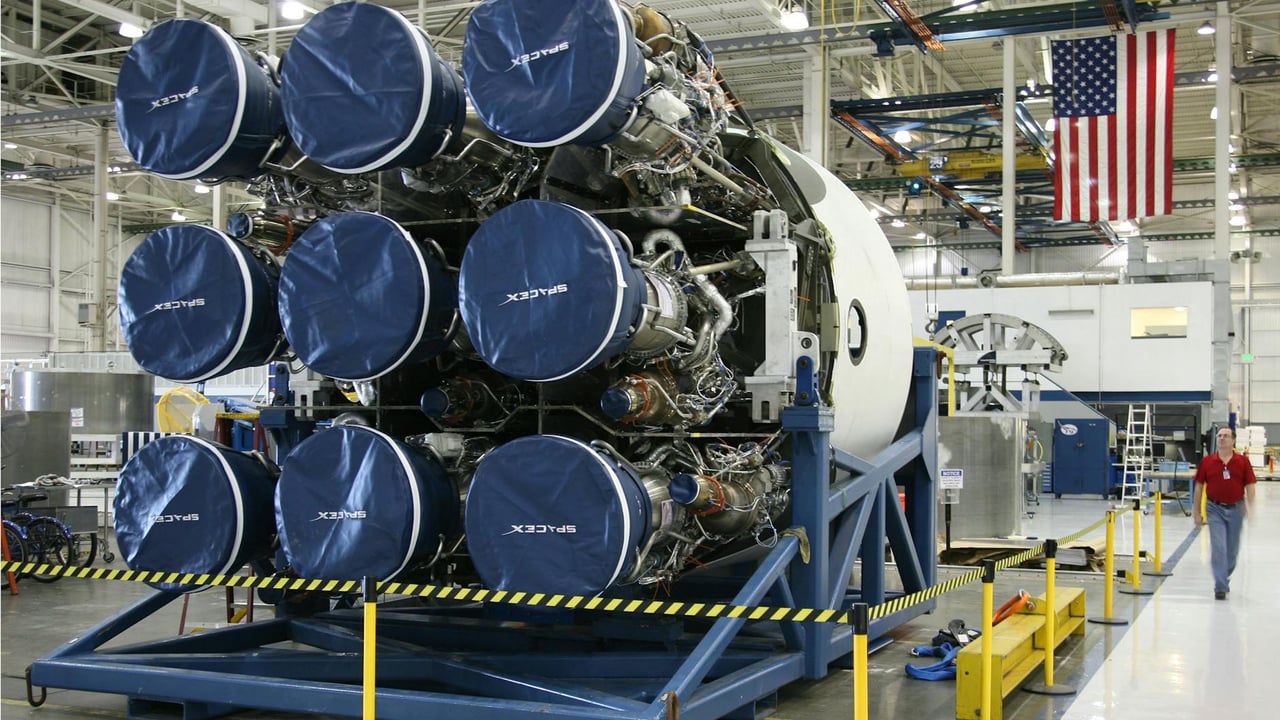
Despite the enthusiasm, the technical 'moat' protecting SpaceX remains formidable. While Chinese startups have mastered the 'look' of modern rocketry, the propulsion systems remain a generation behind. SpaceX’s Raptor engines utilize complex metallurgy and high-pressure cycles that Chinese manufacturers admit may take twenty to thirty years to fully replicate. Domestic engines currently achieve only a fraction of the thrust produced by their American counterparts, and the precision required for the vertical landing of a first-stage booster—a feat SpaceX perfected a decade ago—is still in the experimental testing phase for China’s private sector.
To bridge this gap, Chinese firms are innovating through 'frugal engineering.' Instead of sourcing bespoke aerospace-grade components that cost millions, engineers are testing automotive-grade cables and industrial robot joints in vacuum chambers. This 'cross-border' supply chain—utilizing wind turbine manufacturers for rocket shells and consumer electronics for cameras—allows startups to iterate at a fraction of the traditional cost. The goal is not necessarily to beat SpaceX on performance, but to provide a 'good enough' domestic alternative that ensures China is not locked out of the increasingly crowded orbital highways.