A Precarious Pivot: US Precision Strikes in the Strait of Hormuz Signal New Phase of Deterrence

Following a failed multi-vector attack by Iranian forces on a US Navy destroyer group in the Strait of Hormuz, the US military launched precision strikes against Iranian command and launch facilities. While US officials state they do not seek escalation, the proactive degradation of Iranian ISR and missile assets marks a strategic shift in regional deterrence.

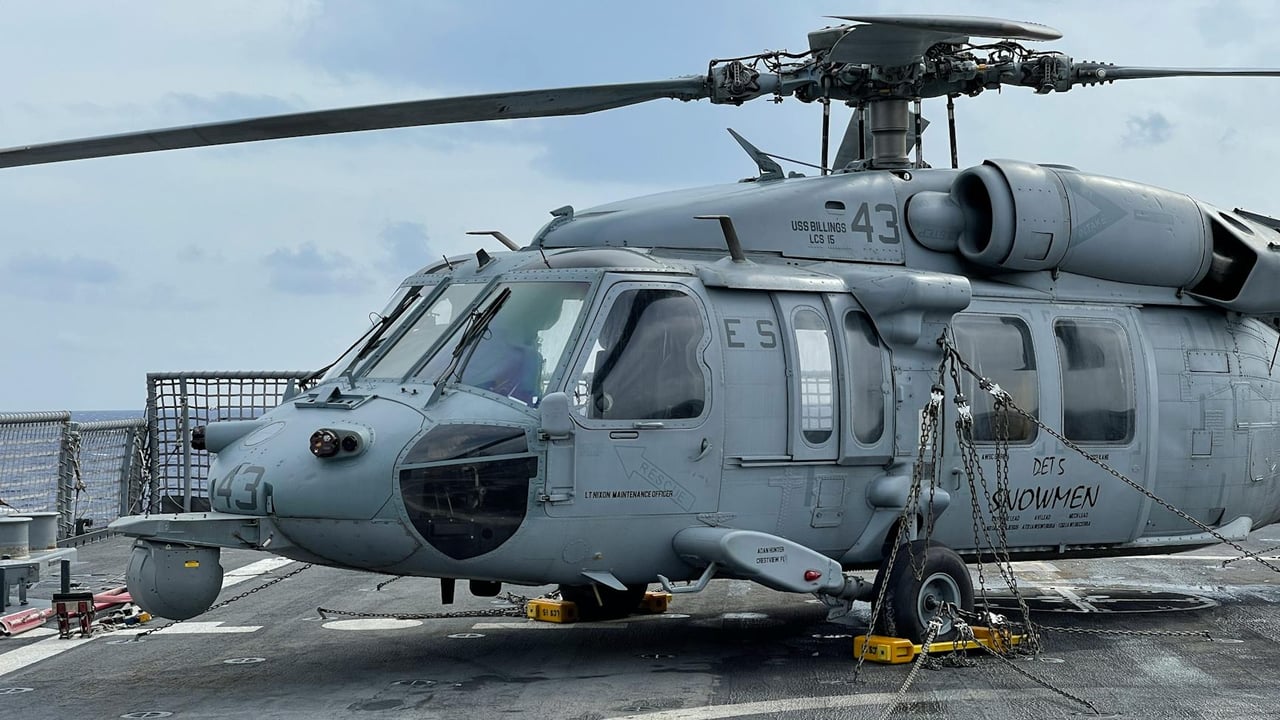
Close-up of Sikorsky SH-60 Seahawk helicopter secured on a naval ship deck.

Key Takeaways

  • 1A US Navy task force including the USS Truxtun, USS Rafael Peralta, and USS Mason intercepted a coordinated Iranian attack involving missiles and drones.
  • 2No American assets were damaged during the encounter, demonstrating the efficacy of current ship-borne defense systems.
  • 3The US retaliated with 'pinpoint' strikes on Iranian soil, targeting command centers and launch platforms to degrade future offensive capabilities.
  • 4The incident took place in the Strait of Hormuz, a vital artery for global energy supplies, raising concerns about maritime insurance rates and oil stability.
  • 5CENTCOM maintains it does not seek a broader war but remains postured for immediate self-defense.

Editor's
Desk

Strategic Analysis

This engagement represents more than a standard skirmish; it is a calculated recalibration of the 'Rules of Engagement' in the Persian Gulf. By specifically targeting Iranian command and control nodes rather than just the active launch platforms, the United States is moving toward a policy of 'active deterrence'—seeking to break the cycle of Iranian harassment by imposing a higher material cost on the Islamic Revolutionary Guard Corps (IRGC). The fact that this reporting appears in Chinese-affiliated media highlights the global concern regarding the security of the Strait of Hormuz. For global markets, the risk lies in whether this 'precision' approach successfully deters Iran or if it forces Tehran to utilize more asymmetric, non-attributable methods of disruption that are harder for conventional naval groups to intercept.

China Daily Brief Editorial
Strategic Insight
China Daily Brief

A high-stakes maritime confrontation in the Strait of Hormuz has marked a significant escalation in the ongoing shadow war between Washington and Tehran. On May 7, 2026, a United States Navy destroyer group was forced to intercept a multi-vector assault involving Iranian missiles, swarming drones, and fast-attack boats. The transit, which included the USS Truxtun, USS Rafael Peralta, and USS Mason, was characterized by U.S. Central Command (CENTCOM) as a routine passage through international waters that met with 'unprovoked' Iranian aggression.

In a swift departure from mere defensive maneuvering, the American response transitioned into targeted offensive action. Upon neutralizing the incoming threats without sustaining damage to its own assets, CENTCOM launched a series of precision strikes against Iranian military infrastructure. These retaliatory measures specifically targeted drone and missile launch sites, command and control facilities, and intelligence-gathering nodes used to coordinate the initial assault.

This exchange occurs in one of the world’s most critical maritime chokepoints, through which approximately one-fifth of the world's liquid petroleum passes. By striking Iranian ISR (Intelligence, Surveillance, and Reconnaissance) nodes, the U.S. is signaling a shift toward degrading the tactical architecture that allows Iran to harass commercial and military shipping. While CENTCOM’s official stance emphasizes a desire to avoid regional escalation, the scale of the counter-strikes suggests a lower threshold for kinetic retaliation than seen in previous years.

The geopolitical ramifications are profound, as the incident tests the resilience of regional security frameworks and the appetite for conflict in a volatile energy market. For Tehran, the failed assault and subsequent loss of military infrastructure represent a tactical setback, yet such maneuvers often serve as internal political signaling or attempts to leverage diplomatic concessions. For the international community, the clash underscores the fragility of maritime stability and the persistent threat of miscalculation in the Persian Gulf.

Share Article

Related Articles

📰
No related articles found