
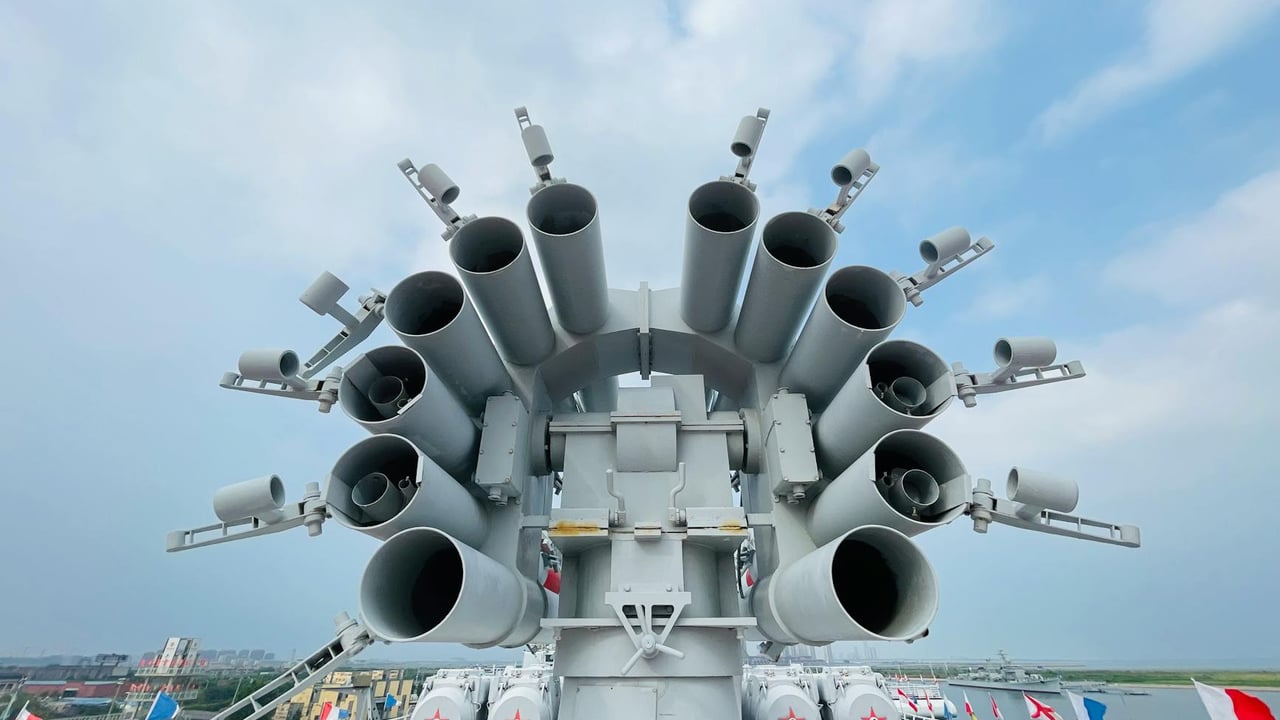

In the choppy waters of the Bohai Sea, the People's Liberation Army Navy (PLAN) recently finalized a critical component of its modern maritime strategy. State media reported the successful testing of a new terminal air defense system, designed to serve as the final safeguard for China's most valuable naval assets against incoming precision-guided munitions. While the test featured dramatic footage of successful interceptions, the most telling detail was what viewers could not see: the command and control screens were entirely obscured by heavy digital blurring.
This terminal defense layer acts as a 'hard kill' mechanism, engaged only when long- and medium-range missiles fail to neutralize a threat. In contemporary naval warfare, anti-ship missiles often utilize sea-skimming trajectories, flying just meters above the waves to evade radar detection until the final seconds before impact. The newly certified system is specifically engineered to counter these low-altitude threats, as well as high-velocity targets executing high-angle terminal dives, which often exploit the vertical blind spots of traditional naval weaponry.
While the PLAN already deploys the HHQ-10 missile system and the Type 1130 close-in weapon system (CIWS), the introduction of this new hardware suggests a pivot toward addressing more sophisticated maneuverable threats. Modern anti-ship missiles are increasingly capable of terminal-phase evasive maneuvers that can overwhelm legacy rapid-fire cannons. By integrating this system, China aims to transform its naval defense from a series of disparate layers into a seamless, multi-dimensional grid capable of 360-degree coverage.
The strategic choice to blur command screens underscores the high stakes of fire-control technology. These interfaces contain the 'DNA' of the weapon system, including target-tracking algorithms, guidance logic, and fire-control parameters that are vital for intercepting high-supersonic targets. By showcasing the capability while masking the methodology, Beijing is practicing a form of strategic ambiguity, projecting strength to deter adversaries while preventing the technical exploitation of its latest innovations.
As this system moves toward mass production and integration across the fleet, the survivability of Chinese carrier strike groups in contested environments increases significantly. This development marks the completion of a multi-year effort to modernize the navy's defensive architecture, moving beyond regional power projection toward a force capable of enduring a high-intensity conflict. For global observers, the message is clear: the Chinese navy is no longer just building more ships; it is building more resilient ones.