
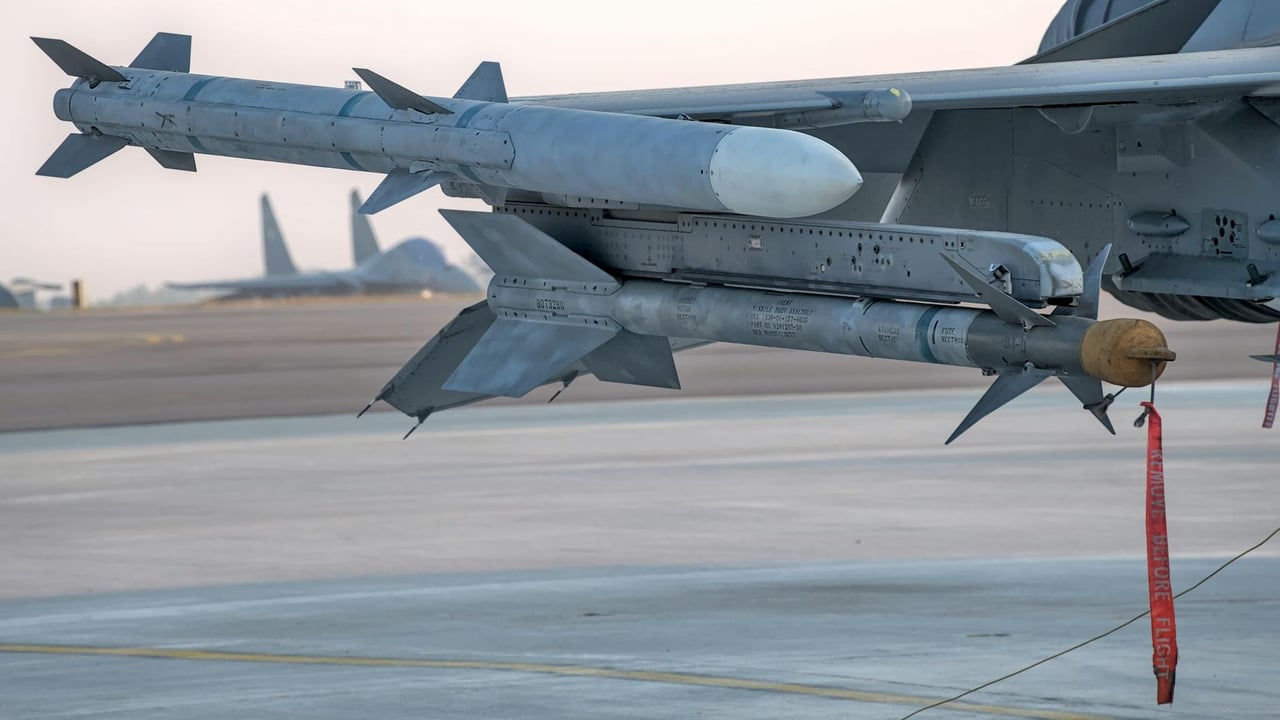

A new frontier in the aerial arms race is emerging as reports surface regarding China's development of a specialized stealth cruise missile. Designed specifically for the internal weapon bays of the J-20 and J-35 stealth fighters, this compact munition represents a significant tactical evolution. By housing these missiles internally, China aims to maintain the low radar cross-section of its fifth-generation fleet while delivering high-precision strikes deep within contested environments.
Technical specifications suggest a missile measuring under four meters in length and less than 0.85 meters in diameter. This compact footprint allows for a dual-missile loadout within the cramped confines of a stealth fighter's internal belly, a feat that traditional cruise missiles cannot achieve. The design incorporates folding wings, a V-shaped tail, and serrated exhaust nozzles, all engineered to minimize radar and infrared detection during flight.
This development directly addresses a perceived vulnerability in Western platforms like the Lockheed Martin F-35. While the F-35 is a marvel of low-observability, its primary long-range strike weapon, the AGM-158 JASSM, is often carried externally due to its size. This configuration effectively compromises the aircraft's stealth profile, making it visible to advanced integrated air defense systems at a much greater distance. China's move to internalize this capability suggests a focus on 'first-day-of-war' penetration missions.
The strategic timing of this breakthrough cannot be ignored. While the United States has historically dominated the precision-guided munition market, its procurement cycles are often hampered by budgetary constraints and aging infrastructure. Conversely, Beijing is leveraging a 'late-mover advantage,' rapidly iterating on drone technologies like the WZ-7 and CH-7, and now integrating these with advanced air-to-surface capabilities to create a comprehensive strike ecosystem.
As we look toward 2030, the integration of these stealth cruise missiles with China's burgeoning hypersonic arsenal will likely shift the calculus of regional deterrence. The ability to launch a stealthy, subsonic cruise missile from a stealthy platform creates a 'nested' threat profile that is notoriously difficult for current Aegis or Patriot systems to track and intercept. This is not merely a technical upgrade; it is a fundamental challenge to the US military's ability to operate within the 'first island chain.'
Ultimately, the success of this new missile program will depend on China's ability to mass-produce high-end sensors and reliable engines. However, the trajectory is clear. By closing the gap in specialized air-launched munitions, China is signaling that the era of uncontested American air power in the Indo-Pacific is rapidly drawing to a close, replaced by a sophisticated game of cat-and-mouse played in the shadows of the radar spectrum.