
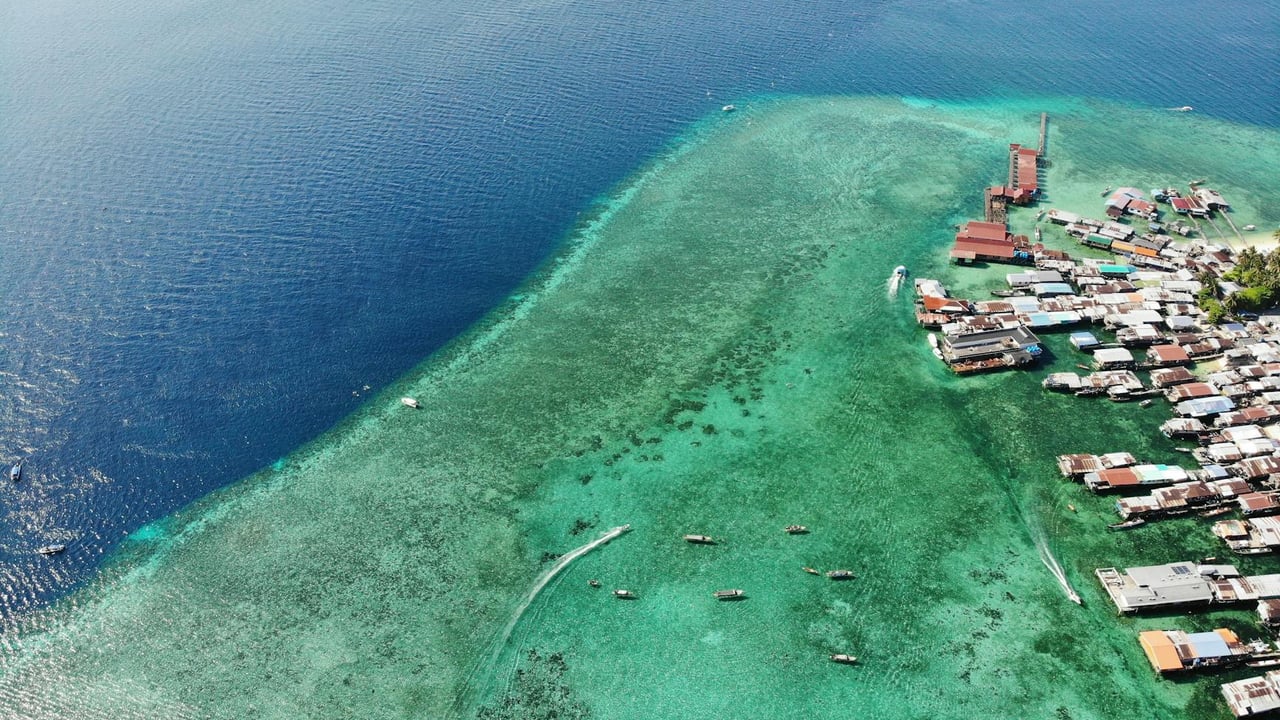

On the sun-drenched docks of Woody Island, the administrative heart of China’s presence in the Paracel Islands, a carefully orchestrated display of domestic soft power unfolded during a recent military open house. Families of the People’s Liberation Army Navy (PLAN) personnel gathered to witness first-hand the lives of those stationed in the Sansha municipality, a region that serves as a focal point for maritime sovereignty claims. This visit was centered not on military hardware, but on the ‘Kangfuntong’ (Scandent Pisonia), a resilient, salt-tolerant tree that has become the primary metaphor for the Chinese military’s endurance in the South China Sea.
The symbolic importance of the Kangfuntong tree cannot be overstated in the context of China's ‘maritime civilization’ narrative. For the soldiers stationed on Woody Island and the even more remote Triton Island, planting and nurturing these trees is presented as a rite of passage, transforming a barren coral landscape into a lived environment. This ecological transformation serves a dual purpose: it improves the harsh living conditions for the garrison while physically rooting the concept of Chinese ‘long-term habitation’ into the disputed geography.
Among the soldiers featured in the event was Jiang Yeqing, an 11-year veteran who frames the ‘Xisha Tan’—the deep tan acquired under the equatorial sun—not as a hardship, but as a badge of honor. Her narrative is joined by that of Danzeng Zhuoga, a Tibetan soldier whose presence underscores the multi-ethnic character of the PLA’s maritime frontier forces. By highlighting soldiers from the Himalayan highlands thriving in a maritime environment, the state media narrative reinforces the idea of a unified national effort to secure the country’s far-flung maritime borders.
The emotional climax of the open house occurred at the sovereignty monument, where families posed for photos beneath the ‘People’s Republic of China’ inscription. The event underscores a strategic shift in how Beijing communicates its presence in the Paracels; it is no longer just about the deployment of surface-to-air missiles or fighter jets, but about the institutionalization and normalization of a community. By bringing children and spouses to these outposts, China is signaling that these islands are not merely temporary military installations, but permanent, multi-generational territories.
Even on Triton Island, one of the most isolated outposts in the Paracels, the narrative of persistence continues. Veteran Zhang Xiaowei recounted his 21-year struggle to grow trees on white sand beaches that are frequently submerged by storm surges. This ‘green dream’ is presented to the domestic audience as a heroic struggle against nature itself, further moralizing the military’s presence. As these families depart, the message left behind is clear: the personnel, like the Kangfuntong trees they plant, are intended to be a permanent fixture of the South China Sea landscape.