The 2-Kilometer Advantage: Why Shanghai Remains the Crucible of China’s Semiconductor Ambitions

Lightelligence founder Yichen Shen highlights Shanghai's unique ecosystem, noting that 50% of China's advanced GPU firms are located within two kilometers of each other. This density, combined with a complete supply chain and robust policy support, reinforces Shanghai's status as the critical hub for China's semiconductor and AI ambitions.

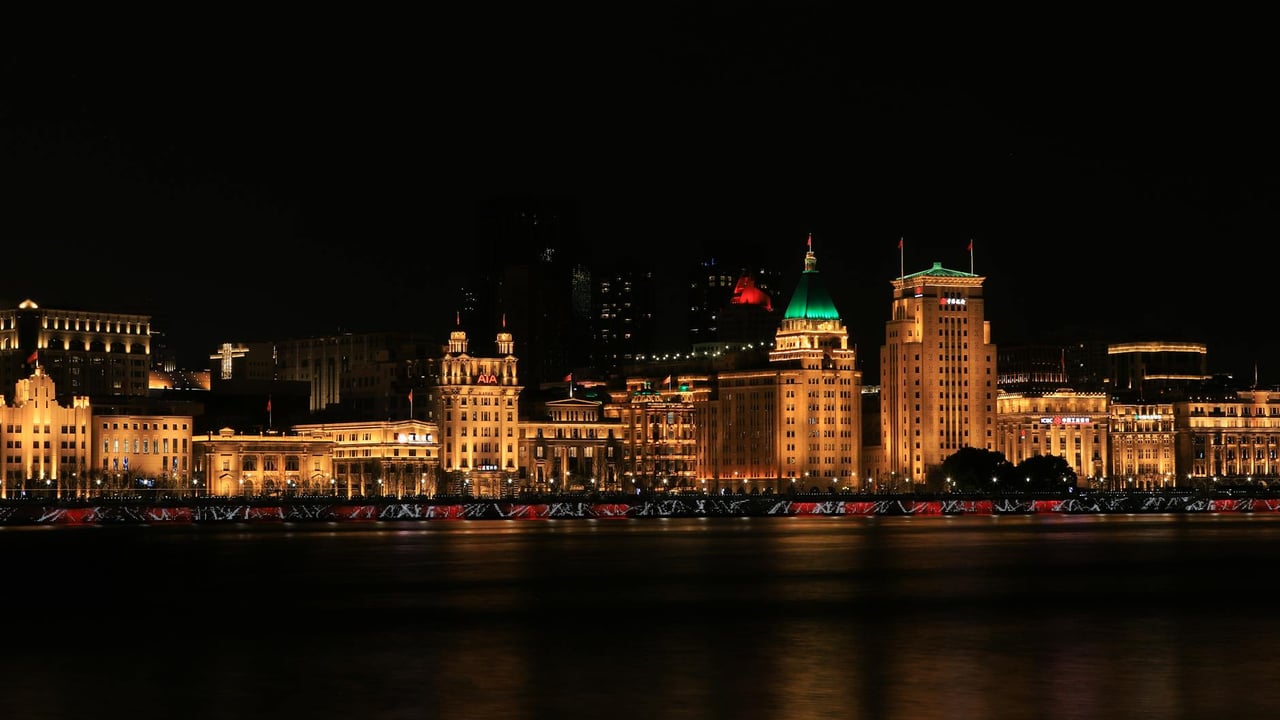
Stunning night view of Shanghai's Bund, showcasing illuminated historic buildings along the waterfront.

Key Takeaways

  • 1Shanghai hosts over 50% of China's advanced GPU companies within a narrow two-kilometer industrial cluster.
  • 2Lightelligence founder Yichen Shen cites the city's 'understanding of entrepreneurs' as a key factor for startup success.
  • 3The city offers a complete semiconductor supply chain, ranging from capital and policy support to essential 'tape-out' services.
  • 4Shanghai provides the most intensive AI application scenarios in China, allowing for rapid product iteration with local partners.

Editor's
Desk

Strategic Analysis

Shen's remarks underscore a critical shift in China's industrial policy: the transition from broad national support to hyper-focused regional clusters. Lightelligence, which specializes in optical computing—a potential 'leapfrog' technology to bypass traditional electronic chip limitations—thrives in this environment because it requires a dense network of GPU and AI partners. The '2-kilometer' phenomenon in Shanghai mirrors the early days of Silicon Valley but is significantly more state-directed. For global observers, this highlights that despite US-led export controls, China is successfully creating a 'closed-loop' ecosystem where the physical proximity of design, manufacturing, and application serves as a catalyst to accelerate domestic breakthroughs.

China Daily Brief Editorial
Strategic Insight
China Daily Brief

At the 7th Shanghai Youth 50 Forum for Innovation and Entrepreneurship, Yichen Shen, the founder and chairman of photonic computing pioneer Lightelligence, offered a compelling endorsement of the city’s industrial strategy. Shen argued that Shanghai’s true competitive edge lies not just in its technical infrastructure, but in its profound ‘understanding’ of the entrepreneurial journey. This synergy of capital, policy, and ecosystem has solidified the city's position as the primary theater for China's high-stakes semiconductor race.

The most striking metric shared by Shen was the sheer physical density of the industry. He noted that within a two-kilometer radius of his company’s office, more than 50% of China’s most advanced GPU firms are headquartered. This hyper-local concentration facilitates a unique ‘agglomeration effect,’ where talent, R&D insights, and supply chain logistics converge with a friction-less efficiency that is difficult to replicate in other global tech hubs.

Beyond mere geography, Shanghai provides the critical ‘tape-out’ infrastructure necessary for chip design and manufacturing. Shen emphasized that the city possesses China's most complete integrated circuit supply chain, paired with the country’s most intensive AI application scenarios. This allows startups to not only design chips but to immediately test and iterate them within a local ecosystem of partners eager to adopt cutting-edge hardware.

As Beijing faces increasing international pressure on its domestic chip industry, the reliance on these localized clusters has become a cornerstone of its self-reliance strategy. The presence of upstream design firms and downstream AI adopters in such close proximity serves as a defensive moat, ensuring that even under geopolitical strain, the internal mechanisms of innovation remain fluid and collaborative.

Share Article

Related Articles

📰
No related articles found