
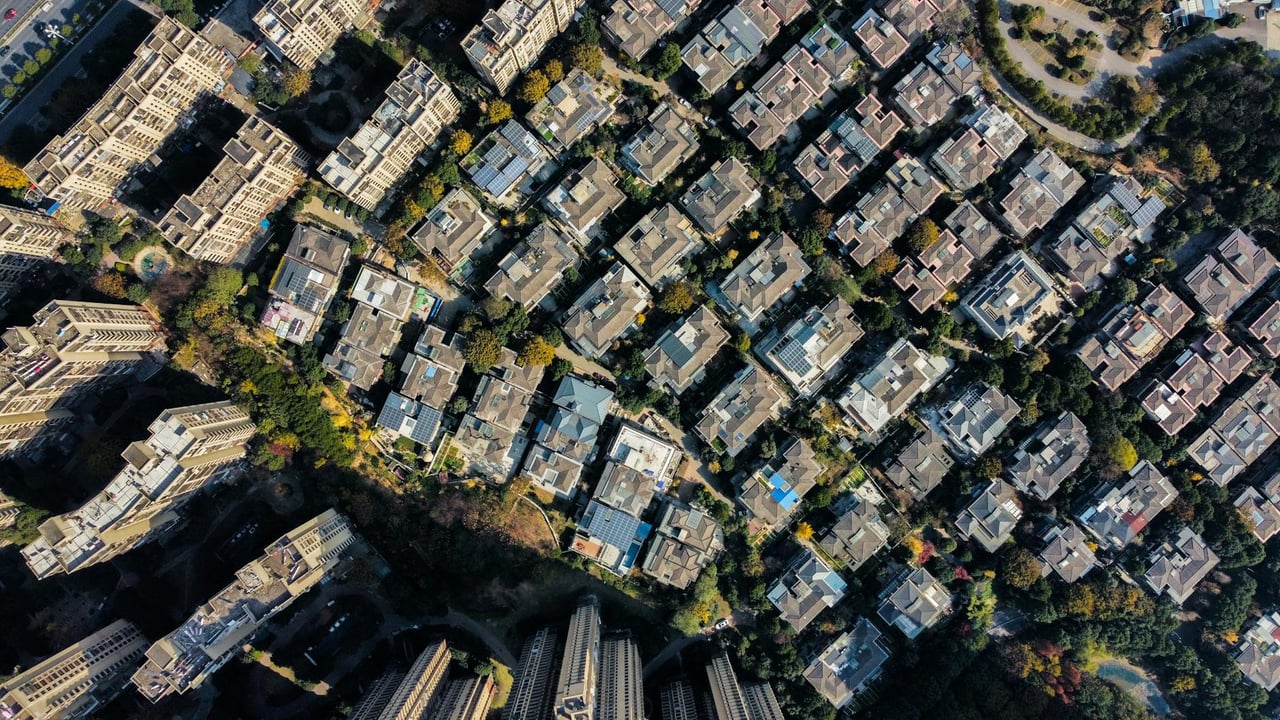

The spectacular collapse of China Evergrande Group continues to manifest in the physical dismantling of its former executives' fortunes. In the latest sign of the legal and financial dragnet tightening around the fallen real estate giant’s inner circle, a luxury duplex penthouse belonging to Xia Haijun, Evergrande’s former president, has been listed for auction on the Ali Auction platform by the Guangzhou Tianhe District People’s Court.
Located in the prestigious Guangyue Mansion in Guangzhou’s Zhujiang New Town, the 428-square-meter residence represents the pinnacle of the city's high-end real estate market. The property, featuring seven rooms and six bathrooms across the top two floors of the complex, has been given a starting price of 49.43 million RMB (approximately $6.8 million), a steep 30% discount from its market valuation of 70.62 million RMB. This fire sale highlights the urgency of asset recovery as the fallout from Evergrande’s $300 billion debt crisis enters a more aggressive phase of personal liability.
Xia Haijun was once celebrated as the 'King of Salaried Workers' in China, commanding an annual salary that peaked at 270 million RMB in 2017. As the right-hand man to Evergrande founder Hui Ka Yan, Xia was instrumental in the company’s debt-fueled hyper-expansion that eventually destabilized the Chinese property sector. His fall from grace has been as rapid as his rise, culminating in a lifetime ban from China’s securities markets and millions in fines for his role in the group’s systemic financial fraud and deceptive bond issuances.
While his physical assets in China are being auctioned off, Xia himself remains elusive. Reports indicate he is currently residing in California with his family, placing him beyond the immediate reach of Chinese domestic law enforcement. However, the international legal noose is tightening; a Hong Kong court recently upheld a Mareva injunction against him, effectively freezing up to 60 billion HKD in assets globally and blocking the transfer of proceeds from his other high-value properties in Hong Kong.
The auctioning of this penthouse is more than just a real estate transaction; it is a symbolic closure of an era of unfettered corporate excess. For the thousands of homeowners and investors left in the wake of Evergrande’s default, the liquidation of Xia’s luxury holdings offers a semblance of accountability, even if the recovered funds represent only a fraction of the astronomical losses incurred. It signals to the Chinese corporate elite that the shield of the corporate veil is thinning when systemic financial stability is at stake.