
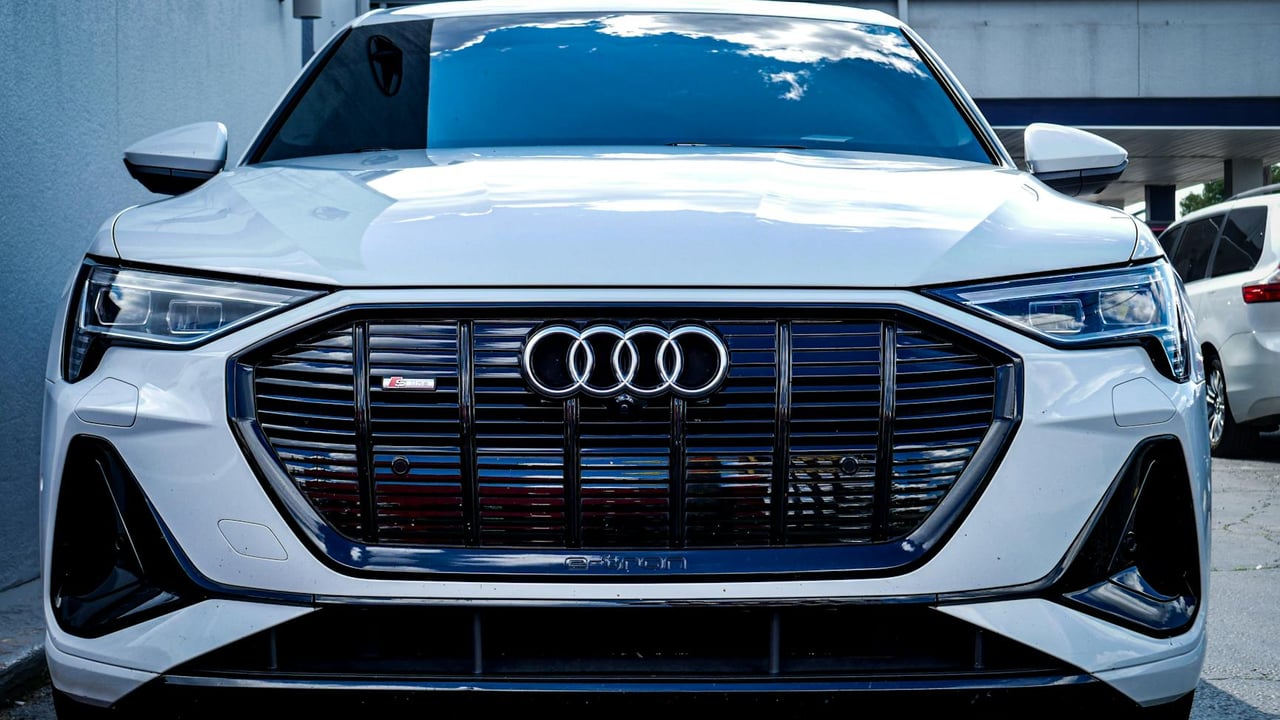

The Chinese automotive landscape is currently witnessing a profound identity crisis among luxury stalwarts. Audi’s latest move—the pre-sale of the AUDI E7X—encapsulates this shift. By launching a sub-brand that conspicuously omits the iconic four-ring logo, the German automaker is betting that a 'local first' strategy, powered by a 900V platform and Momenta’s autonomous driving suite, can reclaim market share from aggressive domestic rivals like Xiaomi and Li Auto.
While Audi attempts to localize its heritage, XPeng is grappling with the complexities of brand dilution. The recent unveiling of the MONA L05, a mid-sized SUV offering both pure electric and extended-range variants, highlights a strategic pivot toward the mass market. However, the L05’s dimensions and rumored pricing create a precarious overlap with XPeng’s existing G6 lineup. This internal friction raises questions about whether the MONA series will eventually require a total separation to protect XPeng's premium aspirations.
Niche segments are also seeing renewed interest as the broader market saturates. Lynk & Co’s debut of the 07GT, the brand’s first wagon-style plug-in hybrid, signals a move to capitalize on the 'shooting brake' trend popularized by Zeekr. By offering 4WD and high-end sensors like LiDAR, Lynk & Co aims to prove that utility and style can coexist in a market that has historically favored traditional sedans and SUVs. Success here will depend heavily on internal price management, as the brand’s current catalog suffers from significant overlaps.
Meanwhile, Lexus is taking a more conservative path with its TZ flagship electric SUV. Slated for a 2026 release in Japan and North America, the TZ retains physical buttons and traditional luxury materials like bamboo, contrasting sharply with the screen-heavy cabins of Chinese competitors. While this may appeal to conservative buyers in the West, the TZ risks appearing archaic in China’s hyper-iterative market, where battery and software specs are updated almost quarterly.