
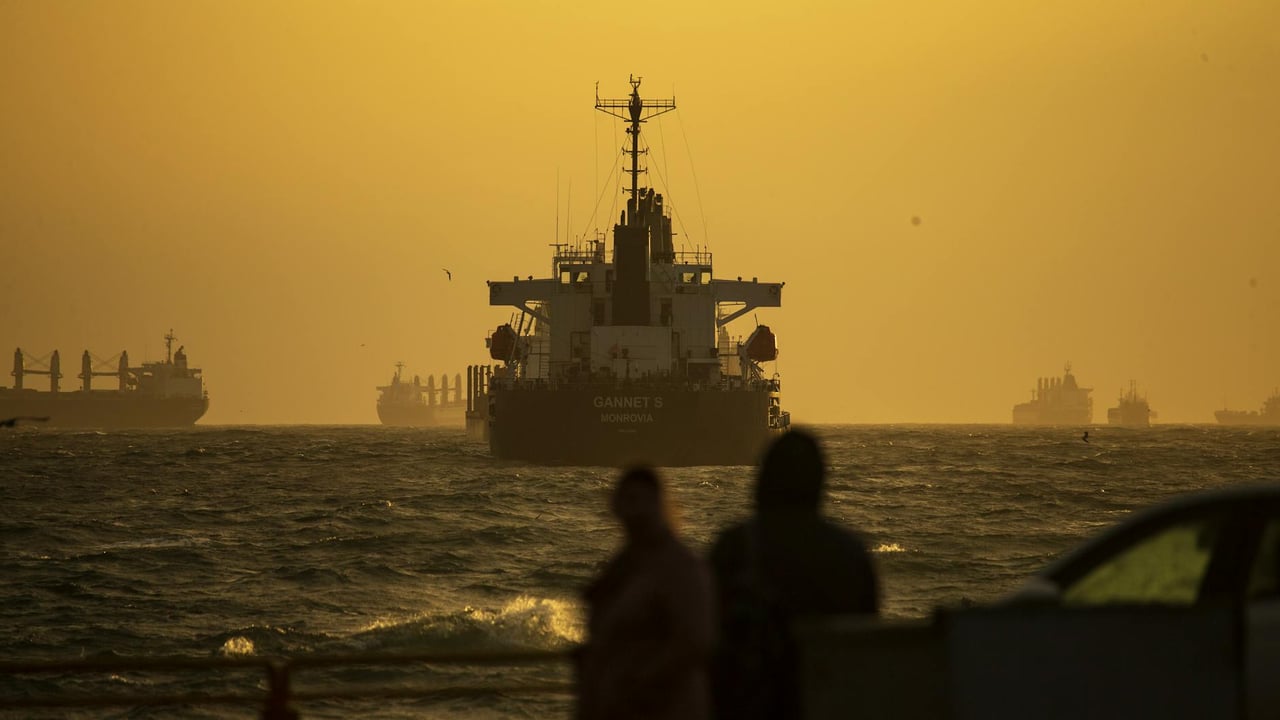

In the narrow, cerulean waters of the Strait of Hormuz, a 21st-century iteration of the 'game of chicken' is unfolding with global consequences. On one side stands a formidable American naval wall, anchored by three aircraft carrier strike groups and nineteen warships; on the other, Iran’s 'mosquito fleet' of hundreds of fast-attack craft maneuvers through the Persian Gulf’s archipelago. This confrontation has transcended a mere military standoff, evolving into a high-stakes gamble regarding national resilience, political willpower, and economic endurance.
The arrival of the USS George H.W. Bush marks the first time since the Iraq War that the United States has deployed three carriers to the Middle East simultaneously. This 'maritime iron wall' is intended to exert maximum pressure, with the Lincoln and Ford groups already positioned in the Arabian and Red Seas. Despite this overwhelming display of force, the deployment resembles a prehistoric beast: powerful yet struggling to maintain its footing in a shifting environment. President Trump’s rhetoric has escalated alongside the hardware, with orders to sink any Iranian vessels laying mines, signaling a zero-sum posture.
However, the geography of the Strait—only 39 kilometers wide at its narrowest point—turns these naval giants into cumbersome targets. In such restricted waters, the technological gap is narrowed by Iran’s 'maritime guerrilla' strategy, which utilizes decentralized bases across dozens of islands. This 'ghost fleet' avoids direct confrontation, instead employing a network of sea mines, drones, and shore-based missiles. For the U.S. Navy, tracking these small, intermittent radar signatures is a logistical nightmare that negates the advantages of satellite and carrier-based surveillance.
While Washington claims to have 'completely severed' Iranian trade, data from maritime intelligence agencies like Lloyd’s List suggest a different reality. A 'shadow fleet' of Iranian tankers continues to navigate the Gulf by spoofing transponder data and utilizing Pakistani territorial waters. This highlights the inherent difficulty of policing one of the world’s busiest shipping lanes. For Iran, which has built a 'sanction-resistant' economy over decades, the pressure is a familiar burden; for the U.S., the economic blowback is proving far more volatile.
The domestic front in the United States is rapidly becoming the weak link in the Trump administration's strategy. As the standoff lingers, global energy prices have surged, causing domestic gasoline costs to spike by a third and fueling broader inflation. Public approval for the administration’s economic handling has plummeted to 26%, creating a 'political poison' scenario. The President is now trapped between four looming deadlines: a May 1st expiration of war powers, a high-stakes visit to China, the nation’s 250th-anniversary celebrations in July, and the critical November midterms.
Ultimately, this is a psychological war where the clocks are set differently for each side. Iran is playing the long game, betting that the U.S. political system cannot sustain the domestic costs of a protracted, low-intensity conflict. While the U.S. possesses the world's most powerful military machine, it is currently grappling with the 'Imperial Dilemma'—the inability to convert overwhelming force into a political victory without shattering its own internal stability. In this marathon of endurance, the winner may not be the one with the most carriers, but the one who can afford to blink last.