China’s Hydrogen Breakthrough: The New “Heart” Doubling Industrial Drone Endurance

Researchers at the Chinese Academy of Sciences have developed a lightweight, air-cooled hydrogen fuel cell stack that doubles the flight time of industrial drones. With a power density of 1970W/kg and a fully domestic supply chain, the technology is already entering mass production for use in agriculture, energy, and rescue operations.

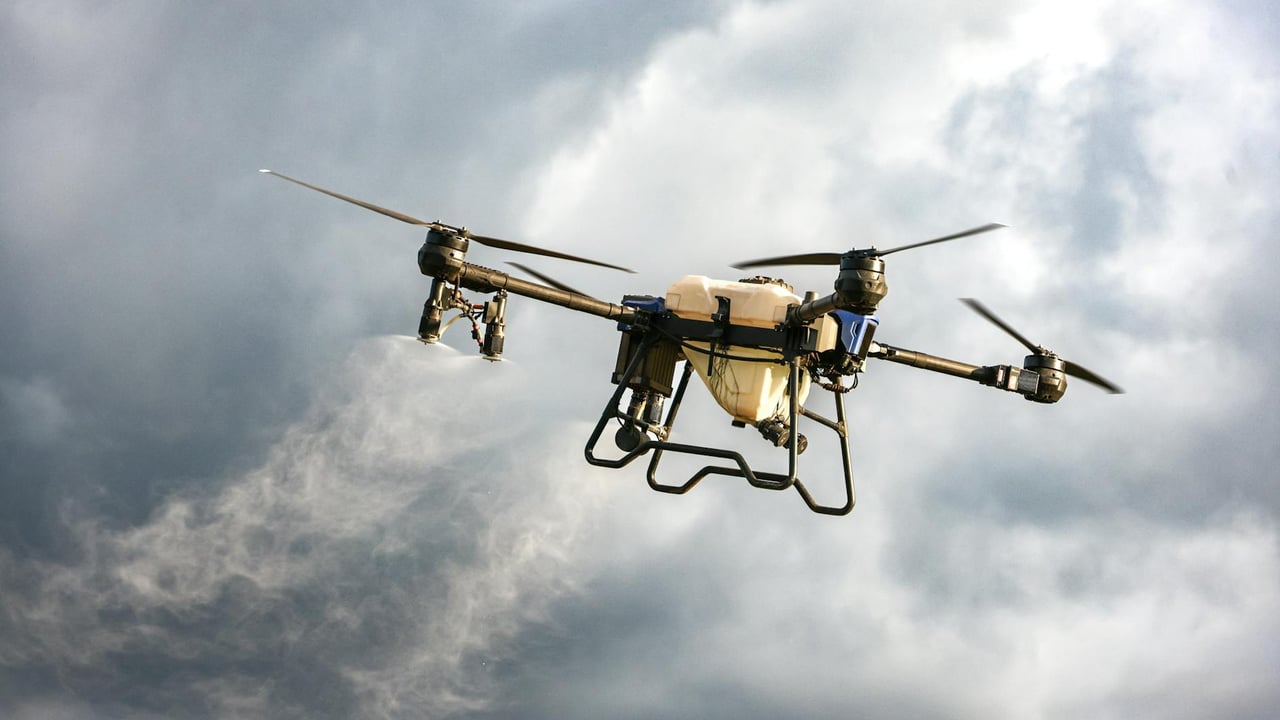
A drone dispersing mist in a cloudy sky, showcasing agricultural technology innovation.

Key Takeaways

  • 1The Dalian Institute of Chemical Physics developed an air-cooled hydrogen fuel cell stack with a power density of 1970W/kg.
  • 2The technology effectively doubles the endurance of industrial drones compared to traditional lithium-ion battery configurations.
  • 3China has secured complete intellectual property rights across the entire development chain from materials to systems.
  • 4An automated production line has been established to facilitate large-scale delivery and commercialization.
  • 5Current applications include forestry, agriculture, power grid inspection, and emergency response services.

Editor's
Desk

Strategic Analysis

This breakthrough represents a pivotal shift in China's 'Low-Altitude Economy' strategy, moving beyond consumer gadgets toward high-value industrial infrastructure. By solving the range-to-weight ratio problem through hydrogen, China is positioning itself to dominate the next generation of heavy-duty, long-endurance UAVs. The emphasis on a 'full-chain' domestic IP system is particularly noteworthy, reflecting Beijing's broader push for self-reliance in 'New Productive Forces' to bypass Western technology bottlenecks. As the global drone market bifurcates between consumer and industrial use, this 'hydrogen heart' provides Chinese manufacturers a significant competitive advantage in sectors where endurance is more valuable than price.

China Daily Brief Editorial
Strategic Insight
China Daily Brief

The persistent Achilles’ heel of the industrial drone industry has long been the limitation of battery life. While lithium-ion batteries have powered the consumer drone revolution, their energy density remains insufficient for the grueling demands of long-range infrastructure inspections, emergency rescues, and precision agriculture. A breakthrough from the Dalian Institute of Chemical Physics (DICP) under the Chinese Academy of Sciences aims to rewrite this narrative with a new hydrogen-powered "heart."

On May 10, researchers in Dalian announced the successful appraisal of a "high specific power cathode-enclosed air-cooled fuel cell stack." This technology, specifically engineered for the industrial drone sector, achieves a power density of 1970W/kg. By utilizing an air-cooled system, the researchers have managed to shed the weight and complexity typically associated with liquid-cooling, creating a lightweight power plant that effectively doubles the operational flight time of industrial unmanned aerial vehicles (UAVs).

What distinguishes this development is its strategic emphasis on technological sovereignty. The DICP team has established a "full-chain" independent research and development system that encompasses everything from raw materials and individual components to the final integrated system. This ensures that the resulting intellectual property is entirely domestic, insulating the technology from global supply chain volatility and potential export restrictions.

This is not merely a laboratory success; the project has already transitioned into the industrialization phase. The team has constructed an automated production line for these air-cooled stacks, signaling a readiness for mass-market delivery. The technology is already being deployed in real-world environments, including forestry management, agricultural spraying, power line inspections, and emergency disaster relief operations, where extended endurance is a critical requirement for mission success.

Share Article

Related Articles

📰
No related articles found