
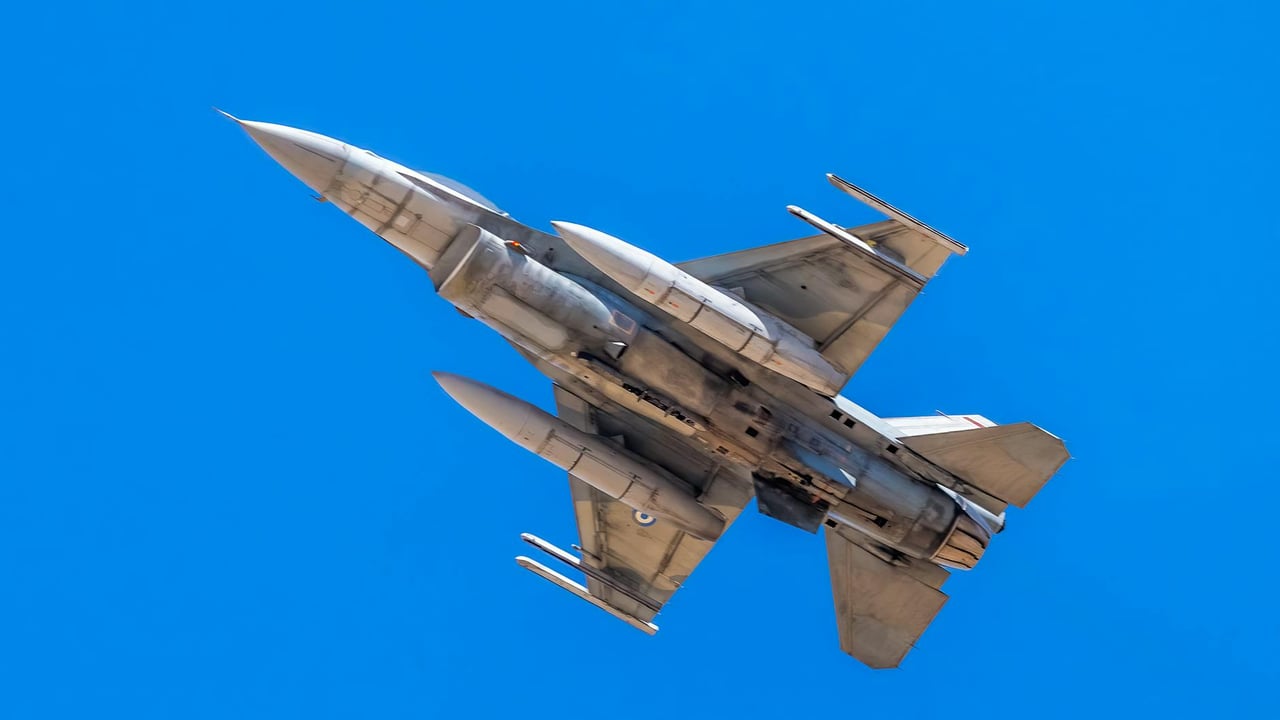

In the fog of escalating regional tensions involving the United States, Israel, and Iran, reports have emerged of a highly improbable aerial engagement that challenges the established hierarchy of modern air power. On the evening of April 3, an American F-16C multirole fighter reportedly broadcasted a Squawk 7700 emergency code while operating near the Iraqi border. This event, tracked by ADS-B platforms, initially passed as a routine mechanical or logistical hiccup until recent social media disclosures added a layer of dramatic conflict to the narrative.
New claims emerging from open-source intelligence circles suggest that the F-16C’s distress signal was not the result of a technical failure, but rather a successful interception by a legacy Iranian F-4E Phantom II. The narrative posits that the two aircraft entered a close-quarters 'dogfight' in which the aging Iranian platform managed to damage its technologically superior American counterpart. To complicate the story, the same reports indicate the Iranian F-4E suffered a hydraulic failure upon landing, resulting in a runway excursion.
From a technical standpoint, the logic supporting an Iranian victory is remarkably thin. The F-16C is widely regarded as a 'dogfight king,' possessing a corner velocity and turn rate that far exceed the capabilities of the Vietnam-era F-4E. While the Phantom remains a formidable workhorse, its lack of modern high-off-boresight missiles and integrated sensor fusion makes it an unlikely victor against a modern Viper equipped with AIM-9X and Joint Helmet Mounted Cueing Systems.
Furthermore, the significance of the 7700 emergency code is often misinterpreted by civilian observers. In combat zones, US pilots frequently use the transponder code to signal tanker aircraft for emergency refueling or to clear airspace for minor mechanical issues rather than indicating catastrophic battle damage. Without the release of Head-Up Display (HUD) footage or gun camera data from the Iranian Air Force—standard proof in modern air victory claims—the account remains firmly in the realm of speculation and propaganda.
Despite the skepticism, the persistence of these reports highlights a critical shift in the regional conflict. The Iranian Air Force, long considered a 'museum air force' due to decades of sanctions, appears to be adopting a more aggressive posture. Whether or not an F-4E truly traded blows with an F-16C, the narrative itself serves as a potent tool for domestic morale and asymmetric signaling, suggesting that even antiquated systems will be used to challenge American air superiority in the Persian Gulf.