
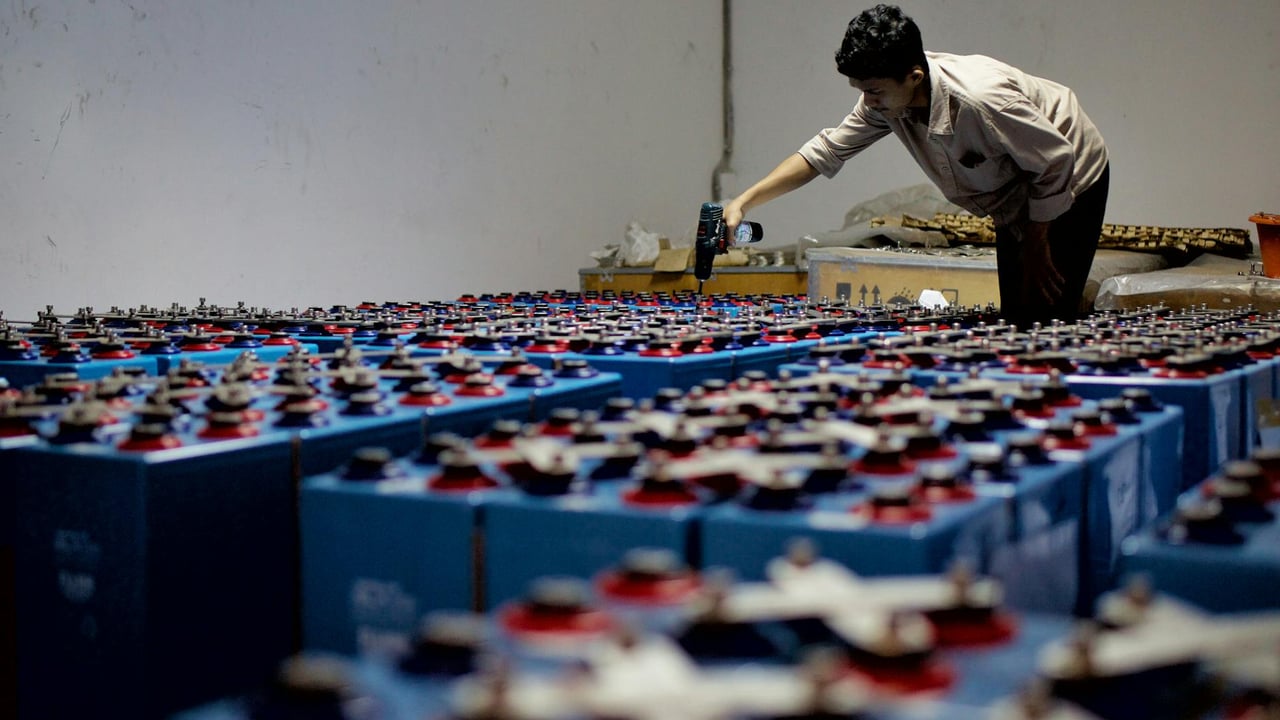

The recent surge in China’s renewable energy exchange-traded funds (ETFs) signals a profound shift in how the world’s second-largest economy intends to power its technological future. On May 11, the New Energy ETF (516270) rose by nearly 2%, buoyed by heavyweights like CATL and Sungrow Power Supply. This market momentum is no longer driven solely by the electric vehicle (EV) sector, but rather by the burgeoning demand for Artificial Intelligence Data Centers (AIDC), which are emerging as the most significant growth engine for the energy storage industry.
Industry leaders, including Haichen Energy Storage, anticipate that 2027 will mark the 'commercialization year' for AIDC-integrated energy storage. These massive computing facilities are notoriously energy-intensive, with electricity costs often accounting for over 70% of their total operating expenses. Furthermore, the erratic, 'pulse-like' nature of AI workloads requires a level of grid stability and cost-efficiency that only integrated solar-storage or wind-storage systems can provide at scale.
This trend coincides with a strategic pivot within the Chinese solar and battery sectors to move beyond 'involution'—the term used for the country’s cutthroat internal price wars. Analysts at BOC International and Sinolink Securities suggest that the industry is entering a phase of margin recovery, driven by high-power components and next-generation technologies. Breakthroughs in solid-state and sodium-ion batteries are transitioning from laboratory curiosities to engineering milestones, promising safer and more efficient storage solutions for both the automotive and infrastructure sectors.
Beyond terrestrial needs, the industry is looking toward 'space-based solar' to support China's burgeoning satellite internet constellations. This diversification into aerospace and green hydrogen indicates that the renewable energy sector is no longer just about power generation; it is about creating a comprehensive energy ecosystem that underpins high-tech manufacturing and digital infrastructure. As components stabilize in price and technology improves, the convergence of green energy and artificial intelligence is poised to redefine industrial competitiveness in the coming decade.