
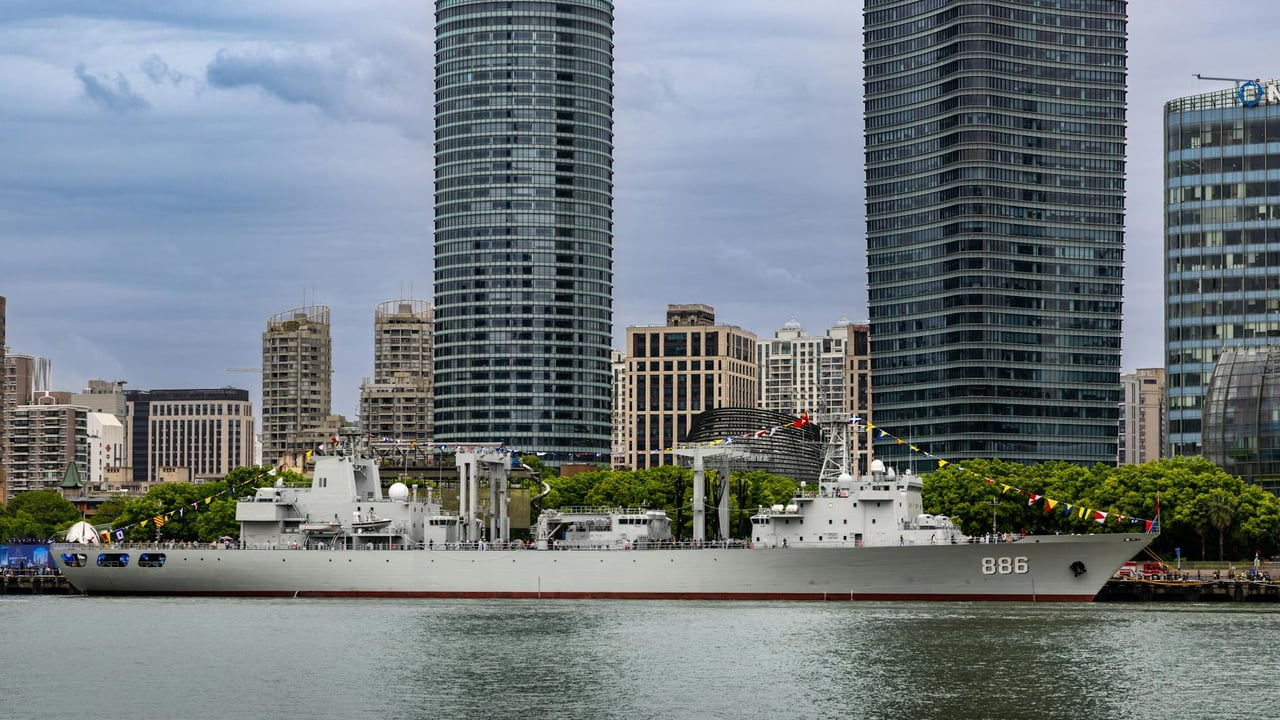

The People’s Liberation Army Navy (PLAN) has recently unveiled a new generation of terminal air defense and anti-missile systems, a development that underscores the accelerating arms race in maritime survivability. While the hardware itself is formidable, it is the deliberate censoring of the command-and-control interfaces that has captured the attention of global military observers. The heavy pixelation of these screens suggests that the true innovation lies not in the barrels or launchers, but in the sophisticated software and sensor fusion driving them.
Terminal defense systems, often referred to as the 'last line of defense,' are designed to intercept incoming projectiles that have evaded long-range layers of protection. In an era where hypersonic anti-ship missiles and low-cost drone swarms threaten even the most advanced carrier strike groups, the margin for error has shrunk to milliseconds. The PLAN’s new system appears designed to address this compressed kill chain through high-frequency automated response mechanisms.
This modernization effort is a direct response to the evolving threat landscape in the Indo-Pacific. As the United States and its allies refine their 'Distributed Maritime Operations' and long-range precision strike capabilities, Beijing is forced to harden its fleet against saturation attacks. By integrating more powerful radar arrays and likely AI-assisted target prioritization, the Chinese navy is attempting to create a 'fortress at sea' capable of weathering a high-intensity opening salvo.
The strategic focus on these systems indicates a transition from hardware-centric warfare to data-centric combat. The mosaics on the command screens likely hide advanced 'blue-force' tracking, multi-target trajectory prediction, and perhaps even the early integration of directed-energy weapon controls. For China, maintaining a technological lead in these areas is essential to its broader goal of anti-access/area denial (A2/AD) and securing its maritime periphery.