
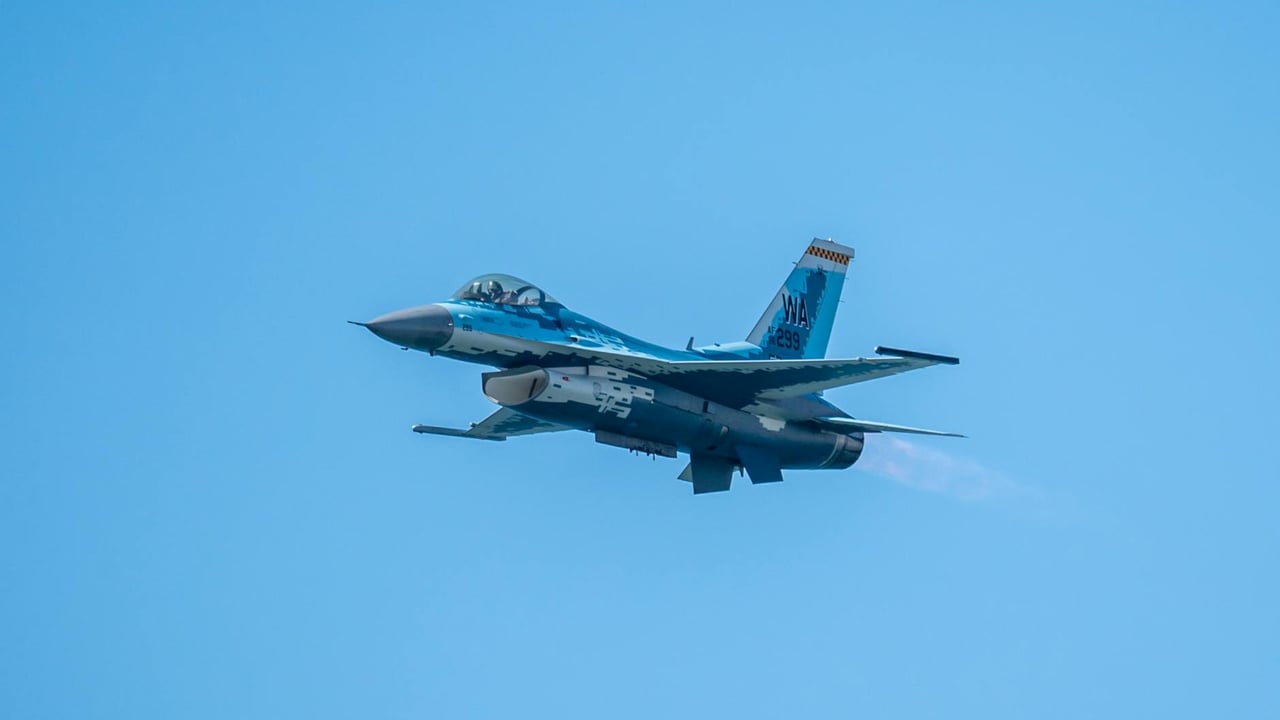

The People’s Liberation Army Air Force (PLAAF) has conducted a series of sophisticated air combat drills featuring its premier trio of fighter jets: the stealthy J-20, the multi-role J-16, and the agile J-10C. This combination, colloquially known within Chinese military circles as the ‘Three Musketeers,’ represents the spearhead of Beijing’s efforts to modernize its aerial warfare capabilities. By training these disparate platforms in a unified tactical environment, the PLA is moving beyond individual platform prowess toward a highly integrated 'system-of-systems' approach.
In these high-intensity exercises, the J-20 typically assumes the role of the 'sniper' or 'gate-opener,' leveraging its stealth characteristics to penetrate enemy air defenses and neutralize high-value targets like AWACS or tankers. The heavy-lift J-16 follows as the 'heavy hitter,' utilizing its superior radar and massive payload to provide electronic warfare support and conduct precision strikes. Meanwhile, the J-10C acts as the versatile escort and dogfighter, providing the necessary mass and agility to handle diverse threats in a contested airspace.
This integrated training regime highlights a critical shift in China's military doctrine, which now prioritizes interoperability and real-time data sharing across different generational platforms. The ability of a fifth-generation stealth fighter to pass targeting data to fourth-generation-plus platforms effectively multiplies the lethality of the entire fleet. Such capabilities are designed specifically to challenge the traditional air superiority long held by Western powers in the Indo-Pacific theater.
The timing and nature of these drills suggest that the PLAAF is confident in its domestic engine technology and production rates, which have historically been its Achilles' heel. As the J-20 fleet grows in number, the focus has shifted from mere induction to perfecting the tactical synergy between these three aircraft. This evolution signals that China is no longer just catching up in terms of hardware, but is actively refining the complex doctrines required for modern, high-end air campaigns.