
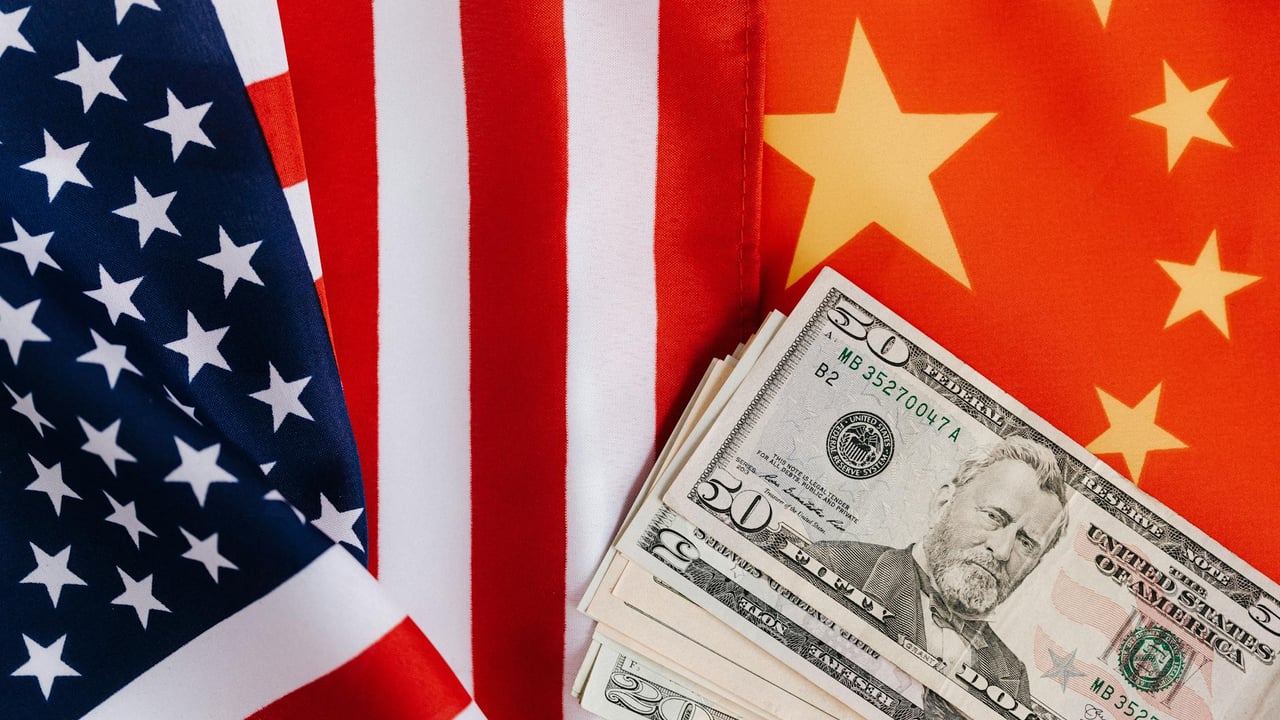

President Donald Trump’s arrival in Beijing this week marks a watershed moment in the high-stakes theater of US-China relations. As the first visit by a sitting American president in nearly a decade, the three-day state visit is being framed not merely as a diplomatic formality, but as a critical recalibration of the world’s most consequential bilateral relationship. In an era defined by deep structural competition, the return to high-level face-to-face engagement suggests a mutual recognition that the costs of total decoupling have become prohibitively high.
Beijing has consistently championed the concept of 'head-of-state diplomacy' as the indispensable 'ballast stone' of the relationship. This top-down approach is designed to provide strategic leadership, ensuring that even as lower-level tensions persist, the overarching direction of the relationship remains under the control of the two 'helmsmen.' This philosophy was put to the test during the trade frictions of 2025, where direct communication between the leaders eventually steered both nations away from the brink of an all-out economic war and back toward a path of structured dialogue.
The economic imperatives driving this summit are undeniable. Together, the United States and China account for more than one-third of global GDP, and their domestic policy choices reverberate through every corner of the global market. Data indicates that trade volatility between these two giants contributed to a significant 10% contraction in global trade growth over the last year, a figure that has clearly incentivized both capitals to seek a more predictable and stable interactive framework.
Beyond bilateral trade, the summit aims to address what Chinese leadership calls the 'global governance deficit.' With China slated to host the APEC summit and the United States preparing to lead the G20, there is a rare opportunity for synchronization on the international stage. Beijing’s rhetoric increasingly focuses on 'benign interaction,' suggesting that if the two powers can support each other’s multilateral agendas, they can inject much-needed stability into a chaotic international environment.
Ultimately, the success of this visit will be measured by whether it can move beyond optics to establish a durable 'new way of getting along.' By advocating for peaceful coexistence and mutual prosperity, Beijing is attempting to shift the narrative from zero-sum rivalry to a pragmatic partnership. In a world fraught with geopolitical uncertainty, the international community is watching closely, hoping that this high-level engagement marks the beginning of a sustained and manageable peace between the two superpowers.