Solving the Lithium Metal Puzzle: How Nanoscale Insights Are Reshaping the Battery Frontier

Researchers at KAIST have successfully observed the nanoscale degradation of lithium metal batteries, identifying the root cause of performance failure. This discovery provides a critical pathway toward commercializing next-generation batteries with significantly higher energy densities than current lithium-ion technology.

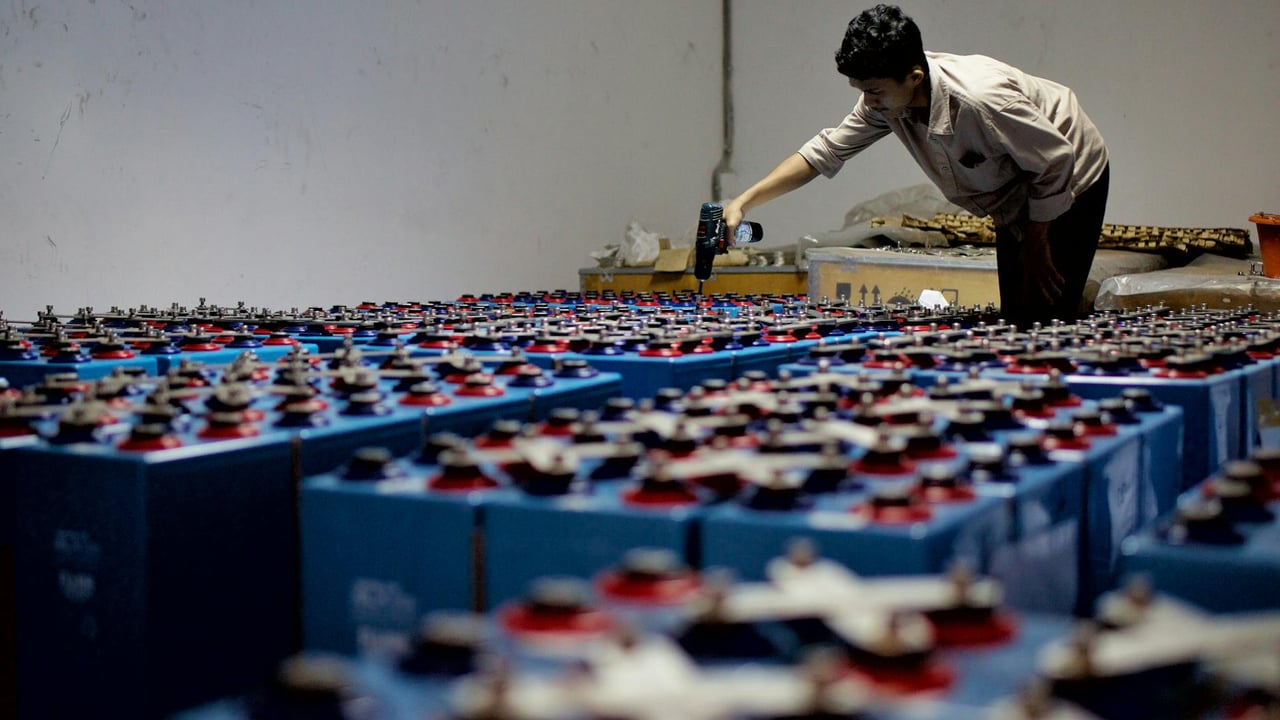
A worker checking many industrial batteries inside a facility. Indoor, industrial setting.

Key Takeaways

  • 1KAIST research team identified the fundamental cause of lithium metal battery degradation through nanoscale observation.
  • 2The findings address a decades-long bottleneck preventing the commercialization of high-density lithium metal anodes.
  • 3The research was published in the prestigious journal ACS Energy Letters, marking a peer-reviewed leap in battery science.
  • 4The breakthrough is expected to accelerate the development of safer, longer-lasting electric vehicle batteries.

Editor's
Desk

Strategic Analysis

This breakthrough arrives at a critical juncture in the global 'battery war' between South Korea and China. While Chinese manufacturers currently dominate the supply chain for traditional lithium-ion (LFP and NCM) chemistries, South Korean firms and institutions are doubling down on next-generation 'frontier' technologies like lithium metal and solid-state systems to regain the lead. By solving the stability issue at the nanoscale, KAIST is providing the intellectual property foundation needed for Korean industry giants to bypass the current energy density ceiling. This discovery suggests that the transition to 500 Wh/kg batteries may happen sooner than industry forecasts predicted, potentially reshuffling the competitive landscape of the global EV market by the late 2020s.

China Daily Brief Editorial
Strategic Insight
China Daily Brief

For years, the energy industry has viewed lithium metal batteries as the 'holy grail' of portable power. Offering theoretical energy densities far beyond today’s lithium-ion standards, they promise to double the range of electric vehicles and extend the life of consumer electronics. However, the commercialization of this technology has been stymied by a persistent and poorly understood problem: the rapid degradation of the lithium metal anode during charging cycles.

Researchers at the Korea Advanced Institute of Science and Technology (KAIST) have recently achieved a significant milestone by observing this degradation process at the nanoscale level. By locking onto the precise mechanics of how the lithium anode breaks down, the team has identified the fundamental cause of performance decline. This granular level of observation allows scientists to see exactly how the internal structures fail, moving beyond the guesswork that has previously characterized lithium metal research.

As published in the journal ACS Energy Letters, this study provides a roadmap for stabilizing the battery's internal environment. By identifying the root cause of failure, engineers can now develop targeted solutions, such as advanced electrolytes or protective coatings, to prevent the formation of dendrites—the needle-like structures that lead to short circuits and battery fires. This breakthrough is not merely a laboratory curiosity; it represents a major hurdle cleared on the path to mass-market adoption.

The implications for the global energy transition are profound. As the automotive industry shifts toward solid-state and lithium metal architectures, the ability to ensure long-term stability and safety is the primary differentiator between market leaders and also-rans. With this discovery, South Korean researchers are positioning themselves at the forefront of a race that will define the next decade of industrial dominance in the green economy.

Share Article

Related Articles

📰
No related articles found